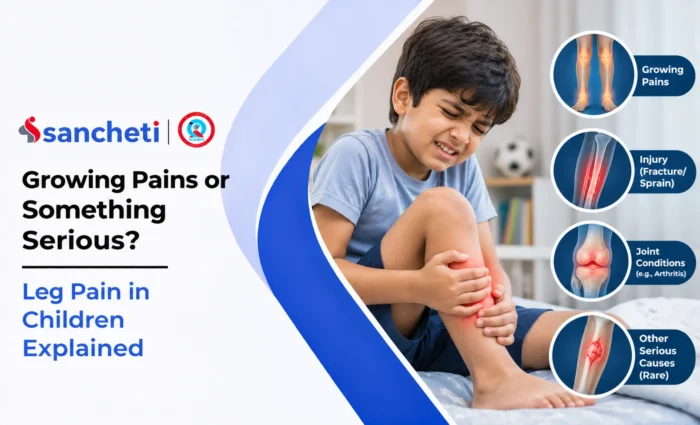

Growing Pains or Something Serious? Leg Pain in Children Explained
Growing pains are harmless aches in both legs that usually come on in the evening or at night in children aged about 3 to 12, and are gone by morning. The child is otherwise well, can walk and play normally, and there is no swelling or limp. Leg pain is more likely to be something serious if it affects only one leg, happens during the day or in the morning, causes a limp, or comes with fever, swelling, bruising, tiredness or weight loss. In those cases, see a doctor.
This guide helps you tell the difference, explains other causes of leg pain in children, and shares simple ways to ease growing pains at home.
What are growing pains?
“Growing pains” is the common name for recurring, non-specific leg aches in young children. Despite the name, the NHS notes that they are not caused by growing and are not a sign of anything serious. Doctors sometimes call them benign nocturnal limb pains of childhood.
Growing pains are common. An Indian Pediatrics review estimates that they affect about 10–20% of children, though figures vary between studies. They often run in families: a review by Evans found a parent or sibling had also had growing pains in almost 70% of cases.
The cause is unknown. The NHS notes they are more common in active children, especially after a lot of sport, and in children with very flexible joints (joint hypermobility).
Typical signs of growing pains
According to the NHS, growing pains usually:
- Cause an aching or throbbing feeling in both legs
- Are felt in the muscles — often the thighs, calves or behind the knees — rather than in the joints
- Come on in the late afternoon, evening or at night, sometimes waking the child
- Are gone by morning
- Come and go over months or even years, with pain-free spells in between
Between episodes, the child is healthy, active and walks normally. Doctors diagnose growing pains from this pattern and a normal examination; the Evans review notes that blood tests are not needed when the pattern is typical.
Growing pains or something serious?
This table compares the typical pattern of growing pains with features that suggest another cause. It is based on published diagnostic criteria from the Evans review and Indian Pediatrics.
| Feature | Typical of growing pains | Suggests something else — see a doctor |
|---|---|---|
| Which legs | Both legs, often switching sides | Always the same leg, or one spot |
| Where it hurts | Muscles of the thighs, calves, behind the knees | A joint (knee, hip, ankle) or a specific bone |
| When it hurts | Evening or night; gone by morning | During the day, in the morning, or all the time |
| Walking and play | Normal; no limp | Limping, refusing to walk, avoiding activities |
| Appearance of the leg | Looks normal | Swelling, redness, warmth, a lump, or bruising |
| General health | Child is well | Fever, tiredness, paleness, poor appetite, weight loss |
| Pattern over time | Comes and goes | Getting steadily worse |
| Response to comfort | Eases with massage or warmth | Child doesn’t want the area touched |
If your child’s pain matches the left-hand column, growing pains are the most likely explanation. If any feature in the right-hand column is present, arrange a check-up.
Red flags: when to see a doctor
See a doctor or paediatrician if your child’s leg pain, as listed by the NHS:
- Is in only one leg or one joint
- Happens in the morning, or when walking or playing
- Is bad enough to stop them walking or causes a limp
- Comes with a rash, swelling or unusual bruising on the legs
- Comes with a high temperature
- Comes with unusual tiredness or sleepiness
- Comes with poor appetite or weight loss
Seek urgent same-day care if your child:
- Has a fever and refuses to walk or put weight on a leg, or won’t let you move a joint — this can be a sign of a bone or joint infection
- Has severe pain after a fall or injury, or a leg that looks out of shape
- Is unusually pale, very tired, bruising easily and has bone pain — signs that need prompt blood tests
Sancheti’s 24/7 emergency and trauma care team can see children urgently at any hour.
Other causes of leg pain in children
When leg pain doesn’t fit the growing-pains pattern, a child’s age is one of the most useful clues. The table below summarises common causes by age group, drawn from guidance on evaluating a limping child and an Irish HSE paediatric guide.
| Age group | Possible causes | Typical clues |
|---|---|---|
| Toddlers (1–3 years) | Toddler’s fracture (a hairline break of the shin bone); hip problems such as developmental dysplasia | Sudden limp or refusal to walk, sometimes after a minor fall |
| Young children (3–10 years) | Transient synovitis (“irritable hip”); Perthes disease | Limp and hip, thigh or knee pain; transient synovitis often follows a cold |
| Older children and teens | Osgood-Schlatter disease (knee); Sever’s disease (heel); slipped capital femoral epiphysis (hip) | Pain with sport that eases with rest; a teen with hip, thigh or knee pain and a limp |
| Any age | Injuries, greenstick or stress fractures | Pain in one spot, often after a fall or a jump in activity |
| Any age | Bone or joint infection | Fever, a hot or swollen joint, refusing to use the leg |
| Any age | Juvenile idiopathic arthritis (JIA) | Joint swelling and morning stiffness lasting weeks |
| Any age (rare) | Leukaemia or bone tumours | Persistent or worsening pain, night pain that doesn’t settle, pallor, bruising, weight loss, a lump |
Some notes on these causes:
- Transient synovitis is the most common cause of a limp without injury in young children — 80–85% of cases, according to the AAFP — and usually settles in days. A child with fever who won’t bear weight needs urgent checks to rule out infection.
- Osgood-Schlatter and Sever’s disease are common in active children during growth spurts. An NHS leaflet notes they usually affect children aged about 11–15 and 7–12 respectively, cause pain with activity, and settle with rest and time.
- Slipped capital femoral epiphysis is more likely in overweight adolescents, as the AAFP notes, and can show up as knee pain even though the problem is in the hip.
- Leukaemia and bone tumours are rare, but persistent bone pain with tiredness, paleness, bruising or weight loss needs prompt investigation, as this paediatric case example illustrates. A bone tumour such as an osteoid osteoma typically causes night pain that keeps getting worse, unlike the on-and-off pattern of growing pains, according to Indian Pediatrics.
For more on limps, see Sancheti’s guide to limping in children.
How doctors check a child’s leg pain
A doctor will ask about when and where the pain happens, how long it has been going on, any injuries, and your child’s general health. They will examine both legs, the hips, knees and feet, watch your child walk, and look for joint swelling, tenderness or reduced movement.
- If the pattern fits growing pains and the examination is normal, no tests are usually needed.
- If anything is unusual, the doctor may order an X-ray, blood tests (including blood count, inflammation markers and vitamin D), or an ultrasound or MRI.
Children whose pain doesn’t fit the pattern may be referred to a paediatric orthopaedic specialist, a paediatric rheumatology service for possible arthritis, or the Orthopaedic Oncology Department in the rare event of a suspected bone tumour.
How to ease growing pains at home
The NHS suggests:
- Gentle massage of the aching legs
- Warmth — a covered hot water bottle or warm pack on the sore area, or a warm bath before bed
- Pain relief — children’s paracetamol or ibuprofen at the dose on the label for your child’s age and weight, if needed
- Do not give aspirin to children under 16 unless a doctor prescribes it
Other helpful steps:
- Gentle stretches of the calves and thighs before bed, especially on active days
- Reassurance and comfort — knowing the pain is harmless helps many children settle
- Keep a simple diary of when pain happens, which leg, what your child did that day and anything that helped. This is very useful if you do see a doctor.
Growing pains usually fade as children get older and don’t cause any lasting problems.
Frequently asked questions about growing pains
At what age do growing pains start?
Growing pains are most common between about 3 and 12 years of age. They usually stop by the teenage years.
Are growing pains caused by growing?
No. Despite the name, growing pains are not caused by bones growing. The exact cause is unknown, but they are more common in active children and those with flexible joints.
Can growing pains happen in just one leg?
Typically, no. Growing pains usually affect both legs. Pain that is always in the same leg or one spot should be checked by a doctor.
Why are growing pains worse at night?
The reason isn’t fully understood. Pain often appears in the evening or at night after a busy day, possibly because children notice it more when they are resting.
Do growing pains need blood tests or X-rays?
Not usually. If your child has the typical pattern and is otherwise well, a doctor can diagnose growing pains from the history and examination. Tests are done if anything is unusual.
Can low calcium or vitamin D cause leg pain?
Low vitamin D is common in Indian children and has been linked to leg aches, but it does not explain every case. A small Indian study found low vitamin D far more often in children with growing pains than in those without, and symptoms improved after supplements — though the study had no placebo group. Severe deficiency can also cause rickets, with bone pain on standing and walking or bowed legs. Ask your doctor about a blood test rather than giving high-dose supplements on your own.
When is leg pain in a child an emergency?
Seek urgent care if your child has a fever and won’t walk or let you move a joint, has severe pain after an injury, or has a leg that looks deformed or swollen.
Do growing pains cause long-term problems?
No. Growing pains are harmless and do not damage the bones or joints. They usually fade as children grow older.
Most leg aches are harmless — but know the signs
Growing pains are common, harmless and usually ease with massage, warmth and reassurance. The key is knowing the pattern: both legs, evening or night, gone by morning, and a child who is otherwise well and walking normally. Pain in one leg, during the day, with a limp, swelling, fever or general illness is not typical and should be checked.
If you are unsure about your child’s leg pain, Sancheti Hospital’s Paediatric Orthopaedic Department in Pune can assess your child and give you peace of mind. You can book an appointment online.