Home
Home PG College
 Patient Login
 Sancheti Clinic
 Contact Us
 Download Reports
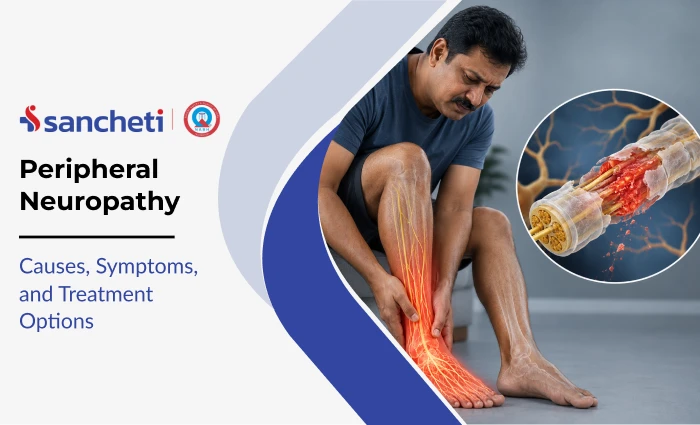

Peripheral Neuropathy: Causes, Symptoms, and Treatment Options
Peripheral neuropathy is damage to the nerves outside the brain and spinal cord, producing numbness, tingling, burning pain, or weakness, most often starting in the feet and hands.
It is not a single disease but a common endpoint of many different conditions, with diabetes the leading cause worldwide. Early recognition and treatment of the underlying cause can slow progression and, in some forms, allow meaningful nerve recovery.
At Sancheti Hospital, Pune, our Neurology Department evaluates peripheral neuropathy across its full range of causes; diabetic, nutritional, autoimmune, hereditary, and drug-induced, to identify the underlying driver and build a treatment plan around it, rather than treating symptoms alone.
What Is Peripheral Neuropathy?
The peripheral nervous system carries signals between the brain and spinal cord and the rest of the body. It includes sensory nerves (carrying touch, temperature, and pain information to the brain), motor nerves (carrying movement signals to muscles), and autonomic nerves (controlling involuntary functions such as heart rate, digestion, and sweating).
Peripheral neuropathy occurs when these nerves are damaged through one of two underlying mechanisms:
axonal degeneration, in which the nerve fibre itself deteriorates, typically starting at its farthest point and progressing backward (a pattern called dying-back),
or demyelination, in which the protective myelin sheath surrounding the nerve breaks down while the fibre itself remains intact. Many neuropathies involve a mixture of both processes.
Because the longest nerves are affected first in most causes, symptoms classically begin in the toes and feet, then the fingers and hands; a pattern often described as glove-and-stocking distribution.
Who It Affects
According to research, peripheral neuropathy affects an estimated 1-7% of the general population, with idiopathic (no identifiable cause) neuropathy accounting for 25-46% of evaluated cases.
Key epidemiological patterns:
- Diabetes is the single most common identifiable cause, affecting up to 50% of people with diabetes over their lifetime
- Prevalence in the general adult population (ages 40-65) rises progressively with age, from approximately 10% at age 40-45 to 18.9% at age 61-65
- Peripheral neuropathy is associated with increased risk of falls, functional decline, and reduced quality of life, particularly in older adults
- Up to 50% of diabetic peripheral neuropathy may be entirely asymptomatic, meaning many cases go undetected without active screening
Causes and Types of Peripheral Neuropathy
Peripheral neuropathy is classified along two independent dimensions: the anatomical pattern of nerve involvement, and the underlying cause. Both matter clinically, the pattern narrows the diagnostic possibilities, and the cause determines whether the neuropathy is treatable, reversible, or simply manageable.
Classification by Pattern
| Pattern | Description | Typical Causes |
|---|---|---|
| Mononeuropathy | Damage confined to a single nerve | Entrapment (carpal tunnel), trauma, compression |
| Mononeuritis Multiplex | Two or more individual nerves affected asymmetrically, in different parts of the body | Vasculitis, diabetes, leprosy, autoimmune disease |
| Polyneuropathy | Widespread, length-dependent involvement of multiple nerves | Diabetes, alcohol, nutritional deficiency, hereditary disease, idiopathic |
Major Causes
| Cause | Mechanism |
|---|---|
| Diabetes mellitus | Chronic high blood glucose damages small blood vessels supplying nerves and directly injures nerve fibres |
| Vitamin B12 deficiency | B12 is essential for myelin synthesis; deficiency causes combined sensory and demyelinating damage |
| Chronic alcohol use | Direct neurotoxic effect of alcohol combined with associated nutritional deficiencies (thiamine, B12) |
| Chemotherapy (CIPN) | Platinum agents, taxanes, and vinca alkaloids directly damage peripheral nerve fibres |
| Autoimmune disease | Immune system attacks nerve myelin or axons directly (Guillain-Barré syndrome, CIDP, vasculitis) |
| Hereditary neuropathy | Inherited genetic mutations affecting nerve structure or myelin formation |
| Infections | Direct nerve invasion or immune response to infection |
| Other drug-induced | Certain antibiotics, anticonvulsants, and cardiac medications carry neurotoxic potential |
| Idiopathic | No cause identified despite thorough investigation |
More than one cause can coexist in the same patient. A patient with diabetes who also drinks alcohol regularly and has borderline B12 levels has three additive contributors to nerve damage symptoms; each one should be assessed and addressed independently rather than assuming diabetes alone explains the full clinical picture.
Symptoms of Peripheral Neuropathy
Symptoms depend on which type of nerve fibre is predominantly affected. Most peripheral neuropathies involve some combination of sensory, motor, and autonomic symptoms, though one category often predominates depending on the underlying cause.
| Category | Symptoms |
|---|---|
| Sensory | Numbness, tingling, burning pain, electric shock-like sensations, heightened sensitivity to touch, reduced ability to feel temperature or vibration, and loss of position sense affecting balance |
| Motor | Muscle weakness, cramping, muscle wasting in advanced cases, foot drop (difficulty lifting the front of the foot), and impaired fine motor tasks such as buttoning clothes |
| Autonomic | Blood pressure fluctuations (especially light-headedness on standing), abnormal sweating, heat intolerance, digestive disturbances, and bladder dysfunction |
The glove-and-stocking pattern, symmetric symptoms starting in the toes and fingertips and gradually extending upward, is the hallmark of length-dependent polyneuropathy. Asymmetric symptoms, sudden onset, or involvement of a single limb suggest a different underlying process such as nerve entrapment, vasculitis, or mononeuritis multiplex, and warrant a different diagnostic pathway.
Diagnosis for Peripheral Neuropathy
Diagnosing peripheral neuropathy involves two separate questions: confirming that neuropathy is present, and identifying its cause. Skipping the second step is a common and consequential error, since several causes are reversible if treated early.
Clinical Examination
Assessment includes testing for light touch sensitivity, pinprick sensation, vibration sense, and proprioception. Monofilament testing, touching a fine nylon filament to the skin to assess protective sensation, is a simple, validated screening tool, particularly important in diabetic patients for foot ulcer risk assessment.
Nerve Conduction Study (NCS) and Electromyography (EMG)
These tests measure the speed and strength of electrical signals travelling through nerves and the electrical activity of muscles. They confirm whether neuropathy is axonal, demyelinating, or mixed; whether it is symmetric or asymmetric; and which nerves and limbs are involved.
Blood Tests
A standard diagnostic panel includes fasting blood glucose and HbA1c, vitamin B12 and folate levels, thyroid function tests, kidney and liver function, and complete blood count. Additional tests, including autoimmune markers, serum protein electrophoresis, and infectious disease screening, are added.
Skin Biopsy
Used specifically to diagnose small fibre neuropathy, in which standard nerve conduction studies may appear normal because they primarily measure large fibre function. A small skin sample is examined microscopically to count the density of small nerve fibres, providing a diagnosis.
Genetic Testing
Considered when hereditary neuropathy is suspected, typically in patients with a family history of neuropathy, very early onset, or a slowly progressive course without an identifiable acquired cause. Confirms conditions such as Charcot-Marie-Tooth disease and informs family counselling.
How Peripheral Neuropathy is Treated
Peripheral neuropathy treatment rests on two parallel goals: treating the underlying cause where possible, and managing symptoms, particularly neuropathic pain, regardless of whether the cause is fully reversible. Neither goal should be pursued in isolation.
Step 1: Treat the Underlying Cause
- Diabetes: Tight glycaemic control is proven to prevent and slow progression of diabetic peripheral neuropathy in diabetes, though it does not reverse established nerve loss
- B12 or other nutritional deficiency: Supplementation can lead to meaningful improvement if started before permanent axonal damage occurs
- Alcohol-related: Abstinence combined with thiamine and B-vitamin replacement allows partial recovery over months
- Drug-induced: Stopping or substituting the causative medication, under medical supervision, is the primary intervention
- Autoimmune causes: Immunotherapy for confirmed autoimmune neuropathies such as CIDP
- Hereditary neuropathy: No cure currently exists; management focuses on symptom control, mobility support, and genetic counselling for families
Step 2: Medications for Neuropathic Pain
When pain is a significant symptom, several medication classes have evidence-based efficacy. Treating the underlying cause does not always relieve pain quickly, so pain-specific treatment often runs in parallel. Medications such as anticonvulsants, SNRIs, Tricyclic antidepressants and Topical agents are used for treatment.
Step 3: Non-Pharmacological Treatment
A physiotherapist plays a central role in managing peripheral neuropathy, particularly for balance, fall prevention, and maintaining functional strength as sensation declines.
- Balance and proprioceptive training to compensate for reduced position sense and lower the risk of falls
- Supervised exercise: regular aerobic and resistance exercise can delay progression of diabetic peripheral neuropathy and improve nerve function in some studies
- Transcutaneous electrical nerve stimulation (TENS) for localised pain relief as an adjunct to medication
- Appropriate footwear and orthotics to reduce pressure points and prevent skin breakdown in patients with reduced foot sensation
- Patient education on daily foot inspection; essential for diabetic patients given the link between neuropathy and foot ulceration
Step 4: Advanced and Refractory Cases
For severe, treatment-resistant neuropathic pain that has not responded to standard pharmacological and non-pharmacological measures, options include spinal cord stimulation and specialist pain management referral. These interventions are reserved for a small minority of patients and are considered only after a comprehensive trial of standard treatment.
The Neurology Department at Sancheti Hospital, Pune builds an individualised treatment plan based on the confirmed cause, pattern, and severity of each patient’s neuropathy; combining cause-directed treatment with structured pain management and rehabilitation.
Recovery Journey of Peripheral Neuropathy
Recovery from peripheral neuropathy depends fundamentally on its cause. This single factor matters more than any treatment choice: reversible causes treated early can show genuine nerve recovery, while chronic progressive causes such as long-standing diabetes or hereditary neuropathy are managed rather than cured.
Recovery Potential by Cause
| Cause | Recovery Potential | Typical Timeframe |
|---|---|---|
| Vitamin B12 deficiency | Good, if treated before permanent axonal loss | 3-12 months for sensory improvement |
| Drug-induced (non-chemotherapy) | Good after stopping the causative drug | Weeks to several months |
| Alcohol-related | Partial, with sustained abstinence | 6-12 months, often incomplete |
| Chemotherapy-induced | Variable; may improve, persist, or partially resolve | Months to 1-2 years post-treatment |
| Autoimmune (treated) | Variable; some forms respond well to immunotherapy | Weeks to months, depends on subtype |
| Diabetic | Stabilisation rather than reversal in most cases | Lifelong management |
| Hereditary | No reversal; slow progression typical | Lifelong management |
| Idiopathic | Variable; often stable or slowly progressive | Lifelong monitoring |
Rehabilitation Phases
A structured approach to rehabilitation applies across nearly all causes of peripheral neuropathy, adjusted for severity and underlying cause:
Phase 1: Assessment and Cause-Directed Treatment (Weeks 1-4)
- Complete diagnostic workup to confirm pattern and identify cause
- Initiate cause-specific treatment: glycaemic control, vitamin replacement, drug cessation, or immunotherapy as indicated
- Begin pain management if neuropathic pain is significant
- Baseline assessment of balance, strength, and foot sensation for ongoing monitoring
Phase 2: Pain Control and Protective Strategies (Months 1-3)
- Titration of neuropathic pain medication to effective, tolerated doses
- Foot care education and footwear assessment, particularly for diabetic patients
- Introduction of balance and proprioceptive exercises under physiotherapist guidance
- Monitoring for early signs of skin breakdown or injury in areas with reduced sensation
Phase 3: Strengthening and Functional Training (Months 3-6)
- Progressive resistance training for muscles weakened by motor nerve involvement
- Continued balance training with increasing complexity to reduce fall risk
- Reassessment of medication effectiveness and adjustment as needed
- Gait training and assistive device assessment if foot drop or significant weakness is present
Phase 4: Long-Term Self-Management (Ongoing)
- Regular monitoring of the underlying condition (glucose control, vitamin levels, or disease activity)
- Daily foot inspection and skin care as a permanent habit, particularly for diabetic and severely affected patients
- Periodic reassessment of pain management and functional status
- Ongoing exercise as tolerated to maintain strength, balance, and nerve health
Prevention of Peripheral Neuropathy
Not all causes of peripheral neuropathy are preventable, hereditary and many idiopathic cases cannot currently be prevented. However, the most common causes are substantially preventable or controllable, making prevention one of the highest-value interventions in this condition.
- Maintain tight glycaemic control: Effective glucose management can prevent diabetic peripheral neuropathy in type 1 diabetes and modestly slow its progression in type 2 diabetes
- Daily foot inspection and care: Peripheral neuropathy affects patients who develop diabetic foot ulcers, and early detection of minor skin breaks prevents progression to serious ulceration
- Limit alcohol intake: Reducing or stopping alcohol consumption prevents alcohol-related neuropathy and protects against compounding nerve damage in patients with other risk factors
- Address nutritional deficiencies: Particularly relevant for older adults, vegetarians and vegans, and patients on long-term metformin therapy, which can reduce B12 absorption
- Regular physical activity: Exercise improves glycaemic control, supports nerve health, and has been shown to reduce the risk of diabetes-related lower extremity amputation
- Review medications for neurotoxic potential: When alternatives exist, avoiding known neurotoxic drugs in patients with other neuropathy risk factors
- Screen high-risk patients proactively: Since up to 50% of diabetic peripheral neuropathy is asymptomatic, regular monofilament screening in diabetic patients identifies at-risk feet
Key Takeaways
- Peripheral neuropathy is nerve damage outside the brain and spinal cord, most often producing numbness, tingling, burning pain, or weakness in a glove-and-stocking distribution
- Diabetes is the leading identifiable cause, affecting up to 50% of people with diabetes over their lifetime.
- Causes fall into reversible (B12 deficiency, drug-induced, alcohol-related with abstinence) and chronic progressive categories (diabetic, hereditary, idiopathic). The distinction directly shapes what outcome to expect from treatment.
- Up to 50% of diabetic peripheral neuropathy is asymptomatic, proactive screening with monofilament testing identifies at-risk patients before complications develop.
- Nerve damage that cannot be reversed can almost always still be functionally improved, through pain management, balance training, footwear, and protective foot care.
- Daily foot inspection is one of the single highest-value preventive habits for any patient with diabetes or established neuropathy, given the direct link between reduced sensation and ulceration risk.
- At Sancheti Hospital, Pune, our Neurology Department identifies the specific cause and pattern of each patient’s neuropathy before building a treatment plan, because the right approach for B12 deficiency is very different from the right approach for diabetic or hereditary neuropathy.
Frequently Asked Questions (FAQs)
Q1. What are the earliest signs of peripheral neuropathy I should not ignore?
The earliest signs are usually subtle: mild tingling or numbness in the toes, a sensation of wearing a sock when you are not, or reduced ability to feel the texture of the ground while walking barefoot. These symptoms are often dismissed because they are not painful and do not interfere with daily activity initially. However, early-stage neuropathy is precisely when intervention has the greatest chance of preventing progression, particularly if the cause is diabetes, B12 deficiency, or a medication side effect. Any new, persistent numbness or tingling in the feet or hands, even without pain, warrants evaluation rather than a wait-and-see approach.
Q2. Can peripheral neuropathy be cured, or is it always a permanent condition?
It depends entirely on the cause. Neuropathy from vitamin B12 deficiency, certain medications, or excess alcohol can substantially improve, and sometimes fully resolve, once the underlying cause is corrected, particularly if treatment begins before significant axonal damage has occurred. Neuropathy from long-standing diabetes, hereditary conditions, or unidentified (idiopathic) causes is generally managed rather than cured: the goal becomes preventing further progression and controlling symptoms rather than full reversal. This is why identifying the specific cause matters so much, it directly determines what outcome is realistic to expect.
Q3. Why does my neuropathy pain feel worse at night?
This is a very common and well-recognised pattern, particularly in diabetic and idiopathic neuropathy. Several factors contribute: there are fewer daytime distractions to compete with the brain’s attention to pain signals; body temperature changes at night can alter nerve firing; and lying still removes the gentle, continuous sensory input from walking and movement that can partially mask neuropathic signals during the day. Elevating the legs slightly, keeping the feet uncovered if heat sensitivity is a trigger, and taking prescribed evening pain medication doses can help. Persistent nocturnal pain that disrupts sleep should be discussed with your treating doctor, as medication timing can often be adjusted to provide better overnight coverage.
Q4. Should I stop exercising if I have peripheral neuropathy in my feet?
No, for most patients, the opposite is true. Regular exercise supports nerve health, improves glycaemic control in diabetic neuropathy, and has been associated with reduced risk of diabetes-related lower-limb amputation. However, exercise needs modification, not avoidance, in the presence of significant foot sensation loss: well-fitted, supportive footwear is essential, high-impact activities may need to be replaced with lower-impact options such as swimming or cycling if foot ulceration risk is present, and daily foot inspection after exercise becomes important to catch unnoticed injuries early.
Q5. How do I know if my neuropathy is getting worse, and what should I do?
Warning signs of progression include numbness or tingling spreading further up the legs or arms, new weakness affecting grip or walking, increasing difficulty with balance, or new pain in areas previously unaffected. Unlike pain intensity, which can fluctuate day to day for many reasons, a genuine change in the area or pattern of symptoms is the more reliable signal of disease progression. If you notice this kind of change, the right step is a follow-up evaluation rather than simply increasing pain medication, because progression may indicate that the underlying cause needs better control or that a repeat nerve conduction study is needed to reassess severity.