Home
Home PG College
 Patient Login
 Sancheti Clinic
 Contact Us
 Download Reports
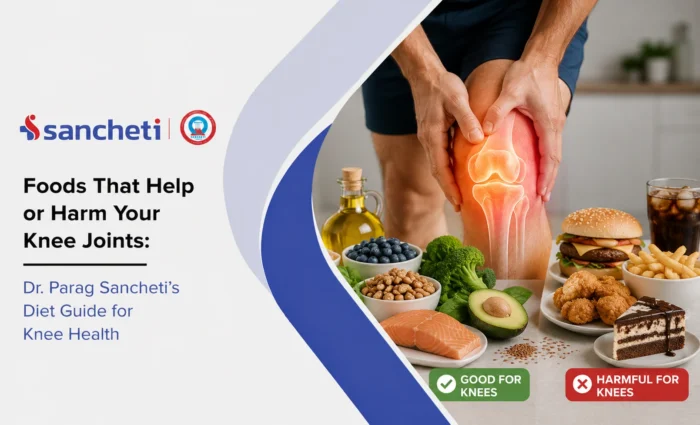

Foods That Help or Harm Your Knee Joints: Dr. Parag Sancheti’s Diet Guide for Knee Health
What you eat affects your knee joints more directly than most patients expect. A diet for knee pain is not about miracle foods or strict elimination plans. It is about reducing the chronic low-grade inflammation that drives cartilage damage and pain, and maintaining the body weight that determines how much force crosses the knee joint with every step.
Dr. Parag Sancheti, Chairman and Managing Director of Sancheti Hospital, Pune with over 34 years of knee surgery experience, addresses diet as part of every knee pain management conversation. This guide explains why.
How Diet Affects Knee Joint Health
The connection between diet and joint health operates through two distinct pathways. The first is inflammation. Chronic low-grade systemic inflammation drives both cartilage degradation in osteoarthritis and flare severity in inflammatory arthritis. What you eat either feeds that inflammation or moderates it. Certain foods consistently raise pro-inflammatory markers in the body; others suppress them. The second pathway is weight. Every kilogram of body mass adds about three to five kilograms of compressive force on the knee joint with every step. Diet’s most powerful influence on knee health is therefore not through specific nutrients but through its effect on body weight.
As the World Health Organisation has recognised, dietary interventions have real potential as an adjunct to conventional arthritis management (PMC). This is not alternative medicine. It is a recognised, evidence-informed component of a complete joint health strategy.
Weight: The Most Powerful Dietary Factor for Your Knees
Before discussing specific foods, the most important dietary message for knee health needs to be stated plainly. Body weight is the single most modifiable dietary influence on knee pain. Visceral fat, the fat carried around the abdomen, does not just add mechanical load to the joint. It is metabolically active tissue that produces pro-inflammatory cytokines, creating a systemic inflammatory environment that accelerates cartilage loss independently of the mechanical stress.
For overweight patients with knee osteoarthritis, even a 5% reduction in body weight produces measurable improvement in pain scores and walking capacity. A 10% reduction can significantly delay progression and, in some patients, substantially postpone the need for surgical intervention. This is why the dietary conversation in knee health must begin with weight, not with individual ingredients.
Sustained weight management for patients with knee arthritis is best supported by structured guidance from a physiotherapist in Pune and, where needed, a dietitian, alongside exercise that protects the joint while burning calories.
Foods That Support Knee Joint Health
The foods below have the strongest evidence or clinical rationale for reducing joint inflammation and supporting cartilage health.
| Food Group | Active Components | How It Helps Knee Joints |
|---|---|---|
| Fatty fish (salmon, sardines, mackerel, surmai) | EPA and DHA (omega-3 fatty acids) | Directly suppresses pro-inflammatory cytokines; 2-3 servings weekly is a practical target |
| Turmeric with black pepper and fat | Curcumin + piperine | Blocks COX-2 inflammatory enzymes; clinical trials confirm pain and CRP reduction in knee OA |
| Extra virgin olive oil | Oleocanthal, oleic acid | Anti-inflammatory effect comparable to low-dose ibuprofen; replaces pro-inflammatory refined oils |
| Dark leafy greens (spinach, kale, methi) | Vitamins C and K, sulforaphane | Reduces oxidative stress in joint tissue; supports collagen synthesis |
| Coloured fruits and berries | Anthocyanins, vitamin C | Antioxidant protection of cartilage; promotes collagen formation |
| Nuts and seeds (walnuts, flaxseeds, chia) | Plant omega-3s, vitamin E | Reduces systemic inflammatory load; antioxidant protection of joint tissue |
Foods That Worsen Knee Pain
Several dietary patterns consistently increase the body’s inflammatory burden and accelerate joint damage over time. These are not occasional indulgences to feel guilty about; they are sustained patterns that cumulatively shift the inflammatory balance in the wrong direction.
- Refined sugar and sugary beverages: trigger the release of pro-inflammatory cytokines and contribute significantly to weight gain; daily sweetened chai and packaged juice represent a substantial and easily reducible inflammatory load in many Indian diets
- Ultra-processed and packaged snacks: high in trans fats, refined carbohydrates, and sodium; regularly consumed foods fried in reused cooking oil compound the problem with oxidised fat products
- Omega-6-heavy refined cooking oils (corn, sunflower): promote inflammatory prostaglandin production; contrasts with the anti-inflammatory effect of olive oil and mustard oil
- Excess red and processed meat: contains arachidonic acid, which drives inflammatory pathways; patients who reduce red meat intake consistently report less joint swelling over time
- Excess salt: promotes water retention and worsens the swelling already present in inflamed joints; processed and pickled foods are the dominant source in most Indian diets
Turmeric: The Evidence Behind the Kitchen Staple
Turmeric deserves its own mention because it is already in most Indian kitchens, and its active compound, curcumin, has one of the strongest evidence bases of any dietary intervention for knee pain. Across multiple trials in knee osteoarthritis patients, curcumin significantly reduced CRP and TNF-alpha, two key markers of joint inflammation, compared with placebo. Some studies have compared its pain-relieving effect to low-dose ibuprofen.
The clinical challenge with turmeric is absorption. Curcumin is poorly absorbed when consumed on its own. Two factors significantly improve bioavailability: piperine, the active compound in black pepper, and dietary fat. Cooking turmeric in a dish with oil and a pinch of black pepper, which is precisely how most Indian sabzis and dals are prepared, is actually the optimal delivery method. A pinch of turmeric in warm water without fat or pepper delivers a fraction of the benefit. The Indian culinary tradition has inadvertently solved the bioavailability problem that Western supplement manufacturers are still trying to engineer around.
Indian Diet: Best Foods for Knee Arthritis and Common Pitfalls
The traditional Indian diet has meaningful advantages for joint health that are often underestimated. Turmeric, ginger, and fenugreek are used daily in cooking and are among the most evidence-supported anti-inflammatory spices available. Lentils and dal provide plant protein and fibre without the arachidonic acid load of red meat. Mustard oil, widely used in home cooking across Maharashtra and India, has a favourable omega-3-to-omega-6 ratio. These are genuine dietary assets.
The pitfalls are equally real. Refined flour (maida) has replaced whole grains in a significant proportion of daily food for urban populations. Packaged snacks and sweet beverages have become daily habits. Repeated frying in degraded oil is common. Sugar in chai, sweets at celebrations, and high-salt preserved foods create a chronic low-grade inflammatory background that the beneficial spices cannot fully counteract. The Indian diet for knee health is not about adopting a Western eating pattern; it is about restoring the balance within the traditional diet that modernisation has disrupted.
Supplements: What Evidence Actually Shows
Dietary supplements are widely used for joint pain, often with more confidence in their effectiveness than the evidence warrants. A realistic plan helps patients allocate money and expectations appropriately.
- Vitamin D: vitamin D deficiency is extremely common in India; deficiency worsens OA outcomes and bone health; check levels and supplement to optimal range.
- Omega-3 fish oil: a substitute for regular fatty fish consumption; evidence for reducing joint inflammation is solid; quality matters, so choose a supplement that specifies EPA and DHA content.
- Glucosamine and chondroitin: mixed evidence overall; some trials show benefit for moderate knee OA; safe to trial for 3 months and assess response; unlikely to help if OA is severe.
- Curcumin supplements: effective when formulated with piperine or a bioavailability enhancer; a useful option for patients who prefer consistent dosing over dietary sources.
Key Takeaways
- Diet for knee pain works through two pathways: reducing systemic inflammation and managing body weight. Of the two, body weight has the larger and more direct mechanical impact on the knee joint.
- The most impactful dietary change for most patients with knee OA is reducing overall calorie intake to support weight loss. Even a 5% reduction in body weight produces measurable pain reduction and functional improvement.
- Fatty fish, turmeric cooked with black pepper and fat, extra virgin olive oil, dark leafy greens, and coloured fruits have the best evidence for reducing joint inflammation. These are not supplements; they are everyday foods.
- Turmeric cooked in oil with black pepper, as in standard Indian cooking, delivers curcumin more bioavailably than most commercial supplements. The traditional Indian kitchen already contains some of the most clinically effective anti-inflammatory ingredients available.
- Refined sugar, ultra-processed snacks, omega-6-heavy cooking oils, and excess red meat sustain a chronic inflammatory environment that accelerates cartilage damage. Reducing these is as important as adding anti-inflammatory foods.
- For a complete assessment of knee pain and a management plan that integrates diet, exercise, and clinical treatment, book a consultation at Sancheti Hospital, Pune.
Frequently Asked Questions (FAQs)
Q1. Can changing my diet cure knee arthritis?
No, and this needs to be stated clearly to avoid setting patients up for disappointment. Diet cannot reverse cartilage that has already been lost, and it cannot cure osteoarthritis. What it can do is reduce the inflammatory environment that accelerates cartilage damage, lower mechanical stress on the joint through weight management, and reduce pain enough that patients can exercise more effectively, which in turn further supports joint health. These are meaningful benefits, but they are adjunctive to, not a replacement for, clinical management. Patients who adopt a strongly anti-inflammatory diet, lose 5-10% of body weight, and combine this with structured physiotherapy consistently achieve better pain control and slower disease progression than those who address only the medical or only the dietary side. Diet is one component of a complete plan, not the complete plan.
Q2. How much turmeric should I use, and is a supplement better than cooking with it?
For dietary purposes, a consistent daily intake through cooking is preferable to sporadic supplementation. One teaspoon of turmeric in a cooked dish prepared with oil and a pinch of black pepper delivers curcumin in its most bioavailable food-based form. Most Indian households already do this, often without realising the clinical relevance. If you prefer a supplement for consistency, choose one that specifies bioavailable curcumin, typically formulated with piperine or phospholipid complexes, rather than plain turmeric powder in a capsule. High-dose curcumin supplements should be discussed with a doctor before use if you are taking blood thinners, as curcumin has mild anticoagulant properties. As a dietary intake through cooking, there is no meaningful safety concern at normal culinary amounts.
Q3. Is a vegetarian diet good or bad for knee joint health?
A well-planned vegetarian diet is excellent for knee joint health and, in several respects, better than a diet heavy in red meat. Eliminating red and processed meat removes a significant source of arachidonic acid, the fatty acid that drives inflammatory prostaglandin production. Plant-based protein from lentils, legumes, and dairy provides anti-inflammatory nutrients without this pro-inflammatory load. The gap in a vegetarian diet for joint health is typically omega-3 fatty acids, since the plant sources of omega-3 (flaxseeds, walnuts, chia seeds) provide ALA rather than the EPA and DHA found in fatty fish, and the conversion of ALA to EPA and DHA in the body is limited. Vegetarians with knee arthritis should either eat fatty fish if lacto-vegetarian practices allow, or consider an algae-based omega-3 supplement, which provides EPA and DHA directly from the original marine source.
Q4. I have heard that milk and dairy worsen joint pain. Should I avoid them?
This is a widespread belief in India that is not well-supported by clinical evidence for most people with osteoarthritis. Dairy products, including milk, curd, and paneer, are not classified as pro-inflammatory foods in the current evidence base for joint health. Full-fat dairy contains saturated fat, which should be moderate rather than excessive in an overall healthy diet. Still, it does not specifically drive joint inflammation in the way that refined sugar, trans fats, or arachidonic acid from processed meat does. Dairy is also a relevant source of calcium and protein, both of which support bone and muscle health around the joint. Unnecessarily avoiding dairy removes useful nutrients without improving joint outcomes. If you have a genuine lactose intolerance or a specific allergy, avoiding dairy is appropriate for those reasons, but not because of joint pain in the absence of a documented sensitivity.
Q5. How quickly will dietary changes make a difference to my knee pain?
The timeline varies by the change being made. Reducing acutely inflammatory foods and increasing anti-inflammatory ones can modestly reduce joint swelling and pain within two to four weeks in some patients, particularly those with active inflammation. The effect is not as dramatic or as rapid as a corticosteroid injection. Weight loss, the most significant dietary change for knee pain, produces measurable improvement once you achieve a 5% reduction in body weight; depending on starting weight and approach, this may take six to twelve weeks of consistent effort. Supplementing with vitamin D if deficient can take several months to reach optimal levels. Dietary changes should be viewed as a medium- to long-term investment in joint health, not a short-term pain relief strategy. The earlier they are adopted relative to disease progression, the more protective and meaningful their effect.