Home
Home PG College
 Patient Login
 Sancheti Clinic
 Contact Us
 Download Reports
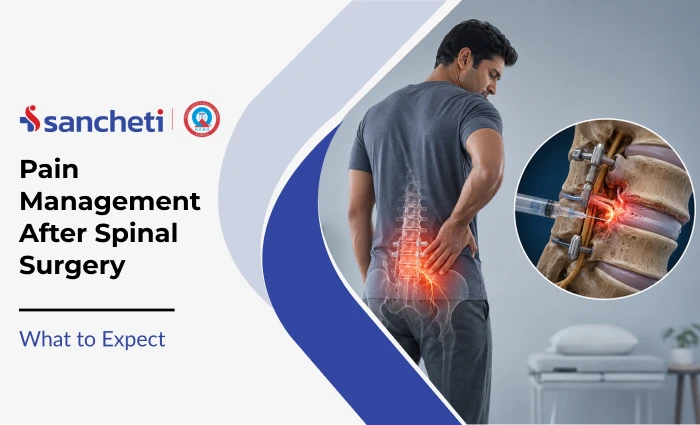

Pain Management After Spinal Surgery: What to Expect
Post-surgery pain management for spinal surgery is a structured, multimodal process, not a single prescription handed over at discharge. Pain during spinal surgery recovery is expected and normal, but it follows a predictable pattern and responds to a deliberate combination of medication, regional anaesthesia, and physical strategies.
At Sancheti Hospital, Pune, our Spine Department uses a multimodal, opioid-sparing approach to pain relief after surgery, built around enhanced recovery principles. This article walks through exactly what pain to expect after spinal surgery, how it is managed at every stage, and which warning signs mean you should contact your care team rather than wait it out.
What Is Post-Surgical Pain After Spine Surgery?
Post-surgical pain is the body’s expected physiological response to surgical incision, tissue handling, and the healing process that follows. Surgery activates and sensitises pain-detecting nerve endings (nociceptors) at the incision site and along the spinal cord itself, which is why pain in the first days after surgery is typically more intense than the original back or leg pain that led to surgery, even though the underlying spinal problem has been addressed.
This is a critical distinction for patients to understand: early post-surgical pain reflects the healing of the surgical wound, not a sign that the operation has failed or that something is wrong. It is genuinely a different kind of pain from the pre-operative condition, and it is expected to follow a course of steady improvement over days to weeks, distinct from any nerve-related pain that may take longer to resolve.
Poorly controlled pain in the early post-operative period is not simply uncomfortable; it carries real clinical consequences, including delayed mobilisation, prolonged hospital stay, and an increased risk of pain becoming chronic. This is why postoperative pain management is considered a structured part of surgical care within the Enhanced Recovery After Surgery (ERAS) protocol, rather than an afterthought managed reactively.
What Influences Your Pain Experience
Not every patient experiences the same intensity or duration of pain after a similar procedure. Several factors, some related to the surgery itself and others related to the individual patient, meaningfully shape the pain trajectory.
- Surgical invasiveness: a single-level discectomy typically produces less pain than a multilevel fusion; more levels fused and more extensive tissue exposure are directly associated with higher in-hospital pain and opioid requirements
- Pre-operative opioid use: patients using opioids before surgery consistently require more pain medication after surgery and have a substantially higher risk of continued opioid use long-term
- Pre-existing anxiety or depression: psychological factors are independently associated with higher reported pain levels and a greater likelihood of pain persisting after surgery
- Smoking: tobacco use is an established, modifiable risk factor for both higher in-hospital opioid consumption and impaired wound healing
- Age: younger age has been associated with higher postoperative opioid consumption in several large cohort studies, while older patients often require closer monitoring for medication side effects
- Pre-operative chronic pain duration: longer-standing pain before surgery is associated with a more prolonged post-surgical pain course and higher likelihood of persistent symptoms
Several of these factors are modifiable before surgery through pre-operative counselling; gradual opioid tapering where appropriate, smoking cessation, and psychological preparation are not optional extras; they meaningfully change how much pain a patient experiences and how quickly they recover.
Types of Pain After Spinal Surgery
Pain after spine surgery is not a single sensation. Recognising which type of pain you are experiencing helps you and your care team match the right treatment to the right source.
| Pain Type | Description | Typical Course |
|---|---|---|
| Incisional (wound) pain | Sharp or tender pain directly at and around the surgical incision, worse with movement or pressure on the area | Peaks in the first 48-72 hours; steadily improves over 1-2 weeks as the wound heals |
| Deep muscular pain | Aching, stiff sensation in the back muscles from tissue retraction and handling during surgery, often worse with certain positions | Improves over 2-6 weeks; responds well to gentle movement and positioning |
| Neuropathic (nerve-related) pain | Burning, tingling, or electric-shock sensations, often in a leg, reflecting nerve irritation or ongoing nerve recovery | Can take weeks to months to resolve; nerves heal more slowly than other tissue and recovery is non-linear |
| Referred or compensatory pain | Pain in areas adjacent to the surgical site (hip, opposite side of the back) from altered posture or movement patterns during recovery | Typically resolves as normal movement patterns and posture are restored through rehabilitation |
Normal Pain vs Warning Signs
Distinguishing expected post-surgical discomfort from a sign of a genuine complication is one of the most important things to understand before you leave the hospital. The general pattern to watch for is direction: normal pain steadily improves; concerning pain suddenly worsens, changes character, or is accompanied by specific additional symptoms.
| Normal (Expected) | Warning Sign (Contact Your Care Team) |
|---|---|
| Pain gradually decreasing day over day | Pain suddenly increasing rather than decreasing, especially after day 3-4 |
| Soreness and stiffness with movement | New or worsening weakness, numbness, or difficulty walking |
| Mild swelling and bruising around the incision | Increasing redness, warmth, swelling, or drainage from the incision |
| Manageable discomfort with prescribed medication | Fever, chills, or feeling generally unwell alongside back pain |
| Occasional tingling as nerves recover | New bladder or bowel difficulty, including retention or incontinence |
| Fatigue and need for rest in early recovery | Severe, unrelenting pain not responding to prescribed medication at all |
How Your Care Team Monitors and Assesses Pain
Pain assessment after spine surgery is structured and ongoing, not a single conversation at discharge. Your care team uses standardised tools to track your pain and recovery trajectory and to catch deviations from the expected pattern early.
Pain Scoring
Numeric pain scales (0-10) or visual analogue scales are used at regular intervals, particularly in the first 48-72 hours, to track whether pain is trending in the expected direction and whether current pain management is adequate. A pain score is considered alongside your ability to move, breathe deeply, and participate in early mobilisation.
Neurological Checks
Regular checks of leg strength, sensation, and reflexes are performed in the immediate post-operative period to detect early signs of nerve compression or epidural hematoma, as these can present primarily as neurological changes rather than pain alone.
When Imaging Is Used
Imaging (CT or MRI) after spine surgery is not routine; it is specifically triggered by a new or worsening neurological deficit, suspected infection, or pain that is markedly out of proportion to the expected post-surgical course. This mirrors the broader principle in spine care that imaging should answer a specific clinical question, not be used reflexively in response to any reported pain.
Treatment: How Pain Relief After Surgery Actually Works
Modern post-surgical pain management for spine surgery is built on multimodal analgesia: combining several treatments that act on different points in the pain pathway, rather than relying on a single, usually opioid-based, medication.
In the Operating Room and Immediately After
Regional anaesthesia techniques, including erector spinae plane blocks and local anaesthetic infiltration such as liposomal bupivacaine, are increasingly used to numb the surgical area directly, reducing the amount of systemic pain medication needed in the first critical hours.
Scheduled, Non-Opioid Medications (First Line)
- NSAIDs: reduce inflammation and pain at the surgical site; used on a scheduled basis rather than only when pain becomes severe
- Acetaminophen (paracetamol): scheduled dosing provides a meaningful baseline of pain control with a favourable safety profile
- Gabapentinoids (gabapentin, pregabalin): particularly useful when nerve-related (neuropathic) pain is a significant component of the post-surgical picture
- Muscle relaxants: used for short periods when muscle spasm is a prominent contributor to discomfort
Opioids: A Deliberately Limited Role
Opioids remain available for breakthrough pain not controlled by the above measures, but contemporary practice uses them as a targeted addition rather than the foundation of pain control. Minimising in-hospital opioid exposure is directly connected to reducing long-term dependence risk, not simply a short-term comfort consideration.
Non-Pharmacological Strategies
- Early mobilisation: getting up and moving within the first day after surgery, where appropriate, is consistently associated with better pain outcomes and shorter hospital stays
- Positioning and ice: correct positioning and localised ice application in the early days reduce swelling and discomfort at the incision site
- A physiotherapist-led graded movement programme, introduced as soon as it is surgically appropriate, supports both pain reduction and functional recovery
- Psychological strategies: cognitive behavioural techniques and mindfulness-based approaches are increasingly incorporated, particularly for patients with pre-existing conditions
Hospitals using a complete Enhanced Recovery After Surgery (ERAS) protocol for spine surgery have demonstrated a significant reduction in length of hospital stay and sustained reductions in opioid use up to six months after surgery. This is the model followed at Sancheti Hospital, Pune’s Spine Department for surgical pain management.
Recovery: The Pain Trajectory After Surgery
Pain after spine surgery follows a broadly predictable trajectory, though the exact pace varies by procedure and individual factors discussed earlier. Knowing the expected pattern helps you judge whether your own recovery is on track.
| Timeframe | What to Expect |
|---|---|
| Days 1-3 | Pain typically at its highest; multimodal medication and regional blocks provide the bulk of relief; early mobilisation begins as tolerated |
| Days 4-7 | Incisional pain steadily decreasing; opioid use, if started, should be tapering; discharge planning for most procedures |
| Weeks 2-4 | Deep muscular soreness continues improving; gradual increase in daily activity; physiotherapy typically begins or intensifies |
| Weeks 4-8 | Most patients see substantial functional improvement; nerve-related symptoms, if present, continue gradually resolving |
| Months 3-6 | Further improvement in any residual nerve-related pain; most patients return to the majority of normal activities |
| Months 6-12+ | A minority of patients experience persistent pain requiring ongoing, structured management rather than further surgery |
If pain persists beyond the expected window, then it is not something to endure. It warrants a structured reassessment, ideally through a multidisciplinary pain management approach, rather than either ignoring it or jumping to another surgical procedure without a clear, re-established diagnosis.
Prevention: Reducing the Risk of Poorly Controlled or Persistent Pain
While not all post-surgical pain outcomes can be controlled, several evidence-based steps meaningfully reduce both the intensity of early pain and the risk of pain becoming a long-term problem.
- Pre-operative opioid optimisation: where clinically appropriate, working with your care team to reduce opioid use before surgery lowers both in-hospital opioid requirements and the risk of long-term dependence
- Stop smoking before surgery: smoking cessation improves wound healing and is an established modifiable risk factor for higher post-surgical opioid consumption
- Address anxiety and depression proactively: pre-operative psychological support for patients with significant anxiety or depression is associated with better post-surgical outcomes
- Ask about your hospital’s protocol: hospitals using structured enhanced recovery pathways consistently show shorter hospital stays and reduced long-term opioid use
- Commit to early mobilisation: getting up and moving as soon as your surgical team advises is one of the most consistently effective, low-cost measures for reducing complications
- Set realistic expectations beforehand: understanding that early post-surgical pain is expected, and that nerve-related symptoms may take weeks to months to resolve fully
Key Takeaways
- Post-surgery pain management after spinal surgery uses a multimodal approach combining regional anaesthesia, scheduled non-opioid medication, and early mobilisation, rather than relying primarily on opioids.
- Early post-surgical pain reflects the surgical wound and tissue healing, not a sign that the operation has failed; it is expected to improve steadily over days to weeks.
- Pain after spine surgery has four distinct sources: incisional, deep muscular, neuropathic, and referred, each with a different expected timeline for resolution.
- Pain should steadily decrease day over day. Sudden worsening, new weakness or numbness, new bladder or bowel symptoms, or fever and wound changes are warning signs requiring prompt medical attention, not a wait-and-see approach.
- Modifiable risk factors for a harder pain recovery include pre-operative opioid use, smoking, and untreated anxiety or depression; addressing these before surgery measurably improves outcomes.
- At Sancheti Hospital, Pune, our Spine Department applies a structured, multimodal, enhanced-recovery approach to post-surgical pain management, paired with close monitoring for any deviation from the expected recovery pattern.
Frequently Asked Questions (FAQs)
Q1. How much pain is “normal” during spinal surgery recovery, and how long should it last?
Pain in the first 48-72 hours is typically the most intense part of the entire recovery, even though this is the period with the most active pain management. The expected pattern is steady, day-over-day improvement from that peak: incisional pain meaningfully eases over 1-2 weeks, deeper muscular soreness over 2-6 weeks, and any nerve-related symptoms (numbness, tingling, burning) can take weeks to several months, since nerves recover more slowly than other tissue and the process is rarely a straight line. What should not happen is sudden pain increase after day 3 or 4, or pain that plateaus at a high level without improvement over 2-3 weeks.
Q2. Will I become addicted to the opioids prescribed after my spine surgery?
Short-term opioid use for acute post-surgical pain, properly tapered as your pain improves, carries a meaningfully lower risk than ongoing daily use. That said, this is a legitimate concern grounded in real evidence: patients who used opioids before surgery are significantly more likely to remain on them long-term, and even opioid-naive patients who receive higher cumulative doses in hospital have a higher chance of continued use at six months. The most effective protection is the multimodal approach itself, using regional anaesthesia, scheduled non-opioid medications, and early mobilisation to minimise how much opioid you actually need in the first place, and a clear tapering plan as you recover.
Q3. I had leg pain or numbness before surgery for nerve compression, why do I still feel it afterwards?
This is one of the most common sources of post-surgical worry, and it is usually not a sign that the surgery failed. A nerve that has been compressed for weeks or months has been irritated for a sustained period, and relieving the compression does not instantly reverse that irritation; the nerve needs time to recover, and in the interim, the same numbness, tingling, or even a temporary worsening of these sensations can persist or briefly intensify as the nerve “wakes up.” This typically continues to improve gradually over weeks to months.
Q4. What can I do myself, beyond medication, to manage pain after spine surgery?
Quite a lot, and these measures are not minor add-ons; they are core components of evidence-based recovery. Getting up and moving as early as your surgical team advises, rather than staying still out of fear of pain, is consistently associated with better pain outcomes and shorter recovery. Using ice on the incision area in the early days, maintaining good positioning when lying down or sitting, following your physiotherapist’s graded movement programme exactly as prescribed (not more, not less), and addressing anxiety about the pain itself through relaxation techniques or psychological support if needed, all measurably contribute to a smoother recovery.
Q5. My pain isn’t improving the way I expected, does that mean my surgery failed?
Not necessarily, though it is a reasonable concern that deserves a proper answer rather than dismissal. Persistent pain after spine surgery is a recognised, well-studied phenomenon affecting a meaningful minority of patients. This is now referred to clinically as chronic pain during spinal surgery recovery, replacing the older and somewhat misleading term “failed back surgery syndrome,” precisely because it usually does not mean the operation itself was done incorrectly. Common contributing factors include scar tissue formation, changes at the spinal level next to the surgery, or other pain sources that were present alongside, but not fully addressed by, the original procedure. If your pain has plateaued well beyond the expected recovery window, the right next step is a structured reassessment by your spine team or a multidisciplinary pain service, not assuming nothing more can be done.