Home
Home PG College
 Patient Login
 International patients
 Contact Us
 Emergency
 Download Reports

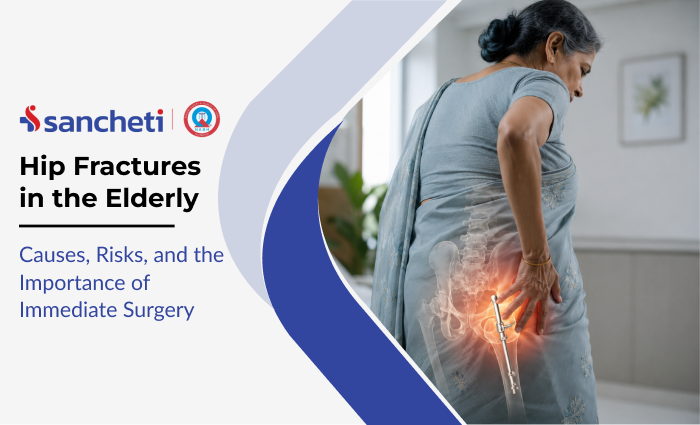

Hip Fractures in the Elderly: Causes, Risks, and the Importance of Immediate Surgery
At Sancheti Hospital, Pune, we see firsthand how a hip fracture in elderly patients can be a life-altering event — and how quickly things can deteriorate without prompt medical attention. A hip fracture is a break near the top of the thigh bone (femur), most commonly caused by a fall or minor trauma in older adults with weakened bones.
This blog covers why hip fractures in the elderly happen, what makes them so dangerous, and why immediate surgery for hip fracture is often the safest path to recovery.
What Is a Hip Fracture?
The hip joint connects the thigh bone to the pelvis. A fracture in this region — especially in people over 65 — is a serious medical emergency. Unlike fractures in younger people, hip fractures in older adults rarely heal well with rest alone. The anatomy, the bone quality, and the physical demands of daily living all make surgical intervention the standard of care.
There are two main types:
- Femoral neck fractures — occur just below the ball of the hip joint
- Intertrochanteric fractures — occur slightly lower, between the two bony prominences of the femur
Both types almost always require surgery.
Common Causes of Hip Fractures in Elderly Patients
1. Falls at Home
The majority of hip fractures from falls happen at home — in bathrooms, near beds, or on uneven flooring. Even a low-impact fall can break a brittle bone.
2. Osteoporosis
Osteoporosis and hip fracture share a deeply connected relationship. Osteoporosis causes bones to become porous and fragile over time. Many elderly patients don’t even know they have it until a fracture occurs. Women are particularly vulnerable after menopause due to a drop in estrogen, which plays a key role in maintaining bone density.
3. Muscle Weakness and Balance Issues
As people age, muscle mass declines — a condition called sarcopenia. This weakens stability and reflexes, making falls more likely. Conditions like Parkinson’s disease, stroke, or inner ear problems can further impair balance.
4. Medications
Certain medications — sedatives, blood pressure drugs, or diuretics — can cause dizziness or low blood pressure upon standing, increasing fall risk in elderly patients significantly.
5. Poor Vision and Cognitive Decline
Elderly individuals with vision problems or dementia may misjudge distances, trip over obstacles, or fail to respond quickly enough to prevent a fall.
Why Are Hip Fractures So Dangerous for Older Adults?
This is one of the most important questions we address at Sancheti Hospital. A hip fracture is not just a bone problem — it’s a systemic health crisis.
Here’s why hip fractures are dangerous in older adults:
- Immobility complications: Bed rest following a fracture can lead to deep vein thrombosis (DVT), pulmonary embolism, pressure sores, and pneumonia.
- Muscle atrophy: Even a few days of immobility can cause significant muscle loss in elderly patients, making recovery harder.
- Mental health impact: Sudden loss of independence often leads to depression and anxiety.
- Mortality risk: Studies consistently show that hip fracture mortality in elderly patients is alarmingly high — up to 20–30% within the first year after a fracture, particularly in those with pre-existing conditions.
The longer a patient remains immobile after a fracture, the higher the risk of these complications. This is precisely why early surgery is not just recommended — it is critical.
Importance of Immediate Surgery for Hip Fracture
Why “Wait and Watch” Can Be Dangerous
A common misconception among families is that surgery can be delayed until the patient is “stronger.” In most cases, the opposite is true. Delaying hip fracture surgery beyond 24–48 hours is associated with significantly higher rates of complications and death.
At Sancheti Hospital, our orthopedic team follows evidence-based protocols that prioritize early hip fracture surgery — ideally within 24 hours of admission — unless there is a specific medical contraindication.
What Surgery Options Are Available?
Hip fracture surgery in elderly patients generally falls into two categories:
- Internal Fixation Metal screws, plates, or nails are used to hold the broken bone in place. This approach is typically used for fractures where the blood supply to the femoral head is preserved.
- Hip Replacement (Hemiarthroplasty or Total Hip Replacement) If the fracture has disrupted blood flow to the femoral head — risking bone death (avascular necrosis) — replacing the joint is a more reliable long-term solution. Hip replacement for elderly fracture patients allows earlier mobilization and better functional outcomes.
The choice between these options depends on the fracture type, location, bone quality, and the patient’s overall health and activity level.
Benefits of Early Surgery
- Faster return to mobility and independence
- Reduced risk of blood clots and infections
- Shorter hospital stay
- Better long-term functional recovery
- Lower overall hip fracture complications and mortality risk
Post-Surgery: What Does Recovery Look Like?
Surgery is only the beginning. Hip fracture recovery in elderly patients requires a coordinated, multidisciplinary approach.
At Sancheti Hospital, our rehabilitation team begins physiotherapy within 24 hours of surgery in most cases. Early mobilization — getting the patient to stand and walk with support — is key to recovery.
Recovery typically involves:
- Physiotherapy: Strengthening muscles, improving balance, and restoring gait
- Occupational therapy: Helping patients safely return to daily activities
- Nutritional support: Adequate protein and calcium intake to support bone healing
- Osteoporosis management: Treating the underlying bone disease to prevent recurrent hip fractures
- Fall prevention counseling: Modifying the home environment and addressing risk factors
Most patients who were independently mobile before surgery can return to a similar level of function with appropriate rehabilitation and family support.
How to Prevent Hip Fractures in Older Adults
Prevention is always better than treatment. Here are practical steps families and caregivers can take:
Bone Health
- Ensure adequate calcium (1000–1200 mg/day) and Vitamin D intake
- Get a bone density test (DEXA scan) if over 65, especially women
- Discuss osteoporosis medications with your doctor if needed
Fall Prevention
- Install grab bars in bathrooms and stairways
- Use non-slip mats and remove loose rugs
- Ensure adequate lighting throughout the home
- Encourage regular weight-bearing exercise
- Review medications with a doctor for fall-risk side effects
Regular Health Checks
- Get vision and hearing checked annually
- Monitor blood pressure, especially when changing positions
- Consult a physiotherapist for balance training if needed
Key Takeaways
- Hip fractures in the elderly are medical emergencies, most commonly caused by falls combined with underlying osteoporosis
- They carry serious risks including blood clots, pneumonia, and high mortality if not treated promptly
- Immediate surgery — ideally within 24 hours — significantly improves outcomes and reduces complications
- Recovery requires a multidisciplinary approach including physiotherapy, nutrition, and osteoporosis treatment
- Prevention through fall risk reduction and bone health management is the most effective long-term strategy
- At Sancheti Hospital, Pune, our experienced orthopedic team provides comprehensive hip fracture care from emergency surgery to full rehabilitation
Frequently Asked Questions (FAQs)
Q1. Can a hip fracture heal without surgery in elderly patients?
In very rare cases where surgery poses an extreme risk, non-surgical management may be considered. However, this is the exception, not the rule. Without surgery, most elderly patients cannot bear weight, leading to prolonged immobility and life-threatening complications. Our orthopedic specialists at Sancheti Hospital evaluate each case individually to determine the safest approach.
Q2. How long does it take for an elderly person to recover from hip fracture surgery?
Recovery timelines vary depending on the patient’s age, overall health, and type of surgery. Most patients begin walking with support within a day or two after surgery. A return to independent mobility can take anywhere from 3 to 6 months, and some patients may need long-term physiotherapy. Early surgery and consistent rehabilitation significantly improve the chances of full recovery.
Q3. What are the signs that an elderly person may have fractured their hip after a fall?
Common signs include sudden, severe pain in the hip or groin area, inability to bear weight or stand, visible deformity or rotation of the leg, swelling or bruising around the hip, and a noticeably shortened leg on the affected side. If any of these signs are present after a fall, seek emergency medical care immediately.
Q4. Will my elderly parent ever walk normally again after a hip fracture?
Many elderly patients do regain the ability to walk, especially with early surgical intervention and dedicated rehabilitation. Outcomes are better for patients who were mobile and independent before the fracture, and for those without significant pre-existing health conditions. With the right care and family support, a meaningful return to daily function is achievable for many patients.
Q5. Does osteoporosis treatment need to continue after hip fracture surgery?
Absolutely. Treating osteoporosis after a hip fracture is essential to reduce the risk of future fractures. This typically includes medications such as bisphosphonates, calcium and Vitamin D supplementation, dietary changes, and regular bone density monitoring. Our team at Sancheti Hospital ensures that bone health management is an integral part of every patient’s post-fracture care plan.