
Clubfoot in Babies: Causes, Ponseti Treatment and Recovery
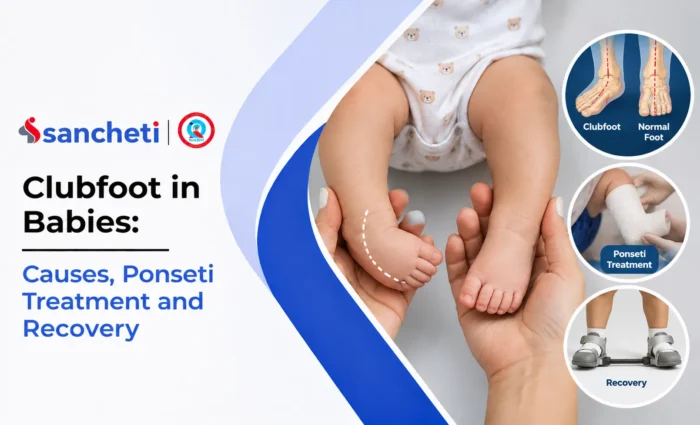
Clubfoot (congenital talipes equinovarus, or CTEV) is a condition present at birth in which one or both of a baby’s feet turn inward and downward. It is not painful for the baby and, in most cases, its cause is unknown. Clubfoot does not correct itself, but the Ponseti method — weekly casts, a small heel-cord procedure and years of night-time bracing — corrects it in the vast majority of babies without major surgery. Treatment works best when started in the first few weeks of life.
What is clubfoot?
In clubfoot, the tendons on the inside and back of the foot and leg are too short and tight, pulling the foot into a twisted position. According to the NHS, an affected foot may:
- Be bent and curved
- Point inward, up or down
- Feel stiff and tight when gently moved
Clubfoot affects about 1–2 in every 1,000 newborns, as noted in a UK clinical study. Boys are affected about twice as often as girls, and around half of babies have both feet involved, according to StatPearls. In India, more than 50,000 children are estimated to be born with clubfoot each year, a figure cited by the President of India at the first Global Clubfoot Conference.
Untreated clubfoot can make walking painful and difficult, because a child ends up walking on the side or top of the foot. With timely treatment, most children grow up to walk, run and play normally.
Clubfoot vs positional talipes
Some babies are born with feet that turn in simply because of how they lay in the womb. This is called positional talipes. The foot is flexible and can be moved into a normal position, and it usually corrects on its own or with gentle stretching, as the NHS explains. True clubfoot is stiffer and needs treatment. A paediatric orthopaedic specialist can tell the difference.
What causes clubfoot?
In most babies, the cause is not known — this is called idiopathic clubfoot. It is not caused by anything parents did during pregnancy, and it is not caused by how the baby was held or delivered.
Known risk factors, summarised by StatPearls, include:
- Family history: about a quarter of cases have a relative with clubfoot
- Sex: boys are affected about twice as often
- Smoking during pregnancy and maternal diabetes, which have been linked to a higher risk
In around 1 in 5 cases, clubfoot occurs alongside another condition, such as spina bifida, arthrogryposis or a chromosomal condition such as Edwards’ syndrome. These non-idiopathic clubfeet are often stiffer and may need a modified approach, so your baby will be examined from head to toe at the first visit.
How clubfoot is diagnosed
During pregnancy: clubfoot is often seen on the routine anomaly scan around 20 weeks. A scan cannot show how stiff the foot is, so the final assessment is made after birth. Many families find it helpful to meet a paediatric orthopaedic team before delivery to understand the plan.
After birth: diagnosis is made by examining the baby’s feet. The specialist will also check the hips, legs and spine, and ask about family history. X-rays are usually not needed for the foot itself. Doctors often score the severity using a system such as the Pirani score, which also helps track progress during treatment.
The NHS advises that babies with clubfoot should be seen by a specialist within a few weeks of birth.
Ponseti method, step by step
The Ponseti method, developed by Dr Ignacio Ponseti, is the standard treatment for clubfoot worldwide. It uses the natural flexibility of a newborn’s tissues to gradually move the foot into the right position. There are three stages.
Stage 1: Gentle stretching and weekly casts
- The specialist gently stretches the foot towards the correct position for a minute or two.
- A plaster cast is applied from the toes to the upper thigh to hold the new position.
- Every 5–7 days the cast is removed, the foot is stretched a little further, and a new cast is applied, as described in this review of the Ponseti method.
Most babies need about five to seven casts. In a long-term study from Iowa, 90% of babies needed five casts or fewer. The process is not painful, though babies may fuss during cast changes; feeding during the change often helps.
Stage 2: The tenotomy
Most babies still have a tight Achilles (heel) tendon after casting. A tenotomy is a quick procedure in which the tendon is released through a tiny cut, usually under local anaesthetic. The tendon heals at the correct length within a few weeks. A final cast is worn for about three weeks while it heals.
A tenotomy is part of the Ponseti method, not a sign that casting has failed. If the ankle already bends up enough after casting, it may not be needed.
Stage 3: Boots and bar
After the final cast comes off, your baby wears a foot abduction brace: special boots attached to a bar that holds the feet turned outward. According to the NHS and the Ponseti method review:
- The brace is worn about 23 hours a day for around 3 months
- Then at night and during naps until about 4–5 years of age
Clubfoot treatment timeline
| Age (approximate) | Stage | What happens |
|---|---|---|
| First 1–2 weeks after birth | Assessment | Examination by a paediatric orthopaedic specialist; severity scored |
| From the first few weeks | Casting | Weekly stretching and casts, usually 5–7 casts |
| About 2 months | Tenotomy | Quick heel-cord release; final cast for about 3 weeks |
| About 3 months to 6 months | Full-time brace | Boots and bar about 23 hours a day |
| About 6 months to 4–5 years | Night-time brace | Boots and bar for naps and night sleep |
| Until school age and beyond | Follow-up | Regular check-ups to spot any relapse early |
Exact timing varies from child to child; your care team will tailor the plan.
Why the brace matters so much
Casting corrects the foot, but the brace keeps it corrected while your child grows. Without it, the foot tends to drift back into the clubfoot position.
The evidence is clear:
- In the Iowa study, relapses were linked to not wearing the brace as advised — not to the baby’s age at the start or how severe the foot was.
- In a two-year follow-up study, about two-thirds of children who did not keep up with the brace had a relapse, compared with 14% of those who did.
- A systematic review of long-term results also concluded that relapse was driven mainly by brace non-compliance.
The NHS puts it simply: if the boots and bar are not worn for long enough each day, the foot may not stay in the healthy position.
Practical tips for brace wear
Most babies adjust to the brace within a few days. These tips can help:
- Make it routine. Put the boots on as part of bedtime and nap time, every time, just like a nappy change.
- Use soft cotton socks that cover the whole area inside the boot, and check they are smooth with no wrinkles.
- Check the heel is down in the boot and the straps are snug; your team will show you how.
- Check the skin daily for red marks or blisters, especially in hot weather. Contact your team rather than stopping the brace if the skin is sore.
- Encourage movement. Babies can learn to kick both legs together in the brace; play this way to build strength.
- Don’t modify the brace yourself. If it seems too small or uncomfortable, ask your team to adjust or replace it.
- Plan ahead for travel and festivals so brace time isn’t missed.
- Get support. Talking to other parents and asking your care team questions helps families stay on track.
How successful is Ponseti treatment?
Very successful when the full method, including bracing, is followed:
- A systematic review found initial correction in about 97% of feet and satisfactory function in about 90% at long-term follow-up.
- In the Iowa study, correction was achieved in 98% of babies, and only 2.5% needed extensive corrective surgery.
- Long-term follow-up of adults treated as babies, reported in this review, found their feet functioned as well as normal feet for pain and activity level.
What if clubfoot comes back?
Relapse — the foot gradually turning in again — is the most common problem after treatment. The same systematic review reported relapse in about 1 in 5 feet on average, with wide variation between studies.
Signs to watch for include:
- The foot turning in or the heel lifting when your child stands or walks
- Walking on the outer edge of the foot
- Reduced upward bending of the ankle
- Difficulty getting the foot into the brace
Early relapse is usually treated by repeating a few casts and restarting or extending bracing. Some older children need a small operation, such as moving a tendon on the front of the ankle, to balance the foot. In the systematic review, about 9% of feet needed surgery for relapse. Regular follow-up visits help catch relapse early, when it is easiest to treat.
What if treatment starts late?
The Ponseti method works best in the first weeks of life, but it can still be effective later. The Iowa researchers reported that it can be used in children up to 2 years of age, even after previous unsuccessful treatment. Older children may need more casts or additional procedures, so it is worth seeing a Ponseti-trained specialist at any age.
Long-term outlook for children with clubfoot
Most children treated with the Ponseti method:
- Walk at the usual age
- Run, play sports and take part in school activities
- Wear ordinary shoes
The treated foot and calf may be slightly smaller than the other side, and the ankle may be a little stiffer. These differences rarely cause problems in daily life. Ongoing follow-up with a paediatric orthopaedic team and, when needed, physiotherapy and rehabilitation help children reach their full potential.
Frequently asked questions about clubfoot
Is clubfoot painful for my baby?
No. Clubfoot does not hurt a baby, and Ponseti casting is gentle. Babies may fuss during cast changes, but they are not in pain. Untreated clubfoot can become painful later, once a child starts walking.
When should clubfoot treatment start?
Ideally within the first few weeks after birth, when the tissues are most flexible. Your baby should be seen by a specialist soon after delivery to plan treatment.
Can clubfoot be corrected without surgery?
Mostly, yes. The Ponseti method avoids major surgery for the great majority of babies. Most do need a minor tenotomy to release the heel cord, which is done through a tiny cut.
How long does my baby need to wear the brace?
About 23 hours a day for the first three months, then at night and during naps until around 4–5 years of age. Your team will advise on the exact plan.
Will my child walk normally?
Most children treated with the Ponseti method walk, run and play like their peers. Keeping up with the brace and follow-up visits gives the best chance of a good long-term result.
Did I cause my baby’s clubfoot?
Almost certainly not. In most cases the cause is unknown. Some families have a genetic tendency, and smoking in pregnancy is linked to a higher risk, but clubfoot is not caused by anything parents did after birth.
Can clubfoot be detected before birth?
Yes, it is often seen on the anomaly scan around 20 weeks. The diagnosis and severity are confirmed after birth by examination.
Will future children also have clubfoot?
The risk is higher than average if a parent or sibling has clubfoot, but most siblings are not affected. Ask your doctor about your family’s specific risk.
Early treatment, steady bracing, healthy feet
Clubfoot can be worrying for new parents, but with the Ponseti method most babies grow up with healthy, flexible feet. Starting early, completing the casting, and keeping up the brace through to school age are the keys to success.
If your baby has been diagnosed with clubfoot — or it was seen on a pregnancy scan — Sancheti Hospital’s Paediatric Orthopaedic Department in Pune offers Ponseti casting for clubfoot and long-term follow-up. You can book an appointment online.