Home
Home PG College
 Patient Login
 Sancheti Clinic
 Contact Us
 Download Reports
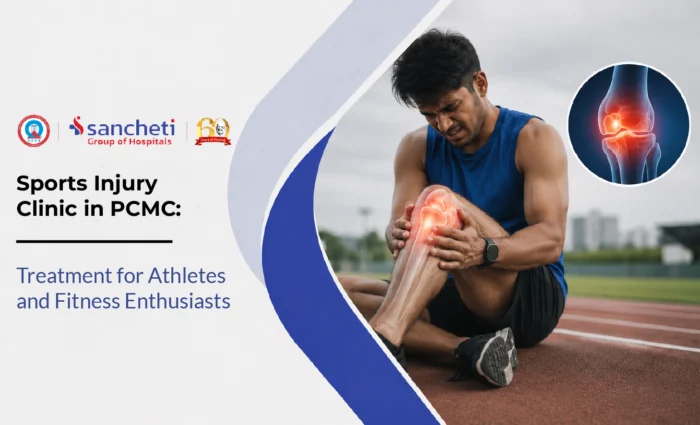

Sports Injury Clinic in PCMC: Treatment for Athletes and Fitness Enthusiasts
A sports injury clinic is a specialist facility that goes beyond general orthopaedic care to assess and treat the full spectrum of athletic and fitness-related musculoskeletal injuries. The goal is not just to treat the injury, but to restore function to the level that brought the patient to sport in the first place.
For athletes and fitness enthusiasts across Pimpri-Chinchwad, the nearest specialist sports medicine facility is Sancheti Hospital’s dedicated Sports Medicine Division in Pune. The division provides comprehensive injury assessment, arthroscopic surgery, biomechanical analysis, platelet-rich plasma therapy, and individualised return-to-sport protocols, care aligned with international sports medicine standards.
What is A Sports Injury Clinic?
A sports injury clinic differs from a standard orthopaedic outpatient in both scope and approach. A general practitioner or emergency room visit manages the acute phase of a sports injury: pain control, ruling out fracture, basic rest advice. A sports injury clinic addresses what happens next: accurately diagnosing the specific structure that is injured, determining whether surgery is needed or whether conservative management is the right path, building a structured rehabilitation programme tailored to the patient’s sport and fitness level, and applying objective criteria to clear an athlete for safe return to sport.
The distinction matters in practice. Sports injuries involve specific structures- ligaments, tendons, menisci, labra, cartilage- that have defined anatomy, established injury grades, and evidence-based management pathways.
At a specialist level, sports injury clinics also perform biomechanical analysis: identifying movement patterns, strength asymmetries, and technique faults that created the vulnerability to injury in the first place, and addressing them as part of the rehabilitation plan, not as an afterthought.
Sports Injury Clinic Serves Who in Pimpri-Chinchwad
Understanding who benefits from sports injury treatment by specialist doctors in the Pimpri-Chinchwad region of Pune clarifies that this is not a resource only for professional athletes.
| Patient Group | Common Injuries | Why Specialist Care Matters |
|---|---|---|
| Cricketers and kabaddi players | Shoulder rotator cuff injuries, hamstring tears, ankle sprains, knee ligament injuries | Cricket and kabaddi account for most sports-related knee injuries in India, with injury patterns differing from Western sports. |
| Recreational and gym-going fitness enthusiasts | Weightlifting-related shoulder, knee, and lower back injuries; overuse injuries from running and cycling | Gym injuries are increasing with the fitness boom, largely due to repetitive overuse and poor load management. |
| Runners and cyclists (PCMC Runners community) | Stress fractures, iliotibial band syndrome, plantar fasciitis, Achilles tendinopathy, knee pain | Most long-distance running injuries result from excessive training load and respond well to targeted sports medicine. |
| School and college athletes | Growth plate injuries in younger athletes, ACL tears, ankle sprains | Young athletes need age-specific care, as growth plate injuries differ from adult injuries. |
| Working adults with occupational loading | Tendinopathies, overuse injuries from physically demanding work combined with recreational sport | Manufacturing work can worsen sports injuries, making a safe return to work as important as returning to sport. |
Types of Sports Injuries
Sports injuries are classified by mechanism (acute trauma vs. overuse), tissue type (bone, muscle, tendon, ligament, cartilage), and severity grade, all of which directly determine the treatment pathway.
| Category | Examples |
|---|---|
| Ligament injuries | ACL tear, MCL/LCL sprain, ankle lateral ligament sprain, shoulder instability |
| Muscle injuries | Hamstring strain, quadriceps contusion, calf tear, groin pull |
| Tendon injuries | Patellar tendinopathy (jumper’s knee), Achilles tendinopathy, rotator cuff tendinopathy, tennis elbow, golfer’s elbow |
| Bone injuries | Stress fractures (tibia, foot), acute fractures from impact, growth plate injuries in adolescents |
| Cartilage and joint injuries | Meniscus tears (often alongside ACL injury), articular cartilage damage, labral tears of hip or shoulder |
| Shoulder injuries | Rotator cuff tears, shoulder dislocation, AC joint separation, labral tear (SLAP) |
Symptoms That Need Specialist Assessment
Not every sports injury requires specialist care; minor muscle soreness and mild sprains managed with rest and basic first aid often resolve without intervention.
| Symptom or Sign | What It May Indicate |
|---|---|
| A pop, crack, or giving-way sensation at the time of injury | Ligament rupture or meniscus tear; warrants imaging before return to activity |
| Joint swelling appearing within 2-4 hours of an injury | Haemarthrosis (blood in the joint), high correlation with ACL tear or significant ligament injury |
| Inability to bear weight after a lower limb injury | Possible fracture or severe ligament disruption; warrants same-day assessment |
| Persistent pain beyond 2 weeks despite rest and basic treatment | Overuse injury or structural damage not responding to self-management |
| Recurrent injuries at the same site | An underlying biomechanical vulnerability is not being addressed |
| Shoulder pain with overhead activity, weakness, or night pain | Possible rotator cuff pathology requiring imaging and specialist evaluation |
| Numbness, tingling, or weakness associated with a sports injury | Nerve involvement requiring specific assessment |
| Pain that comes on at a specific point during exercise every time | Classic overuse injury pattern that benefits from structured load management |
How Sports Injuries Are Diagnosed
Accurate diagnosis goes beyond imaging. While scans reveal structural changes, a sports medicine specialist interprets them alongside the injury mechanism, clinical findings, sporting demands, and rehabilitation goals.
Clinical History
The injury mechanism often provides the strongest diagnostic clue. A twisting knee injury with a pop suggests an ACL tear, while gradual front knee pain in runners commonly indicates tendinopathy or a stress injury. This guides focused examination and appropriate imaging.
Physical Examination
Validated clinical tests assess ligaments, tendons, and joints, while strength and limb symmetry testing help determine readiness for rehabilitation and return to sport.
Imaging
- X-ray: Fractures and bone alignment
- MRI: Ligaments, tendons, cartilage, muscles, and complex joint injuries
- Ultrasound: Tendon and muscle injuries; image-guided injections
- CT: Complex fractures and surgical planning
Biomechanical Assessment
Movement analysis identifies factors such as training load, technique, muscle imbalance, and strength deficits that contribute to injury, ensuring rehabilitation addresses the root cause rather than symptoms alone.
Immediate & Non-Surgical Treatment
Sports injury care follows a stepwise approach, progressing from first aid to rehabilitation, with surgery reserved for selected cases. The goal is to restore function safely while respecting the body’s natural healing process.
PEACE & LOVE: Early Injury Management
The modern approach replaces the traditional RICE protocol.
PEACE (First 1–3 days):
- Protect: Avoid painful activities
- Elevate: Keep the injured limb above heart level
- Avoid anti-inflammatory modalities: Limit ice and NSAIDs during early healing
- Compress: Reduce swelling
- Educate: Understand the healing process
LOVE (Recovery phase):
- Load: Gradually reintroduce movement
- Optimism: Positive expectations support recovery
- Vascularisation: Pain-free aerobic activity improves circulation
- Exercise: Progressive strengthening restores function
Conservative Management
Most muscle strains, ligament sprains, tendinopathies, stress fractures, and minor joint injuries recover without surgery through physiotherapy-led rehabilitation.
- Progressive loading programmes for tendon injuries
- Neuromuscular and balance training to restore joint stability and reduce re-injury risk
- Manual therapy as an adjunct to active rehabilitation
- Bracing and taping where appropriate, including ankle braces and functional knee braces
Surgical Treatment for Sports Injuries
Surgery is recommended when structural damage cannot heal adequately on its own or when rehabilitation fails to restore the function required for the patient’s lifestyle or sport.
Common arthroscopic sports procedures include:
- ACL reconstruction: Using the patient’s hamstring or patellar tendon; the most common sports surgery in India.
- Meniscus repair or partial meniscectomy: Tissue is preserved whenever repair is possible, often alongside ACL reconstruction.
- Rotator cuff repair: Arthroscopic repair for complete or significant tendon tears.
- Shoulder stabilisation: Bankart repair and capsulorrhaphy for recurrent shoulder dislocations.
- Ankle arthroscopy: For chronic instability, impingement, and cartilage lesions.
- Knee cartilage procedures: Including microfracture, osteochondral grafting, and cartilage debridement for selected younger patients.
Recovery and Return to Sport
Returning to sport before the injured tissue has healed and before neuromuscular function is restored produces consistently higher re-injury rates. Evidence-based return-to-sport clearance uses objective criteria, not timelines alone.
Recovery Timelines by Injury Type
| Injury | Conservative Management | Post-Surgical (where applicable) |
|---|---|---|
| Grade I ankle sprain | 1-3 weeks | Not typically required |
| Grade II/III ankle sprain | 4-8 weeks | Occasionally for instability; 3-6 months rehabilitation |
| Hamstring strain (grade I-II) | 3-8 weeks | Rarely surgical |
| Rotator cuff tear (partial) | 3-6 months physio | 6-9 months post-arthroscopic repair |
| Knee meniscus tear | 4-12 weeks (minor) | 3-6 months post-repair; 6-10 weeks post-meniscectomy |
| ACL tear | 6-12 months (brace) | 9-12 months post-reconstruction (criteria-based) |
| Achilles tendinopathy | 3-6 months progressive loading | Rarely required for chronic cases |
| Stress fracture (tibia/foot) | 6-12 weeks offloading | Occasional fixation for high-risk sites |
Rehabilitation Phases Involved in Sports Injuries
A structured physiotherapy and rehabilitation programme at each phase is non-negotiable for good outcomes.
Phase 1: Protect and Restore Basic Function
- Control swelling and pain; maintain range of motion in the uninjured arc
- Maintain cardiovascular fitness with pain-free modalities
- Education on healing timelines and activity expectations
Phase 2: Rebuild Strength and Neuromuscular Control
- Progressive resistance training targeting the injured limb and adjacent muscle groups
- Proprioceptive and balance training; critical for ligament injuries
- Strength symmetry testing between limbs
Phase 3: Sport-Specific Conditioning and Return-to-Training
- Agility drills, change-of-direction training, plyometrics at graduated intensity
- Sport-specific movement patterns performed under controlled conditions and observed for quality and safety
- Psychological readiness assessment; athletes who feel psychologically ready to return have significantly higher return-to-sport success rates
Phase 4: Return to Full Competitive Sport
- Objective clearance criteria met: strength symmetry, functional hop tests, single-leg landing quality, sport-specific performance
- Graduated return: training before matches, limited play before full competition, monitored load management during the first competitive season back
- Ongoing injury prevention programme integrated into training
Prevention: Reducing Sports Injury Risk
Most sports injuries are preventable. Non-contact injuries are primarily the result of identifiable, correctable risk factors: muscle weakness, fatigue, poor landing mechanics, inadequate load management, and insufficient warm-up.
- Structured warm-up: a 15-20 minute sport-specific warm-up including dynamic movements, activation exercises, and neuromuscular preparation significantly reduces injury risk.
- Progressive load management: the majority of overuse injuries, tendinopathies, stress fractures, and shin splints are a direct result of increasing training volume or intensity too quickly.
- Strength training alongside sport: athletes who train strength alongside their primary sport consistently sustain fewer injuries than those who do sport alone.
- Sleep adequately: sleep deprivation doubles sports injury risk; athletes sleeping under 8 hours per night have substantially higher injury rates
- Wear appropriate footwear: properly fitted footwear for the specific sport and surface reduces running injury risk; worn-out shoes are a common and overlooked injury contributor
- Seek early assessment for warning symptoms: pain during training that persists into the following day signals an overuse injury developing rather than normal training soreness.
Key Takeaways
- Sports injury treatment is about restoring full function and preventing re-injury, not simply relieving pain or helping an athlete return to activity as quickly as possible.
- Accurate diagnosis combines clinical assessment, imaging, and biomechanical analysis to identify both the injury and the factors that caused it, enabling more effective long-term recovery.
- Most sports injuries recover successfully without surgery when managed early through structured rehabilitation, progressive loading, and sport-specific physiotherapy.
- Surgery is reserved for injuries where structural damage prevents healing or when conservative treatment cannot restore the level of function needed for work, fitness, or competitive sport.
- Returning to sport should be guided by strength, movement quality, and functional performance rather than time alone, reducing the risk of repeat injuries.
- Rehabilitation is a phased process that gradually restores mobility, strength, balance, confidence, and sport-specific performance, making it as important as the initial treatment itself.
- Many sports injuries are preventable through proper warm-ups, progressive training loads, strength training, adequate recovery, and early attention to persistent pain before it develops into a more serious injury.
- For athletes and fitness enthusiasts across Pimpri-Chinchwad, Nigdi, Akurdi, Wakad, Bhosari, and the surrounding PCMC region, Sancheti Hospital, Pune‘s Sports Medicine doctors provide complete sports injury care, from initial assessment and non-surgical management through to arthroscopic surgery and criteria-based return-to-sport rehabilitation.
Frequently Asked Questions (FAQs)
Q1. How do I know if my sports injury needs a doctor in Pimpri Chinchwad or if I can manage it at home?
Home management is appropriate for minor muscle soreness, mild bruising, and small joint sprains that improve steadily over 5-7 days with rest, gentle movement, and basic first aid. Specialist assessment is appropriate when: a joint swelled rapidly within 2-4 hours of the injury (suggesting blood in the joint); you felt or heard a pop at the time of injury; you cannot bear weight; the joint feels unstable or gives way; pain is getting worse rather than better over 1-2 weeks; or you have injured the same structure before and are not recovering as expected. Attempting to self-manage a significant ligament tear or stress fracture consistently produces worse outcomes than early specialist assessment, and earlier assessment typically means earlier, not later, return to sport.
Q2. Do I need surgery for an ACL tear, or can it heal on its own?
The ACL does not heal reliably on its own after a complete tear, because it lacks the blood supply needed for primary healing. However, not every patient with an ACL tear needs surgery; the decision depends on the patient’s activity level, the stability they need from the knee, and whether the ACL tear is accompanied by other structural injuries (meniscus tears, cartilage damage). Younger, active patients who want to continue pivoting sports strongly benefit from reconstruction. Older, less active patients or those willing to modify their activity level can sometimes manage conservatively with a structured neuromuscular rehabilitation programme and a brace. A sports medicine doctor’s assessment in PCMC with MRI imaging provides the basis for this decision, which cannot be made accurately from symptoms alone.
Q3. I train at the gym in PCMC, so what are the most common injuries I should watch for?
The most common gym-related injuries differ between upper body and lower body training. Shoulder injuries, rotator cuff tendinopathy, shoulder impingement, and AC joint irritation are the most prevalent upper body findings, particularly in men over 40 who perform regular overhead pressing or heavy bench work. Lower body gym training most commonly produces knee issues (patellar tendinopathy from squatting and leg extension, IT band friction from running and cycling programmes), lower back strain from deadlifts and loaded bending with poor form, and Achilles tendinopathy in those who run or jump. Most gym-related overuse injuries result from too much load too quickly, insufficient rest between training sessions for the same muscle groups, or poor technique that repeatedly overloads a specific structure. A sports medicine assessment can identify which tissue is involved and what training modification is needed, which is rarely “stop training entirely.”
Q4. How long does it take to return to cricket or football after an ACL reconstruction?
The honest answer is 9-12 months from surgery for most patients, with the specific timeline determined by objective functional criteria rather than a fixed calendar date. The average time from ACL reconstruction to return to sport in Indian athletes is approximately 8-9 months in well-managed cases. Returning before 8 months specifically carries a fivefold higher risk of re-tearing the reconstructed graft. Criteria-based clearance typically requires demonstrating 85-90% strength symmetry between both limbs, passing a battery of functional hop tests, completing sport-specific agility drills without pain or instability, and psychological readiness. Players who rush this process to return in 5-6 months risk losing the prior investment in surgery and a much longer second recovery. The goal is returning once, correctly, not twice.
Q5. Is PRP treatment for sports injuries worth considering, and what should I expect from it?
Platelet-rich plasma (PRP) therapy has genuine, evidence-supported indications in sports medicine, particularly for chronic tendinopathies (Achilles, patellar, and tennis elbow) and partial muscle tears that have not responded adequately to structured physiotherapy. For these conditions, PRP carries a 70% success rate in published clinical studies. The evidence is less consistent for acute ligament injuries and muscle tears in the early stages. PRP is not a quick fix and does not replace structured rehabilitation; it works by providing concentrated growth factors to the injury site, and these growth factors work alongside the rehabilitation process rather than instead of it. Results build gradually over 4-8 weeks after injection. PRP is most rationally used when conservative physiotherapy-based management has plateaued after an adequate trial (typically 3-6 months), not as a first-line treatment for a new injury.