Home
Home PG College
 Patient Login
 Sancheti Clinic
 Contact Us
 Download Reports
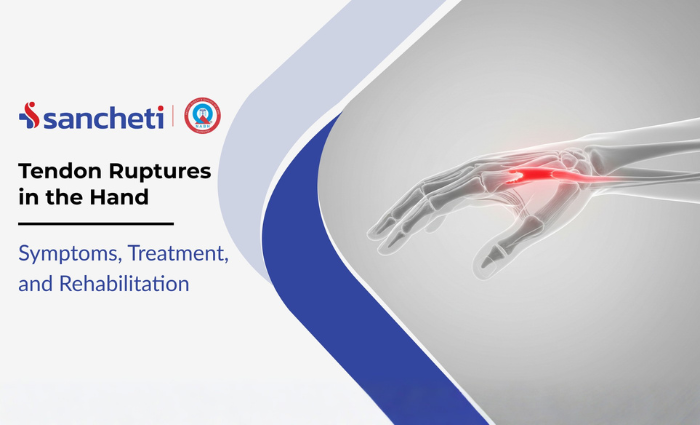

Tendon Ruptures in the Hand: Symptoms, Treatment, and Rehabilitation
Tendon ruptures in the hand occur when the fibrous cords connecting muscles to bones tear or break, leading to loss of movement, pain, and functional impairment. These injuries require prompt medical attention and specialized treatment—ranging from splinting and physical therapy to surgical repair—followed by structured rehabilitation to restore hand function and prevent long-term complications.
At Sancheti Hospital, Pune’s premier orthopaedic centre, we understand how devastating a hand tendon injury can be. Your hands are essential for daily activities, work, and independence. When tendons in the hand are damaged, even simple tasks become challenging. This comprehensive guide will help you recognize the signs of tendon ruptures, understand your treatment options, and know what to expect during recovery.
Understanding Hand Tendons: The Foundation of Movement
The human hand contains an intricate network of tendons that work like pulleys, translating muscle contractions into precise movements. These finger tendons run along both the palm side (flexor tendons) and the back of the hand (extensor tendons), allowing you to grip, pinch, and manipulate objects with remarkable dexterity.
The tendon of palm—specifically the flexor tendons—enables you to curl your fingers and make a fist. Meanwhile, extensor tendons on the back of your hand straighten your fingers. When a tendon tear occurs, this delicate system breaks down, compromising your hand’s function.
Common Causes of Hand Tendon Ruptures
Understanding how these injuries happen can help you take preventive measures:
Traumatic Injuries
- Deep cuts from knives, glass, or machinery
- Crush injuries in accidents
- Sports-related trauma
- Animal or human bites
Degenerative Conditions
- Rheumatoid arthritis weakening tendon integrity
- Chronic inflammation causing gradual wear
- Repetitive strain over time
- Age-related tendon degeneration
Medical Factors
- Steroid injections weakening tendon tissue
- Certain medications affecting collagen
- Underlying inflammatory diseases
Recognising the Symptoms: When to Seek Help
Early recognition of hand tendon injury symptoms can significantly impact treatment outcomes. At Sancheti Hospital, we encourage patients to seek immediate evaluation if they experience:
Immediate Signs
- Sudden inability to bend or straighten one or more fingers
- Visible deformity or abnormal finger positioning
- Deep lacerations on the hand or fingers
- Popping sensation at the time of injury
Ongoing Symptoms
- Pain along the tendon pathway
- Swelling and bruising
- Weakness in gripping or pinching
- Numbness or tingling (indicating possible nerve involvement)
A complete tendon rupture creates a characteristic appearance: if you cannot actively bend a finger joint, but someone else can move it for you (passive motion), this strongly suggests a flexor tendon tear. Conversely, inability to straighten a finger may indicate an extensor tendon injury.
Diagnostic Approach at Sancheti Hospital
Our orthopaedic specialists employ comprehensive evaluation methods:
Physical Examination:
We assess active and passive range of motion, testing each finger’s ability to flex and extend. Specific maneuvers help identify which tendons are affected and whether nerves or blood vessels are also injured.
Imaging Studies:
- X-rays to rule out fractures or foreign bodies
- Ultrasound for real-time visualization of tendon integrity
- MRI when detailed soft tissue assessment is needed
Specialized Testing:
Our hand surgeons may perform specific tests like the “finger cascade” examination or resistance testing to determine the extent of injury and plan appropriate treatment.
Treatment Options: From Conservative to Surgical
Treatment depends on several factors: injury location, completeness of the tear, time since injury, and your functional needs.
Non-Surgical Management
Some partial tears or finger ligament injuries may heal with conservative treatment:
- Immobilization: Custom splints position the hand to reduce tension on healing tendons
- Activity modification: Avoiding strenuous activities during the healing phase
- Anti-inflammatory medications: Managing pain and swelling
- Close monitoring: Regular follow-ups to ensure proper healing
When Surgery Becomes Necessary
Complete tendon ruptures typically require hand tendon surgery for optimal outcomes. At Sancheti Hospital, our experienced hand surgeons specialize in microsurgical techniques that maximize functional recovery.
Surgical Repair Process
- Primary Repair: Performed within days of acute injury, the surgeon meticulously reattaches torn tendon ends using specialized sutures
- Tendon Grafting: When significant tendon tissue is lost, healthy tendon from another area serves as a bridge
- Tendon Transfer: For irreparable damage, a working tendon is rerouted to replace the damaged one
- Two-Stage Reconstruction: Complex cases may require temporary silicone rods followed by tendon grafting
Our surgical approach prioritizes:
- Minimal scarring and adhesion formation
- Preservation of gliding surfaces
- Strong repair allowing early mobilization
- Restoration of natural finger cascade
Rehabilitation Journey: Your Road to Recovery
Rehabilitation after a tendon tear is just as important as the surgery itself. At Sancheti Hospital, our certified hand therapists work closely with surgeons to create individualized recovery protocols.
Early Phase (Weeks 1-6)
Protection and Controlled Motion
- Wearing protective splints between exercise sessions
- Passive motion exercises to prevent stiffness
- Avoiding active use of repaired tendons
- Managing swelling and pain
Modern protocols often use “early active motion” under therapist supervision, allowing gentle tendon gliding while protecting the repair.
Intermediate Phase (Weeks 6-12)
Progressive Strengthening
- Gradual introduction of active finger movements
- Light resistance exercises
- Scar massage and desensitization
- Functional activity training
Advanced Phase (Months 3-6)
Return to Function
- Progressive strengthening programs
- Work-specific conditioning
- Sports-related activities if appropriate
- Final adjustments to maximize outcomes
Full recovery from hand tendon surgery typically takes 3-6 months, though you may return to light activities earlier under professional guidance.
Preventing Complications and Ensuring Success
Several factors influence your recovery outcome:
Adherence to Protocol: Following your therapist’s instructions precisely prevents re-rupture and adhesion formation.
Nutrition and Health: Adequate protein intake, staying hydrated, and avoiding smoking support tissue healing.
Scar Management: Early intervention with massage and silicone therapy minimizes restrictive scarring.
Patience: Rushing return to activities increases complication risk. Trust the process.
Special Considerations for Different Tendon Injuries
Flexor Tendon Injuries: These tendons in the palm and fingers are particularly challenging because they glide through narrow tunnels. Rehabilitation must prevent both weakness and stiffness—a delicate balance.
Extensor Tendon Injuries: Generally have better outcomes due to simpler anatomy, but still require careful management to prevent deformities like mallet finger or boutonniere deformity.
Zone-Specific Injuries: The location of injury significantly impacts treatment and prognosis, with “no man’s land” (Zone II) flexor tendon injuries being historically the most challenging.
Why Choose Sancheti Hospital for Hand Tendon Treatment?
As Pune’s leading orthopaedic institution, Sancheti Hospital offers:
- Specialized Hand Surgery Unit: Dedicated surgeons with extensive microsurgical training
- Advanced Rehabilitation Facilities: State-of-the-art therapy equipment and certified hand therapists
- Multidisciplinary Approach: Collaboration between surgeons, therapists, and pain management specialists
- Proven Track Record: Decades of excellence in treating complex hand injuries
- Patient-Centered Care: Individualized treatment plans focused on your functional goals
Key Takeaways
- Tendon ruptures in the hand require immediate medical evaluation to optimize treatment outcomes
- Hand tendon injuries can result from trauma, degenerative conditions, or inflammatory diseases
- Symptoms include inability to move fingers, pain, swelling, and visible deformity
- Complete tears typically require hand tendon surgery for functional restoration
- Rehabilitation is a critical component, lasting 3-6 months with staged protocols
- Early intervention and adherence to therapy significantly improve long-term outcomes
- Sancheti Hospital provides comprehensive, expert care from diagnosis through complete recovery
- Prevention includes workplace safety, proper technique in sports, and managing underlying health conditions
If you’ve experienced a hand injury or suspect a tendon rupture, don’t delay seeking expert care. Contact Sancheti Hospital to schedule a consultation with our hand surgery specialists. Early intervention makes all the difference in restoring your hand function and quality of life.