Home
Home PG College
 Patient Login
 Sancheti Clinic
 Contact Us
 Download Reports
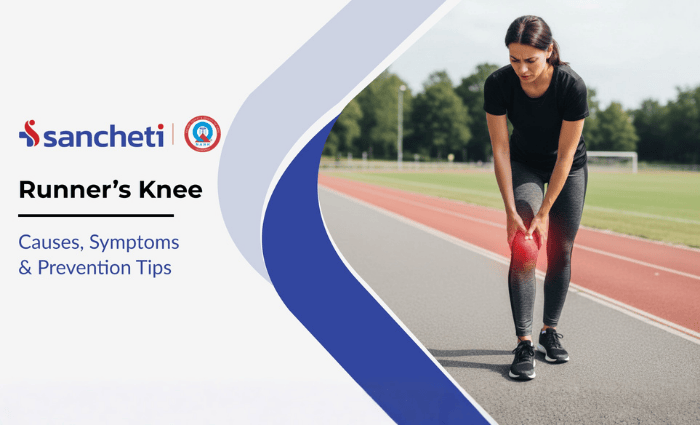

Runner’s Knee: Causes, Symptoms & Prevention Tips
Runner’s knee is one of the most common knee complaints among runners, gym-goers, and anyone who participates in repetitive, high-impact activities. The condition causes pain around or behind the kneecap and often makes running, squatting, or even climbing stairs difficult. Although it’s called runner’s knee, it can affect anyone – not just runners – especially those who overload the knee joint without proper strength, form, or recovery.
Understanding what causes this pain and recognizing early runner’s knee symptoms can prevent long-term issues. With the right runner’s knee treatment, training adjustments, and strength work, most individuals can return to pain-free activity and achieve strong runners knee recovery. This guide explains the causes, symptoms, and prevention strategies to help you avoid and manage knee pain while running.
What Is Runner’s Knee?
Runner’s knee refers to pain around or behind the patella (kneecap), typically caused by irritation of the cartilage or surrounding tissues. The medical term for this condition is patellofemoral pain syndrome (PFPS). It occurs when the kneecap does not glide smoothly in its groove during movement, leading to stress, inflammation, and discomfort.
Pain usually worsens with running, squatting, stairs, or after long periods of sitting – often referred to as the “movie-theatre sign.”
Common Causes of Runner’s Knee
Runner’s knee doesn’t have a single cause – it usually results from a combination of factors related to running load, strength imbalances, and mechanics.
1. Overuse and Training Errors
Sudden increases in distance, speed, hill running, stair workouts, or training volume can overload the knee joint. Repetitive bending and impact make the kneecap work harder than it should, leading to irritation and knee pain after exercise.
2. Weak or Imbalanced Muscles
Weak quadriceps, hip abductors, or glute muscles can cause the kneecap to shift slightly off its ideal track. Tight hamstrings, calves, or the IT band further increase joint stress and contribute to PFPS.
3. Poor Running Form
Overstriding, inward knee collapse, or excessive forward lean increases force on the patellofemoral joint. Suboptimal biomechanics raise the risk of developing runners knee.
4. Foot and Footwear Issues
Flat feet, over-pronation, worn-out shoes, or poor cushioning can change leg alignment and increase knee impact forces.
5. Hard or Uneven Surfaces
Running on concrete, sloped roads, or uneven terrain adds stress with each stride.
These causes often overlap, making early recognition essential for proper treatment for runners knee.
Runner’s Knee Symptoms
1. Pain Around or Behind the Kneecap
A dull, aching pain at the front of the knee, especially during running, squatting, or climbing stairs.
2. Pain After Prolonged Sitting
Stiffness or pain after sitting with bent knees for long periods.
3. Grinding or Popping Sensation
You may notice clicking or grinding when bending the knee.
4. Pain During Specific Movements
Activities that aggravate symptoms include:
- Running (especially downhill)
- Deep squatting
- Kneeling
- Jumping
- Descending stairs
5. Pain in One or Both Knees
Runner’s knee can affect one or both knees, depending on your mechanics, strength imbalances, or training habits.
If ignored, symptoms may gradually worsen, affecting overall mobility and performance.
Runner’s Knee Treatment Options
Most cases improve with rest, activity modifications, strengthening, and proper form. Here are the core elements of effective runner’s knee treatment:
1. Reduce Load and Modify Activity
Short-term reduction in running volume helps irritation settle. Switch to low-impact activities like swimming, cycling, or elliptical training while symptoms improve.
2. Strengthen Key Muscle Groups
A well-structured strengthening plan should target:
- Quadriceps
- Hip abductors and glutes
- Core stabilizers
Exercises such as squats (within pain limits), bridges, step-downs, wall sits, clamshells, and hip-strengthening drills improve patellar tracking.
This is essential for runners knee recovery.
3. Improve Flexibility and Mobility
Stretching tight muscle groups reduces stress on the kneecap:
- Quadriceps
- Hamstrings
- Calves
- IT band
Foam rolling can further ease tightness and improve mobility.
4. Correct Running Technique
Simple adjustments reduce load on the knee:
- Shorten stride length
- Slightly increase cadence (steps/min)
- Maintain a tall posture with soft foot landings
Better form directly reduces knee pain while running.
5. Choose the Right Footwear
Use running shoes that match your foot type and provide adequate support. Replace worn-out shoes regularly. Orthotics may be recommended for flat feet or over-pronation.
6. Cross-Train and Manage Weight
Low-impact activities build strength and endurance without aggravating the knees. Maintaining a healthy weight reduces stress on knee joints.
How to Prevent Knee Pain While Running
Preventing knee pain while running requires long-term consistency with strength, mobility, and innovative training progression.
1. Build Strength in the Right Areas
Strong hips and quadriceps are your best protection.
2. Warm Up Properly
Use dynamic stretches such as leg swings, hip openers, and light jogging before running.
3. Progress Gradually
Follow the 10% rule – do not increase mileage by more than 10% per week.
4. Avoid Excessive Downhill and Speed Work
Both significantly increase patellofemoral stress.
5. Use Proper Running Shoes
Good shock absorption and proper foot alignment can prevent strain.
6. Mix Surfaces
Alternate between roads, track, and trail to vary impact loads.
7. Maintain a Balanced Training Plan
Include strength training 2-3 times per week and cross-training to avoid overload.
These strategies minimize the risk of developing knee pain after exercise.
When to See a Doctor or Physiotherapist
Seek professional help if you notice:
- Persistent knee pain even at rest
- Swelling or significant weakness
- Pain lasting more than 2–3 weeks
- Difficulty bending or straightening the knee
- Locking, giving way, or instability
A physiotherapist can evaluate your biomechanics and create an individualized rehab plan for effective treatment for runners knee.
Sancheti Hospital: Expert Care for Runner’s Knee
At Sancheti Hospital, we understand how frustrating knee pain can be – especially when it stops you from doing what you love. Our sports medicine specialists and physiotherapists work closely with runners, athletes, and active individuals to diagnose the exact cause of runners knee and create a treatment plan that targets pain at its root.
Our approach combines detailed movement analysis, strength assessment, gait correction, and personalized rehabilitation to ensure safe and complete runners knee recovery. Whether your pain comes from overuse, poor mechanics, muscle weakness, or training errors, we design a structured program that rebuilds stability, restores mobility, and improves overall performance.
If you’re struggling with knee pain while running, persistent runner’s knee symptoms, or recurring knee pain after exercise, our team is here to guide you back to pain-free movement – with expert support at every step.