Home
Home PG College
 Patient Login
 Sancheti Clinic
 Contact Us
 Download Reports
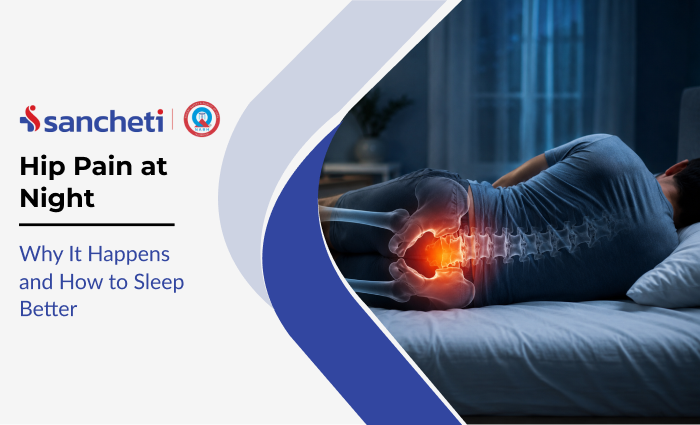

Hip Pain at Night: Why It Happens and How to Sleep Better
If you’ve ever woken up with a dull ache or sharp hip pain at night, you’re not alone. Nighttime hip pain is one of the most common orthopaedic complaints we hear at Sancheti Hospital, Pune — and it can range from mildly uncomfortable to seriously sleep-disrupting.
The short answer: hip pain at night is usually caused by pressure on the hip joint or surrounding tissues during sleep, often worsened by underlying conditions like bursitis, arthritis, or tendinitis.
Keep reading to understand exactly what’s happening in your body and what you can do to finally get a good night’s rest.
What Causes Hip Pain at Night?
Nighttime hip pain doesn’t always have a single cause. Several conditions can trigger or worsen discomfort once you lie down.
1. Hip Bursitis
Hip bursitis is one of the leading causes of hip pain when sleeping on side. Bursae are small fluid-filled sacs that cushion the hip joint. When they become inflamed — often due to repetitive movement or prolonged pressure — lying on your side can trigger intense pain along the outer hip.
2. Osteoarthritis of the Hip
Hip osteoarthritis causes the cartilage in the joint to break down over time. At night, when your body is still and circulation slows, stiffness and aching tend to flare up. Many patients with hip arthritis describe a deep, grinding discomfort that makes it hard to find a comfortable sleeping position.
3. Hip Tendinitis
Hip tendinitis involves inflammation of the tendons around the hip. It often results from overuse — common in runners, cyclists, or people who stand for long hours. The pain can radiate down the outer thigh and worsen when lying still for extended periods.
4. Sciatica
Sciatica occurs when the sciatic nerve is compressed, often in the lower back, sending pain through the buttock and down the leg. Many people mistakenly think it’s purely hip pain, but the shooting or burning sensation is nerve-related. It’s particularly disruptive at night because certain sleeping positions increase nerve compression.
5. Greater Trochanteric Pain Syndrome (GTPS)
Greater trochanteric pain syndrome is an umbrella term that includes bursitis and tendon problems around the bony prominence on the outer hip. It’s more common in women and middle-aged adults, causing outer hip pain at night that worsens when lying on the affected side.
6. Hip Labral Tear
A hip labral tear — damage to the cartilage ring around the hip socket — can cause deep groin pain or hip pain that becomes particularly noticeable during rest. People with this condition often report a clicking or locking sensation in the hip.
Why Is Hip Pain Worse at Night?
You might wonder: why does the pain feel worse the moment you get into bed? There are a few physiological reasons:
- Pressure on inflamed tissue — Lying on your side places direct weight on the hip, compressing already irritated bursa or tendons.
- Reduced distraction — During the day, activity and movement keep your mind occupied. At night, there’s nothing to distract you from the pain.
- Inflammatory cycles — Some inflammatory conditions naturally peak during the body’s rest phase, when cortisol (a natural anti-inflammatory hormone) levels drop.
- Poor sleep posture — Staying in one position for hours can strain the hip joint, especially on a mattress that’s too firm or too soft.
How to Sleep Better with Hip Pain
The good news is that hip pain relief at night is achievable with the right adjustments. At Sancheti Hospital, our orthopaedic specialists often recommend starting with these practical strategies before moving to medical treatment.
Best Sleeping Positions for Hip Pain
Your sleeping position for hip pain can make a significant difference:
- Sleep on your back — This is the most joint-friendly position. Place a pillow under your knees to relieve pressure on the hip flexors and lower back.
- Sleep on the unaffected side — If back sleeping isn’t comfortable, lie on the side that doesn’t hurt. Place a pillow between your knees to keep your hips aligned and reduce strain on the affected hip.
- Avoid sleeping on the affected side — Especially if you have bursitis or GTPS, this will directly compress the inflamed area and worsen pain.
Mattress and Pillow Adjustments
- A medium-firm mattress is generally best for hip pain — soft enough to cushion pressure points, firm enough to support spinal alignment.
- A body pillow can help side sleepers maintain better posture throughout the night.
- Consider a memory foam mattress topper if replacing your mattress isn’t an option right now.
Pre-Sleep Stretching and Exercises
Gentle movement before bed can reduce stiffness and calm inflamed tissues:
- Hip flexor stretch — Kneel on one knee, push your hips forward gently, and hold for 20–30 seconds.
- Piriformis stretch — Lie on your back, cross one ankle over the opposite knee, and gently pull the uncrossed leg toward your chest.
- Glute bridges — Slowly raise and lower your hips while lying on your back; this strengthens supporting muscles without straining the joint.
Heat and Cold Therapy
- Apply an ice pack (wrapped in a cloth) for 15–20 minutes before bed to reduce acute inflammation.
- Use a heating pad on low heat if your pain is more of a chronic, deep ache — heat increases blood flow and relaxes muscles.
- Alternate between both if you’re unsure which works better for you.
When Should You See a Doctor for Hip Pain?
Not all hip pain is something you can manage at home. Visit an orthopaedic specialist if:
- The pain is severe or getting progressively worse
- You notice swelling, redness, or warmth around the hip joint
- Pain is accompanied by fever (which may indicate infection or inflammatory arthritis)
- You’ve had a recent fall or injury
- Hip pain is affecting your ability to walk or bear weight
- Home remedies have provided no relief after 2–3 weeks
At Sancheti Hospital, Pune, our orthopaedic team offers comprehensive diagnosis — from clinical examination and X-rays to MRI scans — to identify the exact cause of your hip pain and recommend the most appropriate treatment.
Treatment Options for Nighttime Hip Pain
Depending on your diagnosis, treatment may include:
- Physiotherapy — Targeted exercises to strengthen the hip, improve flexibility, and correct movement patterns
- Anti-inflammatory medications — NSAIDs to manage pain and swelling (prescribed by your doctor)
- Corticosteroid injections — For conditions like bursitis, an injection directly into the bursa can provide significant, lasting relief
- Platelet-Rich Plasma (PRP) therapy — A newer option being used for tendon and cartilage-related hip issues
- Hip arthroscopy or surgery — For labral tears, advanced arthritis, or structural problems that don’t respond to conservative treatment
The earlier you seek medical advice, the more treatment options are available to you — and the better your chances of avoiding surgical intervention.
Key Takeaways
- Hip pain at night is most commonly caused by bursitis, osteoarthritis, tendinitis, sciatica, or greater trochanteric pain syndrome.
- Pain often feels worse at night due to direct pressure on the hip, reduced distraction, and natural inflammatory cycles.
- Sleeping on your back or on the unaffected side with a pillow between your knees is generally the best approach.
- A medium-firm mattress, pre-sleep stretching, and heat or cold therapy can all provide meaningful hip pain relief.
- Consult an orthopaedic specialist if pain is severe, persistent, or affecting your mobility.
Frequently Asked Questions (FAQs)
Q1. Can hip pain at night be a sign of something serious like cancer?
In rare cases, persistent nighttime bone pain that is not related to activity or position can be associated with bone tumours or metastatic disease. This is uncommon, but if your hip pain is constant, worsening at rest, accompanied by unexplained weight loss or fatigue, it’s important to get a thorough medical evaluation immediately.
Q2. Is it normal for hip pain to be worse on some nights than others?
Yes, this is very common. Factors like how much you walked during the day, your sleeping position, the weather (many arthritis patients report flares in cold or damp conditions), and stress levels can all influence the intensity of nighttime hip pain.
Q3. Can my diet affect hip pain at night?
Certain foods with anti-inflammatory properties — like fatty fish, turmeric, leafy greens, and berries — may help reduce joint inflammation over time. Conversely, a diet high in processed foods and sugar can worsen inflammatory conditions. While diet alone won’t cure hip pain, it can support your overall treatment plan.
Q4. How long does hip bursitis take to heal?
With appropriate treatment — rest, physiotherapy, and anti-inflammatory medication — most cases of hip bursitis improve within 6 to 8 weeks. However, without treatment or if the underlying cause isn’t addressed, it can become a chronic, recurring problem.
Q5. Can losing weight help reduce nighttime hip pain?
Absolutely. Excess body weight increases the load on the hip joint, accelerating cartilage wear and increasing pressure on soft tissues. Even a modest reduction in weight can noticeably reduce the frequency and intensity of hip pain, particularly in patients with hip osteoarthritis.