Home
Home PG College
 Patient Login
 Sancheti Clinic
 Contact Us
 Download Reports

Avascular Necrosis (AVN) of Hip: Early Diagnosis Can Save Your Joint
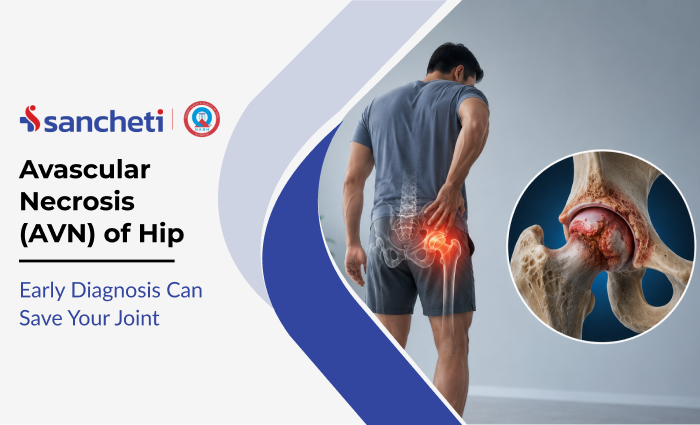
Avascular Necrosis (AVN) of the hip is a condition where the blood supply to the femoral head (the ball part of your hip joint) is disrupted, causing the bone tissue to die. If caught early, there is a real chance of saving the joint and avoiding major surgery.
At Sancheti Hospital, Pune, we see patients across all age groups dealing with this condition — and the single most important factor in their outcome is how early they come to us.
What Is Avascular Necrosis of the Hip?
Avascular necrosis, also called osteonecrosis of the hip, occurs when bone cells begin to die due to a lack of adequate blood flow. Without a healthy blood supply, the femoral head gradually weakens, collapses, and eventually leads to severe hip joint damage and arthritis.
Unlike many joint conditions that predominantly affect the elderly, AVN of the hip can strike adults in their 30s, 40s, and 50s — often people who are otherwise active and productive. This makes early detection not just medically important, but life-changing.
Who Is at Risk? Common Causes of AVN
Understanding the causes of avascular necrosis is the first step toward prevention and early action. The most common risk factors include:
- Steroid use — Long-term or high-dose corticosteroid therapy (for conditions like asthma, lupus, or rheumatoid arthritis) is one of the leading causes of steroid-induced AVN
- Excessive alcohol consumption — Chronic alcohol use interferes with fat metabolism and blood flow to bone
- Hip trauma — A fracture or dislocation of the hip can damage the blood vessels supplying the femoral head
- Sickle cell disease — Abnormal red blood cells can block small blood vessels, cutting off bone circulation
- Blood clotting disorders — Conditions that increase clotting risk can restrict blood flow
- Prolonged bed rest or immobility
- Idiopathic AVN — In some cases, no clear cause is identified
If you fall into any of these categories and are experiencing hip discomfort, it is worth consulting an orthopaedic specialist promptly.
Recognising the Symptoms: Don’t Ignore These Signs
One of the challenges with AVN hip symptoms is that the early stages can be completely silent. Many patients have no pain at all when the condition begins. As it progresses, symptoms typically include:
- Groin pain that may radiate to the thigh or buttock
- Pain that worsens with weight-bearing or walking
- A gradual reduction in hip range of motion
- Stiffness and difficulty with everyday activities like climbing stairs or getting in and out of a car
- In advanced stages, a visible limp or inability to bear weight
The danger lies in this delay between onset and symptoms. By the time pain becomes significant, the bone may already be in a later stage of collapse. This is why early diagnosis of AVN is so critical.
Staging System: Why Stage Matters
AVN is classified into stages — most commonly using the ARCO (Association Research Circulation Osseous) or Ficat classification:
| Stage | What’s Happening | Treatment Possibility |
| Stage 1 | Blood supply disrupted, no visible X-ray changes | High — joint preservation likely |
| Stage 2 | Bone changes visible on MRI/X-ray, no collapse | Good — joint-saving procedures possible |
| Stage 3 | Early femoral head collapse (crescent sign) | Moderate — core decompression may help |
| Stage 4 | Significant collapse and joint space narrowing | Limited — replacement often needed |
At Sancheti Hospital, we emphasize catching AVN at Stage 1 or Stage 2, where we can offer interventions that preserve your natural hip joint.
How Is AVN of the Hip Diagnosed?
MRI: The Gold Standard
If avascular necrosis is suspected, an MRI scan is the most sensitive diagnostic tool. It can detect AVN even before any changes appear on a regular X-ray — sometimes months earlier. At Sancheti Hospital, our radiology team works closely with our orthopaedic specialists to ensure rapid and accurate staging.
Other Diagnostic Tools
- X-ray — Useful in later stages to assess collapse and joint damage
- CT scan — Helps evaluate the extent of bone involvement
- Bone scan — Can detect early changes in blood flow patterns
If you have been on long-term steroids, have had a hip injury, or are experiencing unexplained groin pain, do not wait — ask your doctor specifically about ruling out osteonecrosis.
Treatment Options: From Preservation to Replacement
Joint-Preserving Treatments (Early Stages)
When AVN of the hip is diagnosed early, our goal at Sancheti Hospital is always to save the joint. Options include:
- Core Decompression: A minimally invasive procedure where one or more small tunnels are drilled into the femoral head to relieve pressure, restore blood flow, and stimulate healing. Often combined with bone grafting or stem cell therapy for better outcomes.
- Bone Grafting: Healthy bone tissue is used to support the weakened femoral head, providing a structural scaffold while new blood vessels grow.
- Vascularised Fibular Graft: A more complex procedure where a segment of the fibula bone (along with its blood supply) is transferred to the hip. This is particularly effective in younger patients with early-stage AVN.
- Medications and Lifestyle Changes: In very early stages, bisphosphonates and anticoagulants may slow progression. Reducing steroid use (where medically possible) and stopping alcohol consumption are essential steps.
When Joint Replacement Becomes Necessary
In Stage 3 and Stage 4 AVN, when the femoral head has significantly collapsed, total hip replacement (THR) becomes the most reliable solution. Modern hip replacement surgery at Sancheti Hospital uses advanced implant technology that offers excellent longevity, restoring full mobility and a pain-free life.
The silver lining: even patients who require hip replacement can expect outstanding functional outcomes with the right surgical team and rehabilitation support.
Why Early Diagnosis Truly Saves Your Joint
The difference between a Stage 1 diagnosis and a Stage 4 diagnosis is enormous — not just medically, but in terms of recovery time, cost, and quality of life. Here is what early detection means in practice:
- Avoid major surgery — Joint-preserving procedures are far less invasive than hip replacement
- Faster recovery — Smaller interventions mean shorter hospital stays and quicker return to activity
- Long-term joint health — Preserving your natural joint avoids the need for future revision surgeries
- Better outcomes in young patients — Since AVN often affects working-age adults, saving the joint means preserving years of active, pain-free life
At Sancheti Hospital, our orthopaedic team uses the latest diagnostic imaging combined with evidence-based treatment protocols to give every patient the best chance of joint preservation.
Living With AVN: What You Can Do
Whether you are awaiting treatment or managing the condition post-surgery, these steps make a real difference:
- Reduce weight-bearing on the affected hip using crutches as advised
- Follow a physiotherapy programme to maintain muscle strength and joint flexibility
- Avoid alcohol and smoking, both of which impair bone healing
- Manage steroid use carefully under medical supervision
- Attend all follow-up appointments — AVN can progress quietly without symptoms
Key Takeaways
- Avascular necrosis (AVN) of the hip is caused by disrupted blood supply to the femoral head, leading to bone death and eventual joint collapse
- Common risk factors include steroid use, alcohol, hip trauma, and sickle cell disease
- Early stages may have no symptoms — making proactive screening essential for at-risk individuals
- MRI is the gold standard for early detection, often identifying AVN before X-rays show changes
- Catching AVN at Stage 1 or Stage 2 opens the door to joint-preserving treatments like core decompression and bone grafting
- Advanced cases may require total hip replacement, which still offers excellent outcomes at a skilled centre
- At Sancheti Hospital, Pune, our orthopaedic specialists are experienced in managing all stages of AVN with a focus on preserving your joint wherever possible
Frequently Asked Questions (FAQs)
Q1. Can AVN of the hip heal on its own without treatment?
In very rare and early cases, AVN may stabilize, but spontaneous healing is uncommon. Without treatment, most cases progress to femoral head collapse. Early medical intervention significantly improves the chance of preserving the joint.
Q2. I am only 35 years old — can I really get AVN?
Absolutely. AVN frequently affects adults between 30 and 50 years of age, particularly those with a history of steroid use or alcohol consumption. Age is not a protective factor, and younger patients are strongly encouraged to seek early evaluation if they have risk factors.
Q3. How long does recovery take after core decompression surgery?
Most patients can return to light activity within 6 to 8 weeks following core decompression. Full recovery and return to normal walking without aids typically takes 3 to 6 months, depending on the stage of AVN and any additional procedures performed alongside.
Q4. If I need a hip replacement for AVN, how long will the implant last?
Modern hip implants used in total hip replacement are designed to last 20 to 25 years or more with proper care. At Sancheti Hospital, we use high-quality, internationally approved implants and tailor the choice of implant to your age, activity level, and anatomy.
Q5. Is AVN likely to affect my other hip as well?
Yes — bilateral AVN (affecting both hips) occurs in approximately 50–80% of patients over time, particularly in those with systemic risk factors like steroid therapy or sickle cell disease. If you are diagnosed with AVN in one hip, your orthopaedic surgeon will monitor the other hip closely as a precaution.