Home
Home PG College
 Patient Login
 Sancheti Clinic
 Contact Us
 Download Reports
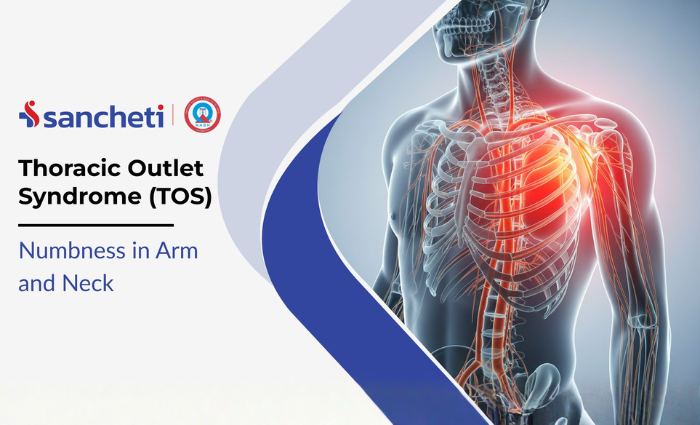

Thoracic Outlet Syndrome (TOS): Numbness in Arm and Neck
Thoracic Outlet Syndrome (TOS) is a condition characterized by compression of nerves or blood vessels within the thoracic outlet, the narrow space between the clavicle and the first rib. This compression often leads to pain, numbness, tingling, or weakness radiating from the neck into the shoulder, arm, and hand.
Because symptoms can resemble other neck or nerve conditions, TOS is frequently overlooked or misdiagnosed, delaying effective treatment. Recognizing thoracic outlet syndrome symptoms early is crucial, as untreated compression can worsen over time and interfere with daily activities, work, and sleep.
This guide explains what TOS is, its common causes, the different types, warning signs such as arm swelling or numbness, and the most effective thoracic outlet syndrome treatment options available today.
What Is Thoracic Outlet Syndrome?
Thoracic outlet syndrome refers to a group of disorders characterized by compression of structures that pass from the neck to the arm. These include the brachial plexus nerves, subclavian artery, and subclavian vein. When these structures are compressed by posture, anatomy, injury, or repetitive movements, symptoms develop in the neck, shoulder, arm, and hand.
Most cases involve nerve compression, but some affect blood vessels, leading to more visible signs such as swelling or color changes. Because multiple tissues can be involved, symptoms vary widely between patients. Understanding the underlying mechanism is key to identifying the right treatment approach and preventing long-term complications.
Types of Thoracic Outlet Syndrome
Thoracic outlet syndrome is classified based on which structure is compressed. Each type presents differently and requires specific management.
Neurogenic Thoracic Outlet Syndrome:
This is the most common form, accounting for nearly 90–95% of cases. It occurs when the brachial plexus nerves are compressed. Patients experience numbness, tingling, weakness, or pain radiating from the neck into the arm, often affecting the ring and little fingers.
Symptoms typically worsen with overhead activities or prolonged poor posture. These are classic TOS symptoms seen in desk workers, students, and athletes.
Venous Thoracic Outlet Syndrome:
Venous TOS occurs when the subclavian vein is compressed. It leads to arm swelling, heaviness, bluish discoloration, and prominent surface veins. Thoracic outlet syndrome swelling is a key warning sign in this type and requires urgent medical attention to rule out clots.
Arterial Thoracic Outlet Syndrome:
The rarest type, arterial TOS, involves compression of the subclavian artery. Symptoms include cold hands, pale or bluish fingers, fatigue with arm use, and reduced pulses. This form often has a structural cause, such as a cervical rib.
Thoracic Outlet Syndrome Causes
Understanding thoracic outlet syndrome causes helps explain why certain people are more prone to developing this condition.
Poor Posture: Forward head posture and rounded shoulders reduce space in the thoracic outlet, increasing pressure on nerves and blood vessels. Long hours of desk work or mobile phone use are common contributors.
Repetitive Overhead Activities: Swimming, weightlifting, painting, and certain sports require repeated arm elevation, which can irritate structures in the thoracic outlet over time.
Trauma or Injury: Whiplash injuries, clavicle fractures, or shoulder trauma can alter anatomy and lead to compression.
Anatomical Variations: Some individuals are born with a cervical rib, tight scalene muscles, or fibrous bands that narrow the thoracic outlet.
Risk Factors: TOS is more common in women, young adults, people with poor posture, obesity, or those with previous neck or shoulder injuries.
Thoracic Outlet Syndrome Symptoms: What to Watch For
Symptoms depend on the type of compression but often overlap.
Nerve-Related Symptoms
- Numbness or tingling in the arm or hand
- Pain in the neck, shoulder, or arm
- Weak grip or hand fatigue
- Symptoms worsening with overhead activity or carrying bags
Vascular Symptoms
- One-sided arm swelling
- Bluish or pale discoloration
- Coldness in the hand or fingers
- Prominent veins across the shoulder or chest
These warning signs help differentiate thoracic outlet syndrome symptoms from other neck or nerve conditions.
How Thoracic Outlet Syndrome Is Diagnosed
Diagnosis begins with a detailed clinical history and physical examination. Doctors look for posture abnormalities, muscle tightness, sensory changes, and reproduction of symptoms with arm movements. Provocative maneuvers, such as Adson’s or Roos’s tests, are used to reproduce symptoms and assess vascular changes.
Imaging and Tests
- X-rays to detect cervical ribs or bone abnormalities
- MRI or CT scans to assess soft tissues
- Nerve conduction studies for nerve involvement
- Doppler ultrasound to evaluate blood flow
Accurate diagnosis is essential to choose the right thoracic outlet syndrome treatment and avoid unnecessary procedures.
Thoracic Outlet Syndrome Treatment Options
Most patients improve with conservative treatment when TOS is identified early.
Physical Therapy (First-Line Treatment)
Physiotherapy is the cornerstone of treatment, especially for neurogenic TOS. Programs focus on:
- Posture correction
- Stretching tight neck and chest muscles
- Strengthening upper-back and shoulder stabilizers
- Nerve-gliding exercises
Lifestyle and Activity Modification
Avoiding prolonged overhead activities, improving workstation ergonomics, and adjusting sleeping positions significantly reduce symptoms.
Medications
Pain relievers or anti-inflammatory medications may be used short-term to manage symptoms during rehabilitation.
Surgical Treatment
Surgery is reserved for severe cases that do not improve after 4-6 months of structured therapy or for vascular TOS with clots or severe compression. Procedures may involve rib resection or muscle release.
When to Seek Urgent Medical Attention
Immediate evaluation is necessary if you experience:
- Sudden arm swelling or discoloration
- Weakness in the hand
- Loss of pulse
- Severe pain or neurological deficits
These signs may indicate vascular compromise requiring urgent care.
Sancheti Hospital: Comprehensive Care for Thoracic Outlet Syndrome
At Sancheti Hospital, we specialize in diagnosing and managing complex conditions like thoracic outlet syndrome through a multidisciplinary approach. Our orthopaedic specialists and physiotherapists work together to identify the exact cause of nerve or vessel compression and design personalized treatment plans.
From posture correction and targeted physiotherapy to advanced imaging and surgical care when required, we provide complete support at every stage. If you’re experiencing persistent TOS symptoms, arm numbness, weakness, or thoracic outlet syndrome swelling, early expert care can prevent long-term complications.
At Sancheti Hospital, our goal is to restore comfort, function, and confidence – helping you return to daily life without pain or limitation.