Dermatofibrosarcoma Protuberans

DFSP Treatment Experts in Pune

We manage dermatofibrosarcoma protuberans at Sancheti Hospital’s Ortho Onco Department using precise surgical procedures.

Overview

Dermatofibrosarcoma protuberans (DFSP) is a rare type of skin cancer that develops in the dermis, the middle layer of your skin. This cancer grows slowly and rarely spreads to other parts of the body, but it can be locally aggressive and tends to come back in the same area if not completely removed.

DFSP affects about 4 out of every 1 million people worldwide each year, making up only 1% to 6% of all soft tissue sarcomas. While it can occur at any age, it most commonly affects adults between 20 and 50 years old. The good news is that with proper treatment, DFSP has an excellent outlook, with high cure rates and long-term survival.

Symptoms

The early signs of DFSP are often subtle and can be easily mistaken for other common skin conditions. Many people don’t experience pain or redness in the beginning stages.

Common DFSP symptoms include:

  • Initial appearance: The cancer typically starts as a small, firm patch of skin that may look like a bruise, pimple, scar, or birthmark. It can be flesh-colored, reddish, or purple, and may be flat, raised, or sometimes depressed.
  • Texture changes: The affected area often feels rough to the touch and slowly changes over months or years.
  • Development of nodules: As the cancer grows, it pushes into the top layer of skin, forming firm, hard, or rubbery lumps called “protuberans.” These give the condition its name.
  • Skin changes: The skin over these nodules may become stretched, tender, or in rare cases, may ulcerate and bleed.

DFSP can appear anywhere on the body, but it’s most commonly found on the trunk (50-60% of cases), arms and legs (35%), and the head and neck area (10-15%). The tumor generally grows slowly, though growth can speed up during pregnancy or as additional tumors develop near the original one.

Causes

The primary cause of DFSP is a specific genetic change that occurs in skin cells after birth. This is not an inherited condition but rather a change that happens spontaneously.

The key genetic event involves a rearrangement between chromosome 17 and chromosome 22, creating what’s called a translocation. This rearrangement causes two genes to fuse together: COL1A1 and PDGFB. This fusion leads to the overproduction of platelet-derived growth factor (PDGF), a protein that normally helps cells grow and multiply.

When PDGF is continuously overproduced, it results in uncontrolled growth of mutated cells, leading to DFSP tumor formation. This genetic change is found in over 90% of DFSP cases.

Risk Factors

While DFSP is primarily caused by genetic changes, certain factors may increase someone’s risk of developing this condition:

  • Age: Most commonly diagnosed in adults between 20 and 50 years old, though it can occur at any age
  • Previous skin injury: Some cases develop in areas that have been previously injured by burns, surgical cuts, radiation therapy, or even tattoos

Pregnancy: The tumor may grow faster during pregnancy

Diagnosis

Diagnosing DFSP typically involves several steps, usually starting when someone notices a slow-growing skin change. Dermatologists, who specialize in skin conditions, are often involved in the diagnostic process.

The diagnostic process includes:

  • Physical examination: A healthcare provider will visually inspect the suspicious area and assess its characteristics
  • Skin biopsy: A small sample of tissue is removed and examined under a microscope. This may involve a core needle biopsy or complete removal of the suspicious area
  • Laboratory testing: Pathologists look for specific markers, particularly CD34, which is found in 80% to 100% of DFSP cases. This helps distinguish DFSP from other similar conditions
  • Molecular testing: Tests like FISH (fluorescence in situ hybridization) can detect the characteristic genetic changes that cause DFSP
  • Imaging studies: MRI or CT scans may be performed to determine the tumor’s size, depth, and relationship to surrounding structures like muscles or bones

Types

DFSP can appear in several different forms, each with unique characteristics:

  • Classic DFSP: The most common type, accounting for 80-90% of cases. It’s considered low-grade with a tendency to recur locally but rarely spreads to distant sites.
  • Pigmented DFSP (Bednar Tumors): Contains cells with high amounts of melanin, appearing in various colors including red, brown, blue, and purple. More common in Black individuals.
  • Giant Cell Fibroblastoma: Primarily affects children and teenagers, containing giant cells mixed with other cell types.
  • Fibrosarcomatous DFSP (DFSP-FS): A more aggressive variant occurring in 10-20% of cases. This type has a higher risk of both local recurrence and distant spread.
  • Myxoid DFSP: A rare type composed of abnormal connective tissue

Atrophic DFSP: Appears as a depressed area with reduced skin thickness

Stages

While there’s no universally accepted staging system for DFSP, medical professionals use a modified system based on tumor progression:

  • Stage I: Non-protruding lesions confined to the dermis or very shallow subcutaneous tissue
  • Stage II: Protruding primary tumors, subdivided into:
    • Stage IIA: Tumors that don’t invade the underlying fascia
    • Stage IIB: Tumors that invade fascia or develop beneath it
  • Stage III: Involves regional lymph node spread (rare in DFSP)
  • Stage IV: Distant spread to other organs (uncommon, but most often involves the lungs)

The prognosis for DFSP is generally excellent, with over 99% of people with localized disease surviving 10 years or more.

Treatment

The primary treatment for DFSP is complete surgical removal. The high tendency for local recurrence makes thorough removal crucial for success.

Surgical options include:

  • Wide Local Excision: Traditional method involving removal of the tumor along with 2-4 cm of surrounding healthy tissue. This approach has higher recurrence rates, especially with smaller margins.
  • Mohs Micrographic Surgery: The preferred method for many cases. This technique removes the tumor layer by layer, examining each layer under a microscope until no cancer cells remain. Mohs surgery offers better outcomes with recurrence rates as low as 1-3%.

Non-surgical treatments:

  • Radiation therapy: Used when surgical margins aren’t clear or when further surgery isn’t possible. DFSP responds well to radiation treatment.
  • Targeted therapy: Imatinib (Gleevec) is a breakthrough medication that targets the protein driving DFSP growth. It’s particularly effective for advanced or unresectable tumors and can shrink large tumors before surgery.

Rehabilitation

After DFSP treatment, comprehensive care focuses on optimal healing and function:

  • Wound care: Proper management of surgical sites to prevent infection and promote healing
  • Reconstructive surgery: May be necessary after extensive tissue removal, involving skin grafts or tissue flaps
  • Physical therapy: Recommended when tumors are located on areas that affect movement or function
  • Scar management: Techniques to minimize scarring and improve cosmetic outcomes

Complications

Despite DFSP’s generally favorable outlook, several complications can occur:

  • Local recurrence: The most common complication, with rates varying from 1-3% with Mohs surgery to up to 50% with inadequate excision
  • Metastatic disease: Rare but possible, particularly with the fibrosarcomatous variant. The lungs are the most common site of distant spread
  • Mortality: Death from DFSP is uncommon, but the prognosis is significantly worse for the small percentage who develop metastatic disease
  • Surgical complications: Including infection, difficulty closing large wounds, contractures, and keloid formation

Diagnostic delays: Early DFSP can mimic benign conditions, leading to delayed treatment and larger tumors

Prevention

Currently, there’s no known way to prevent DFSP since it’s caused by spontaneous genetic changes rather than environmental factors. However, early detection and prompt treatment are crucial for the best outcomes.

Key prevention strategies include:

  • Regular skin self-examinations: Familiarizing yourself with your skin and checking for new or changing growths
  • Professional skin examinations: Regular check-ups with dermatologists, especially for high-risk individuals
  • Prompt medical evaluation: Seeking immediate medical attention for any persistent or changing skin lesions
  • Awareness of warning signs: Recognizing symptoms like firm bumps, patches that grow, change color, become painful, or bleed

Living With Dermatofibrosarcoma Protuberans

Living with DFSP requires ongoing vigilance and adherence to follow-up care to monitor for recurrence and ensure long-term health.

Important aspects of living with DFSP:

  • Follow-up schedule: Regular medical examinations, typically every 6 months for the first 3-5 years, then annually for life
  • Self-monitoring: Learning to perform regular skin self-examinations, particularly around the treated area
  • Sun protection: While DFSP isn’t linked to sun exposure, protecting your skin is important for overall skin health
  • Symptom awareness: Recognizing signs of recurrence such as new firm bumps, patches that grow quickly, or areas that become painful or bleed
  • Emotional support: Connecting with support groups or healthcare professionals to manage concerns and stress
  • Healthy lifestyle: Maintaining overall health through proper nutrition, exercise, and stress management

Key Takeaways

  • DFSP is a rare skin cancer with excellent prognosis when treated appropriately
  • Mohs micrographic surgery offers the best outcomes with lowest recurrence rates
  • Imatinib therapy has revolutionized treatment for advanced cases
  • Long-term follow-up is essential due to potential for local recurrence
  • Early detection through regular skin examinations significantly improves outcomes
  • The fibrosarcomatous variant carries higher risk and requires more aggressive treatment
  • Support systems and comprehensive care improve quality of life for patients

At Sancheti Hospital, we understand the challenges patients face when dealing with rare conditions like DFSP. Our multidisciplinary team of experienced dermatologists, oncologists, and reconstructive surgeons provides comprehensive care from diagnosis through treatment and long-term follow-up. 

We utilize the latest diagnostic techniques, including advanced molecular testing and imaging, to ensure accurate diagnosis and staging. Our surgical expertise includes Mohs micrographic surgery and complex reconstructive procedures, while our oncology team stays current with the latest targeted therapies like imatinib

We believe in patient-centered care that addresses not only the medical aspects of DFSP but also the emotional and psychological needs of our patients and their families. 

Our commitment extends beyond treatment to include comprehensive rehabilitation services, long-term monitoring programs, and support resources to help patients maintain their quality of life. At Sancheti Hospital, we’re dedicated to providing hope, healing, and the highest standard of care for every patient we serve.

Meet Our Ortho Onco Specialist

Patient Stories & Experiences

Vinita Singh
play circle svgrepo com 1 1

The pain in my left knee left me feeling helpless for years. After my treatment here, I can finally say I'm pain-free.

Vinita Singh

Parvati
play circle svgrepo com 1 1

The nerves were swollen, and the body went numb. But thanks to Sancheti Hospital, I got a second life!

Parvati

Balaji Kharat
play circle svgrepo com 1 1

I finally could walk again, a relief I've only felt after the hip pain surgery. I thank the doctors at Sancheti Hospital for their help.

Balaji Kharat

Shantilal
play circle svgrepo com 1 1

I'm a police officer, and I'm extremely thankful to Sancheti Hospital for treating my fracture without surgery.

Shantilal

Kalpana Lepcha
play circle svgrepo com 1 1

My life has completely changed after the knee replacement surgery at Sancheti Hospital. It's like I can finally live again!

Kalpana Lepcha
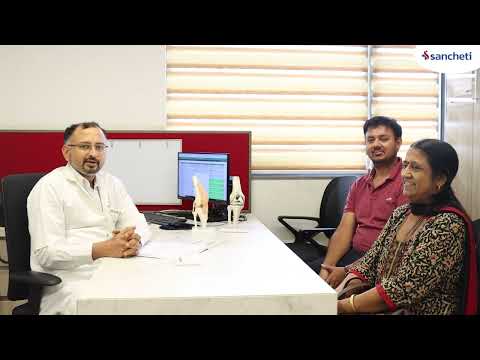
Karuna
play circle svgrepo com 1 1

The knee pain I've carried for years finally went away with the help of Sancheti Hospital.

Karuna

Kishore Bhosle
play circle svgrepo com 1 1

I can't believe that I get to finally live a normal and happy life, all thanks to the knee surgery I had at Sancheti Hospital.

Kishore Bhosle

Frequently Asked Questions

How long does it take for DFSP to grow into a noticeable tumor?

DFSP typically grows very slowly over months to years. Many patients notice changes developing over 2-5 years before seeking medical attention. However, growth can accelerate during pregnancy or in certain aggressive variants.

Scar size depends on the tumor size and surgical method used. Mohs surgery typically results in smaller scars since it removes less healthy tissue. Large tumors may require skin grafts or reconstructive surgery, which can leave more visible scars.

Most patients can return to normal activities within 2-6 weeks after surgery, depending on the location and size of the procedure. Your surgeon will provide specific activity restrictions during healing. Avoid heavy lifting or strenuous exercise until cleared by your doctor.

DFSP is not inherited, so family history of skin cancer doesn’t increase your risk for this specific condition. However, it’s still wise to have regular skin checks and practice sun protection for overall skin health.

Contact Us

(24/7 Support Line)
10am-> 05 pm
Democracy Blvd.

Follow Us

Chat