Home
Home PG College
 Patient Login
 Sancheti Clinic
 Contact Us
 Download Reports
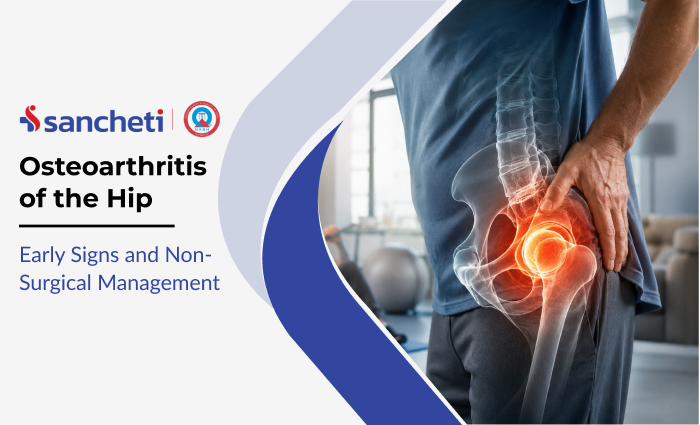

Osteoarthritis of the Hip: Early Signs and Non-Surgical Management
At Sancheti Hospital, Pune, we see a large number of patients each year who come to us wondering why their hip hurts during a morning walk or why climbing stairs has become uncomfortable.
The answer, in many cases, is hip osteoarthritis — a gradual wearing down of the cartilage in the hip joint that leads to pain, stiffness, and reduced mobility. The good news? When caught early, hip OA can often be managed effectively without surgery through a combination of lifestyle changes, physiotherapy, and medication.
What Is Hip Osteoarthritis?
The hip is a ball-and-socket joint. A smooth layer of cartilage covers the bones, allowing them to glide effortlessly during movement. Hip osteoarthritis occurs when this cartilage gradually breaks down, causing the bones to rub against each other. This leads to inflammation, pain, and eventually limited range of motion.
Hip OA is most common in people over 45, but it can appear earlier, especially in those with a history of hip injury, obesity, or a family history of joint disease. In India, changing lifestyles, sedentary habits, and an ageing population have made this condition increasingly common — and increasingly important to recognise early.
Early Signs of Hip Osteoarthritis You Shouldn’t Ignore
One of the biggest challenges with hip osteoarthritis is that it develops slowly, and many people dismiss the early symptoms as general aging. Here’s what to watch for:
1. Pain in the Groin, Thigh, or Buttock
Early hip OA pain often doesn’t feel like it’s in the hip at all. Many patients describe a dull ache in the groin, inner thigh, or even the knee. This referred pain can be confusing and delay diagnosis.
2. Morning Stiffness
Waking up with stiffness in the hip that lasts 20–30 minutes is a classic early sign of hip osteoarthritis. It typically eases as you start moving, which differentiates it from inflammatory conditions like rheumatoid arthritis.
3. Pain After Activity
If your hip feels sore after a long walk, climbing stairs, or sitting for an extended period, this could be an early symptom of hip joint degeneration. The pain often improves with rest.
4. Reduced Range of Motion
Difficulty putting on shoes and socks, crossing your legs, or rotating the hip are common complaints. Decreased hip mobility is an important early indicator that shouldn’t be overlooked.
5. A Clicking or Grinding Sensation
Some patients notice a grating or crunching feeling when moving the hip joint. This is called crepitus and can be a sign of cartilage wear.
6. Limping or Altered Gait
As the hip becomes uncomfortable, many people unconsciously change how they walk. Gait changes due to hip pain can eventually strain the knees and lower back if not addressed.
When to See an Orthopaedic Specialist
At Sancheti Hospital, we always encourage patients to seek evaluation early rather than waiting until the pain becomes severe. If you notice any of the above symptoms persisting for more than two to three weeks, it’s worth getting a clinical assessment. A physical examination combined with an X-ray is usually sufficient to confirm hip osteoarthritis diagnosis.
Early diagnosis opens up the widest range of treatment options — most of which are non-surgical.
Non-Surgical Management of Hip Osteoarthritis
Managing hip OA without surgery is entirely possible in the early and moderate stages. The goal is to reduce pain, maintain joint function, slow disease progression, and improve quality of life. Here is how we approach it at Sancheti Hospital:
Physiotherapy and Targeted Exercise
Physiotherapy for hip osteoarthritis is one of the most effective non-surgical treatments available. A structured exercise programme helps by:
- Strengthening the muscles around the hip (especially the glutes and hip flexors) to reduce joint load
- Improving flexibility and range of motion
- Correcting posture and gait patterns
- Reducing long-term pain and stiffness
Low-impact activities such as swimming, cycling, and walking on even surfaces are particularly beneficial. Our physiotherapy team at Sancheti Hospital creates personalised plans based on the patient’s fitness level, age, and severity of symptoms.
Weight Management
For every kilogram of body weight you lose, the load on your hip joint decreases by approximately three to four kilograms. Weight loss for hip OA is therefore one of the most impactful changes you can make. Even a modest reduction of 5–10% of body weight can lead to a meaningful decrease in pain and improved mobility.
Pain Relief Medications
Medications for hip osteoarthritis are used to manage symptoms, not cure the disease. Commonly recommended options include:
- Paracetamol (acetaminophen) for mild to moderate pain
- NSAIDs (non-steroidal anti-inflammatory drugs) such as ibuprofen or diclofenac for inflammation and pain — used carefully, especially in older patients or those with kidney or stomach concerns
- Topical NSAIDs in gel or cream form can be effective and carry fewer systemic side effects
Always use medications under the guidance of a doctor. Self-medicating for prolonged periods can mask symptoms and delay appropriate treatment.
Assistive Devices
A walking stick, used on the opposite side of the affected hip, can significantly reduce the load on the joint during movement. Assistive devices for hip pain are not a sign of weakness — they are practical tools that protect the joint and improve daily function.
Intra-Articular Injections
When physiotherapy and oral medications provide insufficient relief, hip joint injections may be considered. Two common options are:
- Corticosteroid injections — provide short-term anti-inflammatory relief, often effective for 3–6 months
- Hyaluronic acid (viscosupplementation) injections — aim to supplement the natural joint fluid and reduce friction
These are minimally invasive procedures performed under imaging guidance at our facility and can be very helpful for patients who are not yet candidates for surgery.
Hot and Cold Therapy
Applying heat to stiff joints before activity and cold packs after exercise can help manage hip OA symptoms on a day-to-day basis. While these are simple measures, our patients often find them genuinely helpful for managing flare-ups.
Lifestyle and Activity Modifications
Adapting your daily habits can make a significant difference:
- Avoid sitting on very low chairs or sofas that require deep hip bending
- Take short, frequent breaks if your work involves prolonged sitting or standing
- Use a firm mattress and consider sleeping with a pillow between your knees
- Avoid high-impact activities like running on hard surfaces or sports with sharp directional changes
Role of Nutrition in Joint Health
While no single food can cure hip osteoarthritis, a balanced anti-inflammatory diet supports overall joint health. Include:
- Omega-3 rich foods like fish, walnuts, and flaxseeds
- Colourful vegetables and fruits high in antioxidants
- Adequate vitamin D and calcium for bone strength
- Limit processed foods, excess sugar, and refined carbohydrates
At Sancheti Hospital, we take a holistic view of musculoskeletal health — because what you eat genuinely influences how your joints feel.
When Is Surgery Considered?
Non-surgical treatment works well for most patients in the early and moderate stages of hip OA. However, if symptoms become severe, significantly limit daily activities, or fail to respond to conservative management, total hip replacement surgery may be recommended.
Our orthopaedic surgeons at Sancheti Hospital are highly experienced in joint replacement procedures, but our first priority is always to exhaust every appropriate non-surgical option before considering the operating room.
Key Takeaways
- Hip osteoarthritis is a degenerative joint condition that causes cartilage breakdown in the hip, leading to pain and stiffness.
- Early signs include groin or thigh pain, morning stiffness, reduced range of motion, and a grinding sensation in the hip.
- Non-surgical management — including physiotherapy, weight management, medications, and injections — is effective for most patients in early to moderate stages.
- Early diagnosis significantly improves outcomes. Don’t wait for the pain to become disabling before seeking help.
- At Sancheti Hospital, Pune, our multidisciplinary orthopaedic team provides personalised, evidence-based care for hip conditions at every stage.
Frequently Asked Questions (FAQs)
Q1. Can hip osteoarthritis be reversed naturally?
Unfortunately, the cartilage damage from hip OA cannot be fully reversed. However, with the right treatment plan, symptom progression can be significantly slowed and quality of life can be well maintained for many years without surgical intervention.
Q2. Is walking good or bad for hip osteoarthritis?
Walking is generally beneficial, as it maintains joint mobility and strengthens surrounding muscles. The key is to walk on even surfaces, wear supportive footwear, keep sessions moderate in duration, and avoid pushing through sharp pain. A physiotherapist can guide you on the right amount and type of activity for your stage of hip OA.
Q3. At what age does hip osteoarthritis typically start?
While hip OA is most common after age 45–50, it can appear earlier, particularly in people with previous hip injuries, those who are overweight, or those with a genetic predisposition. There is no strict age limit — we have seen cases in patients in their late 30s.
Q4. Can yoga or stretching help with hip osteoarthritis?
Yes, gentle yoga and stretching can be very helpful for improving hip flexibility, reducing stiffness, and managing pain. However, poses that place extreme stress on the hip joint should be avoided. Always consult your physiotherapist or orthopaedic specialist before starting any new exercise routine.
Q5. How long can I delay hip replacement surgery with non-surgical treatment?
This varies greatly from person to person. Many patients manage their hip osteoarthritis successfully with conservative treatment for 5–10 years or more. The goal of non-surgical management is not simply to delay surgery, but to maintain a good quality of life. If and when surgery becomes necessary, early intervention when you are in better overall health often leads to better surgical outcomes.