Home
Home PG College
 Patient Login
 Sancheti Clinic
 Contact Us
 Download Reports

Understanding Lordosis: Causes, Symptoms, and Treatment
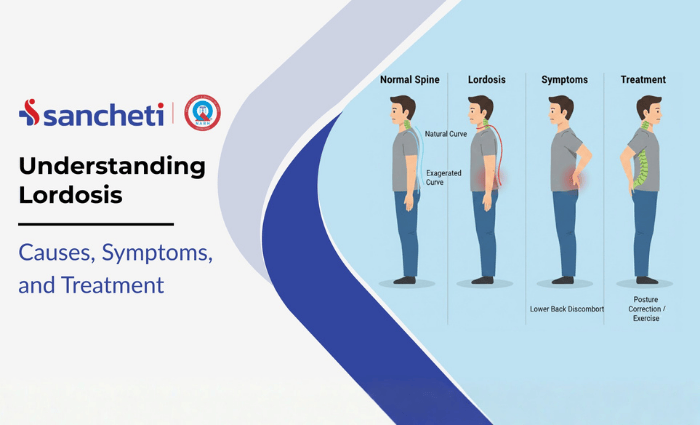
Lordosis — commonly called “swayback” — is an excessive inward curvature of the spine that affects posture, movement, and comfort. Whether it appears in the lower back (lumbar lordosis) or the neck (cervical lordosis), this condition can cause pain, stiffness, and muscle imbalance when left unmanaged.
The spine naturally curves in an S-shape to absorb shock and maintain balance. But when these curves become exaggerated — or when the natural arch is lost — it disrupts spinal alignment and can impact daily function. Understanding lordosis causes, recognizing early lordosis symptoms, and knowing when to seek treatment can help prevent long-term complications.
Key Takeaways
- Lordosis is an exaggerated inward spinal curve, most common in the lower back and neck
- Poor posture, obesity, and muscle weakness are leading lordosis causes
- Both excessive curvature and loss of lordosis (flattening) cause pain and instability
- Most cases respond well to physical therapy, posture correction, and lifestyle changes
- Surgery is rarely needed but available for severe or progressive cases
What Is Lordosis?
Lordosis refers to an abnormal inward curvature of the spine. It most commonly occurs in two regions:
- Lumbar lordosis — excessive inward curve of the lower back
- Cervical lordosis — excessive inward curve of the neck
Mild lordosis may not produce noticeable symptoms. However, when the curve becomes pronounced, it creates visible postural changes and can lead to chronic pain, muscle tension, and — in severe cases — nerve compression.
It’s also important to understand the opposite condition: loss of lordosis, where the spine’s natural curve flattens. Both extremes — too much curve and too little — are problematic and require attention.
Common Lordosis Causes
Understanding what causes lordosis is the first step toward effective management. The most frequently identified lordosis causes in clinical practice include:
- Poor posture — Prolonged sitting or standing incorrectly weakens spinal support muscles, gradually increasing the spinal curve
- Obesity — Excess abdominal weight shifts the body’s center of gravity forward, pulling the lumbar spine into an exaggerated arch
- Muscle weakness or imbalance — Weak core, hip, or back muscles fail to stabilize the spine, allowing the curve to deepen
- Spinal conditions — Disorders such as spondylolisthesis, osteoporosis, or discitis can alter spinal alignment significantly
- Genetics and congenital issues — Some individuals are born with structural differences that predispose them to abnormal curvature
- Neuromuscular disorders — Conditions like cerebral palsy or muscular dystrophy affect muscle tone and spinal support
- Hip or pelvic problems — Tight hip flexors, pelvic tilt, or post-surgical changes can shift spinal mechanics
Lumbar Lordosis: Causes and Risk Factors
Lumbar lordosis is the most common form of the condition, affecting the lower back. Typical lumbar lordosis causes include:
- Sedentary lifestyle — Prolonged sitting weakens the glutes and core, reducing spinal support
- Obesity — Extra weight in the abdominal region pulls the lumbar spine forward and increases curvature
- Incorrect exercise techniques — Overstretching or poor form during workouts places excessive strain on the lower back
- Spinal injuries or degeneration — Age-related disc wear or past trauma can deepen the lumbar curve over time
When lumbar lordosis goes untreated, it can progress to chronic pain, disc herniation, and difficulty performing everyday tasks like standing or walking for extended periods.
Loss of Lordosis: What It Means and Why It Matters
While most people associate lordosis with excessive curvature, loss of lordosis — where the spine loses its natural inward arch — is equally concerning. This flattening can occur in both the lumbar and cervical regions.
Loss of Cervical Lordosis: Causes
Loss of cervical lordosis is increasingly common due to prolonged screen use and desk-based work. Key loss of cervical lordosis causes include:
- Prolonged computer or phone use causing forward head posture
- Whiplash injuries from accidents or trauma
- Chronic muscle tension in the neck or upper back
- Degenerative disc disease affecting cervical vertebrae
Loss of Lumbar Lordosis: Causes
Loss of lumbar lordosis is often seen in people with desk jobs or chronic back conditions. Common loss of lumbar lordosis causes include:
- Chronic back strain from improper lifting or prolonged sitting
- Spinal surgery or trauma affecting lumbar mechanics
- Inflammatory conditions such as ankylosing spondylitis
- Poor ergonomic support during long work hours
Both forms of loss of lordosis disrupt the spine’s shock-absorbing capacity, placing compensatory strain on surrounding muscles, discs, and joints.
Lordosis Symptoms: What to Watch For
Recognizing lordosis symptoms early enables timely intervention and prevents the condition from worsening. Symptoms differ slightly depending on whether the condition affects the lumbar or cervical spine.
General Lordosis Symptoms
- Visible swayback posture — abdomen and buttocks appear to protrude
- Lower back or neck pain that worsens after prolonged sitting or standing
- Muscle tightness and stiffness in the back, hips, or shoulders
- Limited range of motion when bending or rotating the spine
- Persistent fatigue from muscles working overtime to maintain posture
In severe cases, nerve compression can cause numbness, tingling, or weakness in the arms or legs — symptoms that require immediate medical evaluation.
Lumbar Lordosis Symptoms
Lumbar lordosis symptoms typically present as:
- Aching or sharp lower back pain
- Difficulty standing upright for extended periods
- Tight hamstrings and hip flexors
- Increased discomfort when walking, lifting, or climbing stairs
- In advanced cases: tingling or weakness in the legs due to nerve involvement
Cervical Lordosis Symptoms
When the neck’s natural curve is affected, cervical lordosis symptoms may include:
- Neck stiffness and reduced rotational mobility
- Pain radiating into the shoulders or upper back
- Tension headaches from sustained muscle strain
- Tingling or numbness in the arms (indicating nerve compression)
- Difficulty maintaining neutral head position during screen use
Loss of Lumbar Lordosis Symptoms
When the natural lower-back curve flattens, patients often experience:
- Constant stiffness or fatigue in the back
- A flattened or “military posture” appearance of the lower spine
- Increased discomfort while standing or walking
- Reduced spinal flexibility and poor shock absorption
- Secondary pain in the hips or knees due to altered biomechanics
These loss of lumbar lordosis symptoms are especially common among individuals with sedentary lifestyles or those who have experienced spinal loading over time.
Is Loss of Lumbar Lordosis Dangerous or Not?
This is one of the most searched questions by patients — and for good reason. Loss of lumbar lordosis is not immediately dangerous in mild cases, but it should not be ignored. Over time, a flattened lumbar spine:
- Loses its natural shock-absorbing function
- Places excess pressure on spinal discs and facet joints
- Leads to accelerated degenerative changes
- Can contribute to disc herniation and nerve compression
The risk level depends on the degree of flattening, its underlying cause, and whether it’s progressing. Early assessment by a specialist helps determine whether conservative management or more intensive treatment is needed.
Lordosis Treatment: Restoring Spinal Balance
The good news: most cases of lordosis — whether excessive curvature or loss of lordosis — respond well to non-surgical treatment. The focus is on correcting posture, restoring muscle balance, and reducing pain.
Physical Therapy
Physical therapy is the cornerstone of lordosis treatment:
- Core strengthening: Planks, pelvic tilts, and bridge exercises stabilize the lumbar spine
- Stretching: Targeting tight hip flexors, hamstrings, and paraspinal muscles
- Postural retraining: Ergonomic correction for sitting, standing, and screen use
- Manual therapy: Hands-on techniques to mobilize stiff spinal segments
Lifestyle Modifications
- Maintain a healthy weight to reduce spinal loading
- Avoid prolonged sitting — stand, stretch, or walk every 30–45 minutes
- Use a supportive mattress and pillow that align the spine during sleep
- Adopt ergonomic workstation setups to reduce forward head posture
Pain Management
- Over-the-counter NSAIDs (e.g., ibuprofen) can help manage acute discomfort
- Heat therapy or therapeutic massage eases muscle tension
- Physiotherapy-guided dry needling may help in resistant cases
Bracing
In children or adolescents with progressing curvature, spinal bracing may be recommended to slow curve development and support proper alignment during growth.
Surgery
Surgical intervention is rare and considered only when:
- Curvature is severe and structurally progressive
- Nerve compression causes loss of function or bladder/bowel control
- Conservative treatment has failed over a sustained period
Treating Underlying Causes
Addressing contributing conditions — osteoporosis, neuromuscular disorders, inflammatory diseases — is essential for lasting improvement in lordosis management.
When to See a Doctor
Consult a specialist if you experience:
- Persistent or worsening back or neck pain
- Numbness or tingling in limbs
- Difficulty standing, walking, or bending
- Loss of bladder or bowel control
Early diagnosis allows for conservative management and prevents permanent changes in spinal alignment.
Sancheti Hospital: Expert Care for Spinal Health
At Sancheti Hospital, we specialize in diagnosing and treating lordosis, loss of cervical lordosis, lumbar lordosis symptoms, and related spinal conditions with evidence-based precision.
Our team of orthopedic surgeons and physiotherapists develops personalized treatment plans focused on:
- Accurate diagnosis using advanced imaging
- Targeted lordosis treatment through physical therapy and postural correction
- Pain relief and long-term mobility restoration
- Patient education for sustained spinal health
Whether you’re experiencing lumbar lordosis symptoms, cervical lordosis discomfort, or back pain from loss of lordosis, our specialists are here to help you regain comfort and function.
Frequently Asked Questions (FAQs)
Q1. What is the difference between lordosis and loss of lordosis?
Lordosis refers to an excessive inward curve of the spine, while loss of lordosis (also called hypolordosis) means the spine’s natural curve has flattened. Both conditions disrupt spinal mechanics and can cause pain, though they are managed differently.
Q2. What does “lordosis spine” mean on an X-ray report?
When a radiologist notes “lordosis spine” or an altered lordotic curve on an X-ray, it indicates a deviation from the normal spinal curvature. It may suggest either an exaggerated or reduced curve, depending on context. A specialist should review the findings alongside your symptoms for accurate diagnosis.
Q3. Is lumbar lordosis dangerous?
Mild lumbar lordosis is usually not dangerous and may go unnoticed. However, if the curve progresses or causes nerve compression, it can affect mobility and quality of life. Similarly, loss of lumbar lordosis — while not immediately dangerous — can lead to disc degeneration and chronic pain if untreated.
Q4. What does “loss of cervical lordosis meaning” refer to?
Loss of cervical lordosis means the neck has lost its natural inward curve and become straighter or even reversed. It’s often associated with poor posture, screen use, or injury. This condition can cause neck stiffness, headaches, and radiating arm pain.
Q5. Can lordosis be corrected without surgery?
Yes, in the majority of cases, lordosis — whether excessive or lost curvature — can be effectively managed without surgery through physical therapy, postural correction, weight management, and lifestyle changes. Surgery is reserved for severe structural cases with functional impairment.