Home
Home PG College
 Patient Login
 Sancheti Clinic
 Contact Us
 Download Reports
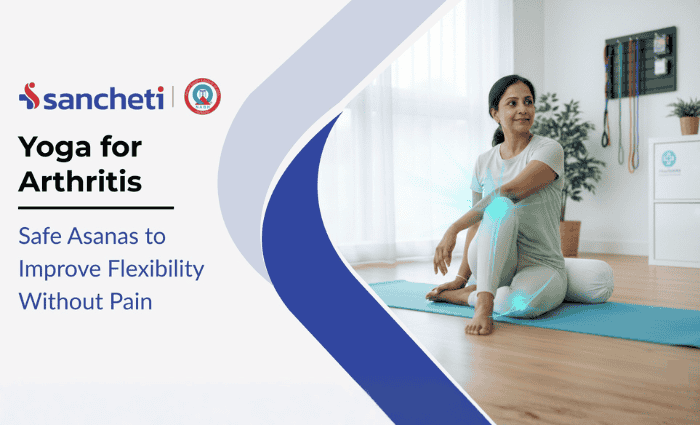

Yoga for Arthritis: Safe Asanas to Improve Flexibility Without Pain
Living with arthritis doesn’t mean giving up on movement—in fact, gentle, mindful exercise like yoga can be one of the most effective ways to manage joint pain and stiffness. Yoga for arthritis offers a low-impact approach to maintaining flexibility, strengthening muscles around affected joints, and reducing inflammation, all while respecting your body’s limits.
The key lies in choosing safe yoga poses that support joint health without causing flare-ups or additional discomfort.
Understanding Arthritis and the Role of Yoga
Arthritis affects millions of people worldwide, causing joint inflammation, pain, stiffness, and reduced range of motion. The two most common types—osteoarthritis and rheumatoid arthritis—both benefit from gentle movement that doesn’t stress the joints.
Yoga works particularly well for arthritis management because it combines three essential elements: gentle stretching to maintain flexibility, strengthening to support joint stability, and breathing techniques that help manage pain and reduce stress. Unlike high-impact exercises, yoga allows you to move at your own pace and modify poses according to your comfort level.
Benefits of Yoga for Arthritic Joints
Physical Benefits
Practicing yoga for joint pain delivers multiple advantages. The gentle stretching helps maintain and even improve your range of motion, which often becomes limited with arthritis. Strengthening poses build muscle support around joints, taking pressure off damaged cartilage and bone.
Weight-bearing yoga poses also support bone density, which is particularly important for those with rheumatoid arthritis who may be at higher risk for osteoporosis. The balance work involved in many yoga postures helps prevent falls and maintains coordination.
Mental and Emotional Wellness
Chronic pain takes a toll on mental health. Yoga’s emphasis on breathing and mindfulness helps reduce the stress and anxiety that often accompany arthritis. The practice encourages body awareness, helping you distinguish between productive stretching and harmful strain.
Many people with arthritis report feeling more empowered and less defined by their condition after incorporating yoga into their routine. The sense of accomplishment from completing a practice, no matter how modified, builds confidence and improves mood.
Safe Yoga Poses for Arthritis
When selecting yoga asanas for arthritis, the goal is to support joint health while avoiding positions that create excessive pressure or twisting. Here are some of the most beneficial and safe poses:
Child’s Pose (Balasana)
This gentle resting pose stretches the hips, thighs, and lower back without stressing the joints. It’s an excellent position for taking breaks during practice and calming the nervous system. You can place a folded blanket under your knees or between your hips and heels for extra cushioning.
Cat-Cow Stretch (Marjaryasana-Bitilasana)
This flowing movement gently mobilizes the spine and strengthens core muscles. The rhythmic motion helps reduce stiffness in the back and neck while being completely adaptable to your comfort level. Move slowly and only within a pain-free range.
Warrior II (Virabhadrasana II)
A modified Warrior II strengthens the legs and opens the hips without excessive joint stress. Keep your front knee aligned over your ankle rather than extending too deeply. This pose builds strength around the knee and hip joints while improving balance.
Bridge Pose (Setu Bandhasana)
This gentle backbend strengthens the glutes, hamstrings, and lower back muscles that support the spine and hips. Start with a small lift and use a block under your sacrum for support if needed. The pose helps counter the forward-leaning posture many people with arthritis develop.
Supported Standing Forward Fold
Using a chair or blocks for support, this modified forward fold gently stretches the hamstrings and lower back. The support removes pressure from the knees and allows you to control the depth of the stretch completely.
Seated Spinal Twist
Gentle twisting helps maintain spinal mobility and can relieve back stiffness. Perform this pose seated in a chair if getting down to the floor is challenging. Never force a twist—move only as far as feels comfortable.
Legs-Up-the-Wall Pose (Viparita Karani)
This restorative pose reduces swelling in the legs and feet while being completely passive. It’s excellent for reducing inflammation and can be held for several minutes with minimal effort.
Essential Guidelines for Practicing Yoga with Arthritis
Start Slowly and Listen to Your Body
Begin with just 10-15 minutes of gentle yoga and gradually increase as your body adapts. Pain is your body’s warning signal—if a pose hurts, stop immediately and try a modification or different position.
Timing Matters
Practice when your body feels best. For many people with arthritis, gentle morning yoga helps reduce stiffness, though your optimal time may differ. Avoid practicing during flare-ups—rest is appropriate during acute inflammation.
Warm Up Properly
Never jump into poses with cold joints. Begin every session with gentle movements like shoulder rolls, ankle circles, and easy neck stretches. Warm muscles and joints are more pliable and less prone to injury.
Focus on Breathing
Coordinate movement with breath, which helps you stay present and avoid pushing too hard. Deep breathing also activates the parasympathetic nervous system, reducing pain perception and promoting relaxation.
Poses to Avoid or Modify Carefully
While yoga offers numerous benefits, certain poses may stress arthritic joints excessively:
High-impact transitions: Jump-throughs and jump-backs can jar joints. Step through instead.
Deep knee bends: Full squats and deep lunges may aggravate knee arthritis. Keep bends shallow and supported.
Extended weight-bearing on wrists: Poses like Downward Dog can stress wrist joints. Use forearm modifications or practice against a wall.
Extreme backbends: Deep backbends can compress the spine. Stick with gentle, supported versions.
Forceful twists: Never crank yourself into a twist using your arms. Move gently and let breath guide depth.
Creating Your Arthritis-Friendly Yoga Routine
A balanced practice for arthritis includes gentle warm-up movements, several standing poses for strength, seated stretches for flexibility, and restorative poses for relaxation. A typical 20-30 minute sequence might include:
- Breathing exercises (3-5 minutes)
- Gentle warm-up movements (5 minutes)
- Modified standing poses (8-10 minutes)
- Seated stretches and gentle twists (5-7 minutes)
- Restorative poses and relaxation (5 minutes)
Consistency matters more than intensity. Three 20-minute sessions weekly often yield better results than one longer, more strenuous practice.
Working with Qualified Instructors
While home practice is valuable, working with a yoga instructor experienced in arthritis or therapeutic yoga ensures you learn proper alignment and appropriate modifications. Look for instructors with training in yoga therapy, gentle yoga, or adaptive yoga.
Communicate clearly about your condition, which joints are affected, and any movements that cause discomfort. A good instructor will help you find variations that work for your body.
Key Takeaways
- Yoga offers a gentle, effective way to manage arthritis symptoms by improving flexibility, building supportive strength, and reducing inflammation
- Safe yoga poses for arthritis include Child’s Pose, Cat-Cow, modified Warrior II, Bridge Pose, and supported forward folds
- Always modify poses using props and avoid movements that cause joint pain
- Practice when your body feels best and skip yoga during acute flare-ups
- Consistency matters more than intensity—shorter, regular sessions are ideal
- Work with experienced instructors who understand arthritis and can guide proper modifications
- Focus on breathing and mindfulness to enhance pain management and reduce stress
- Listen to your body and remember that yoga should never hurt your joints
Sancheti Hospital: Expert Care for Arthritis Management
At Sancheti Hospital, we understand that living with arthritis requires a comprehensive approach to care. Our team of orthopedic specialists, rheumatologists, and physiotherapists work together to create personalized treatment plans that address your specific type of arthritis and affected joints.
Our rehabilitation experts can guide you through safe, effective exercises tailored to your condition, ensuring you build strength and flexibility without aggravating your symptoms. From accurate diagnosis and medication management to guided exercise programs and pain management techniques, Sancheti Hospital helps you stay active, reduce discomfort, and live life on your terms. Schedule a consultation today to discover how we can support your journey toward better joint health and pain-free movement.