Home
Home PG College
 Patient Login
 International patients
 Contact Us
 Emergency
 Download Reports

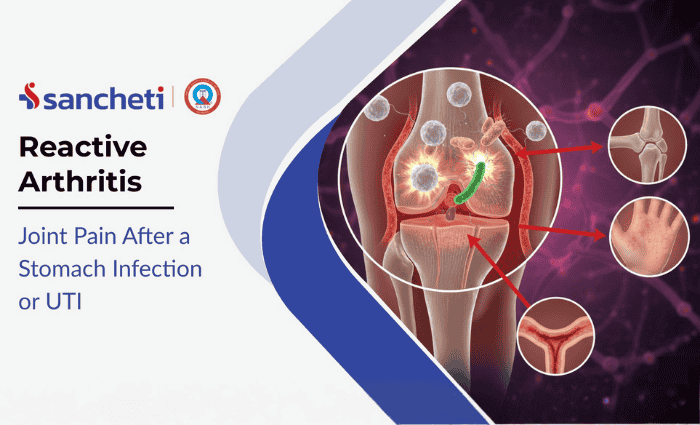

Reactive Arthritis: Joint Pain After a Stomach Infection or UTI
Have you noticed joint pain, swelling, or stiffness developing weeks after recovering from a stomach infection or urinary tract infection? This condition is called reactive arthritis—an inflammatory joint disorder triggered by an infection in another part of your body. Unlike other forms of arthritis, the infection doesn’t spread to your joints; instead, your immune system’s response causes inflammation. While uncomfortable, most cases improve with proper treatment within 3-12 months.
What Is Reactive Arthritis?
Reactive arthritis is an inflammatory condition that develops 1-4 weeks after a bacterial infection in your intestines, urinary tract, or genital organs. The bacteria don’t infect the joints directly—your immune system mistakenly attacks healthy joint tissue while fighting the infection, causing pain and swelling.
Young adults between 20-40 years are most commonly affected, with men slightly more at risk. People carrying the HLA-B27 genetic marker have higher predisposition to developing this condition.
Infections That Trigger Reactive Arthritis
Stomach Infections
Gastrointestinal infections are the most common triggers, including:
- Salmonella from contaminated poultry or eggs
- Shigella from contaminated food or water
- Campylobacter from undercooked chicken
- Yersinia from contaminated pork
These cause diarrhea, cramping, and fever. Joint symptoms may appear weeks after the stomach infection resolves.
Urinary and Sexually Transmitted Infections
UTIs and STIs can also trigger reactive arthritis:
- Chlamydia (most common sexually transmitted trigger)
- Urinary tract infections from various bacteria
- Other infections affecting the urethra or reproductive organs
Recognizing the Symptoms
Joint Problems
The primary symptoms affect your joints, especially:
- Knees (most commonly affected)
- Ankles and feet
- Wrists, fingers, and toes
- Lower back and buttocks
You may experience pain that worsens with movement, swelling, morning stiffness lasting over 30 minutes, and reduced range of motion.
Eye Inflammation
Many patients develop conjunctivitis (“pink eye”) with redness, irritation, watery discharge, and light sensitivity. This requires prompt treatment to prevent complications.
Other Symptoms
Additional signs include urinary frequency or burning, skin rashes on palms or soles, mouth ulcers, fatigue, and low-grade fever.
How Is It Diagnosed?
Your doctor will piece together your medical history, physical examination, and test results:
- Medical History: Recent infections, symptom timeline, and affected joints
- Blood Tests: Inflammatory markers (ESR, CRP), HLA-B27 genetic testing, and tests to rule out rheumatoid arthritis
- Infection Testing: Stool cultures, urine tests, or swabs for chlamydia and other infections
- Imaging: X-rays or MRI to assess joint inflammation and rule out other causes
- Joint Fluid Analysis: If needed, fluid is extracted to check for infection or crystals
Treatment Options
Treating the Infection
If an active bacterial infection is detected, antibiotics are prescribed to prevent complications. Sexual partners may also need testing and treatment.
Managing Pain and Inflammation
- NSAIDs (ibuprofen, naproxen) are the first-line treatment, reducing swelling and pain. They’re typically used for several weeks to months.
- Corticosteroids (oral prednisone or joint injections) provide rapid relief for severe inflammation but are used cautiously.
- DMARDs like sulfasalazine or methotrexate may be prescribed if symptoms persist beyond 3-6 months.
Physical Therapy
A structured rehabilitation program is essential:
- Gentle range-of-motion exercises
- Strengthening exercises once inflammation subsides
- Low-impact activities like swimming
- Heat and cold therapy for pain management
Recovery and Long-Term Outlook
Most people recover completely within 3-12 months. About 20-30% may have symptoms lasting longer, and 15-50% experience recurrent episodes after new infections. A small percentage develop chronic arthritis, particularly those with HLA-B27. Early diagnosis and treatment significantly improve outcomes.
Prevention Strategies
Reduce your risk by practicing food safety (cook meat thoroughly, wash hands, avoid unpasteurized dairy), maintaining sexual health (practice safe sex, get regular STI screening), and following good hygiene habits.
Key Takeaways
- Reactive arthritis is joint inflammation triggered by infections in the stomach or urinary tract, appearing 1-4 weeks after the initial infection
- Common triggers include gastrointestinal bacteria (Salmonella, Shigella, Campylobacter) and sexually transmitted infections like Chlamydia
- Main symptoms include joint pain and swelling (especially knees and ankles), eye inflammation, and urinary symptoms
- Treatment includes antibiotics for active infections, NSAIDs for inflammation, corticosteroids for severe cases, and physical therapy
- Most people recover within 3-12 months with appropriate treatment
Sancheti Hospital: Expert Care for Reactive Arthritis
At Sancheti Hospital, we understand how concerning it is when joint pain develops after an infection. Our specialized team of rheumatologists and orthopedic experts accurately diagnoses reactive arthritis, identifies the underlying infection trigger, and creates a personalized treatment plan.
We combine advanced diagnostics with evidence-based treatments—from managing acute inflammation with appropriate medications to designing comprehensive physical therapy programs that restore joint function. Our integrated approach addresses joint symptoms as well as associated eye, urinary, or skin manifestations for complete recovery.