Home
Home PG College
 Patient Login
 International patients
 Contact Us
 Emergency
 Download Reports

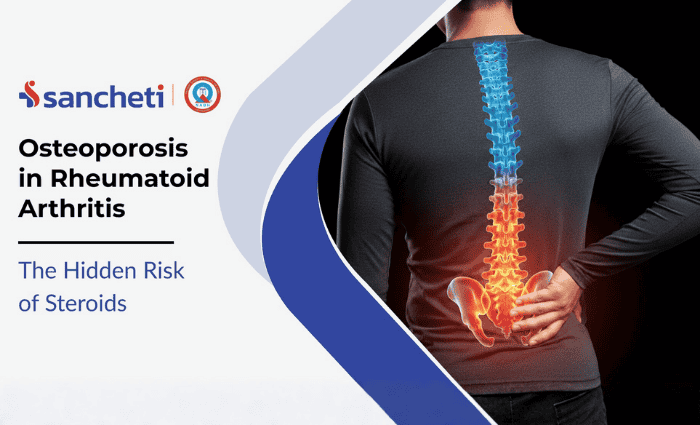

Osteoporosis in Rheumatoid Arthritis: The Hidden Risk of Steroids
If you have rheumatoid arthritis (RA) and rely on corticosteroids to manage inflammation, you face a significantly increased risk of osteoporosis—a condition that weakens bones and makes them prone to fractures. Steroids, while effective at controlling RA symptoms, accelerate bone loss by interfering with calcium absorption, reducing bone formation, and increasing bone breakdown. This creates a “hidden risk” where patients may develop fragile bones without realizing it until a fracture occurs.
Understanding the connection between steroid use and osteoporosis is crucial for anyone managing rheumatoid arthritis. This knowledge empowers you to take preventive measures, work closely with your healthcare team, and protect your bone health while continuing to manage your RA effectively.
Understanding the RA-Osteoporosis Connection
Rheumatoid arthritis itself puts you at higher risk for osteoporosis, even before medication enters the picture. The chronic inflammation that characterizes RA releases chemicals called cytokines that stimulate cells responsible for breaking down bone. Additionally, RA-related pain and reduced mobility can lead to decreased physical activity, which further weakens bones over time.
When you add corticosteroids to this equation, the risk multiplies. Studies show that people with RA are nearly twice as likely to develop osteoporosis compared to the general population, and those taking long-term steroids face even greater danger.
Why Are RA Patients More Vulnerable?
Several factors converge to make rheumatoid arthritis patients particularly susceptible to bone loss:
- Systemic inflammation directly damages bone tissue and disrupts the normal bone remodeling process
- Reduced mobility from joint pain and stiffness decreases weight-bearing activity that keeps bones strong
- Nutritional challenges may arise from disease activity, medications, or dietary restrictions
- Hormonal changes associated with chronic illness can affect bone metabolism
How Steroids Weaken Your Bones
Corticosteroids, including prednisone, prednisolone, and methylprednisolone, work by suppressing your immune system and reducing inflammation. While this provides relief from RA symptoms, it sets off a cascade of effects that compromise bone health.
Mechanisms of Steroid-Induced Bone Loss
Decreased Calcium Absorption: Steroids reduce your intestines’ ability to absorb calcium from food, depriving your bones of this essential building block. They also increase calcium loss through your kidneys, creating a double deficit.
Impaired Bone Formation: These medications suppress osteoblasts, the cells responsible for creating new bone tissue. At the same time, they extend the lifespan of osteoclasts—cells that break down bone—creating an imbalance where bone destruction outpaces bone creation.
Hormonal Disruption: Corticosteroids can decrease production of sex hormones like estrogen and testosterone, both of which play protective roles in maintaining bone density.
Muscle Weakness: Steroids can cause muscle atrophy and weakness, reducing the mechanical stress on bones that stimulates them to stay strong.
How Quickly Does Bone Loss Occur?
The most rapid bone loss happens within the first 6 to 12 months of steroid therapy. During this period, you can lose 3% to 27% of your bone mass, depending on the dose and duration. Even low doses of prednisone (as little as 2.5 to 7.5 mg daily) taken for more than three months can significantly increase fracture risk.
Risk Factors That Amplify the Danger
While anyone taking steroids faces increased osteoporosis risk, certain factors make some people more vulnerable than others.
High-Risk Factors Include:
- Steroid dose and duration – Higher doses and longer treatment periods dramatically increase risk
- Postmenopausal status – Women past menopause already face accelerated bone loss
- Advanced age – Older adults have less bone reserve and slower bone formation
- Low body weight – Having a BMI under 21 increases vulnerability
- Previous fractures – Past fractures indicate compromised bone strength
- Family history – Genetic factors influence bone density and fracture risk
- Smoking and alcohol use – Both habits independently damage bone health
- Vitamin D deficiency – Common in RA patients and essential for calcium absorption
Recognizing the Silent Progression
Osteoporosis is often called a “silent disease” because bone loss occurs without symptoms until a fracture happens. This makes it particularly dangerous for RA patients who may attribute aches and pains to their arthritis rather than recognizing new bone fragility.
Warning Signs to Watch For
- Loss of height over time (more than 1.5 inches suggests vertebral compression)
- Stooped posture or developing a curved upper back
- Sudden, severe back pain that may indicate a spinal fracture
- Fractures from minor falls or accidents that shouldn’t cause breaks
- Persistent bone pain distinct from joint discomfort
Prevention Strategies: Protecting Your Bones
The good news is that with awareness and proactive measures, you can significantly reduce your risk of steroid-induced osteoporosis while continuing necessary RA treatment.
Lifestyle Modifications
Nutrition for Bone Health: Focus on consuming adequate calcium (1,000-1,200 mg daily) through dairy products, fortified foods, leafy greens, and supplements if needed. Ensure sufficient vitamin D intake (800-1,000 IU daily) through sunlight exposure, fatty fish, fortified foods, or supplements.
Weight-Bearing Exercise: Engage in regular physical activity that forces your bones to work against gravity, such as walking, jogging, dancing, or climbing stairs. Even 30 minutes daily can make a significant difference.
Strength Training: Incorporate resistance exercises at least twice weekly to build muscle mass, which supports and protects your bones while improving balance to prevent falls.
Avoid Bone-Damaging Habits: Quit smoking, limit alcohol consumption, and maintain a healthy body weight to optimize your bone health.
Medical Management
Bone Density Testing: Undergo a DEXA scan (dual-energy X-ray absorptiometry) before starting long-term steroids and periodically during treatment to monitor bone density changes.
Calcium and Vitamin D Supplementation: Your doctor will likely recommend supplements, especially if dietary intake is insufficient or you have absorption issues.
Bone-Protecting Medications: Depending on your risk level, your healthcare provider may prescribe bisphosphonates, denosumab, or other medications that slow bone loss and reduce fracture risk.
Optimizing Steroid Use: Work with your rheumatologist to use the lowest effective steroid dose for the shortest possible time, potentially using steroid-sparing medications to control RA while protecting your bones.
Alternative Treatment Approaches
Modern rheumatology offers several strategies to reduce steroid dependence while maintaining effective RA control:
- Disease-modifying antirheumatic drugs (DMARDs) like methotrexate can reduce the need for steroids
- Biologic therapies target specific inflammatory pathways with potentially fewer bone effects
- Targeted synthetic DMARDs offer new options for steroid reduction
- Combination therapy approaches may allow for lower steroid doses
Discuss these options with your rheumatologist to develop a treatment plan that balances symptom control with bone health protection.
Monitoring and Long-Term Management
Successfully managing osteoporosis risk requires ongoing attention and regular medical follow-up. Your healthcare team should monitor bone density, assess fracture risk, evaluate medication effectiveness, and adjust your prevention strategy as needed.
Schedule regular appointments to discuss any new symptoms, review your current medications, and ensure your bone protection plan remains optimal for your evolving needs.
Key Takeaways
- Rheumatoid arthritis patients face increased osteoporosis risk, which is significantly amplified by corticosteroid use
- Steroids weaken bones by reducing calcium absorption, suppressing bone formation, and increasing bone breakdown
- The greatest bone loss occurs within the first 6-12 months of steroid therapy
- Osteoporosis progresses silently without symptoms until fractures occur
- Prevention strategies include adequate calcium and vitamin D, weight-bearing exercise, strength training, and bone-protective medications
- Regular bone density testing helps catch problems early when intervention is most effective
- Working with your rheumatologist to minimize steroid use while maintaining RA control is essential
- Lifestyle modifications combined with medical management can significantly reduce fracture risk
Sancheti Hospital: Expert Care for Osteoporosis and Rheumatoid Arthritis
At Sancheti Hospital, we understand the complex challenges faced by rheumatoid arthritis patients, particularly the hidden risk of steroid-induced osteoporosis. Our multidisciplinary team of rheumatologists, orthopedic specialists, and physiotherapists works collaboratively to protect your bone health while effectively managing your RA symptoms.
Trust Sancheti Hospital to safeguard both your joint health and bone strength with comprehensive, compassionate care that addresses every aspect of living well with rheumatoid arthritis.