Home
Home PG College
 Patient Login
 Sancheti Clinic
 Contact Us
 Download Reports
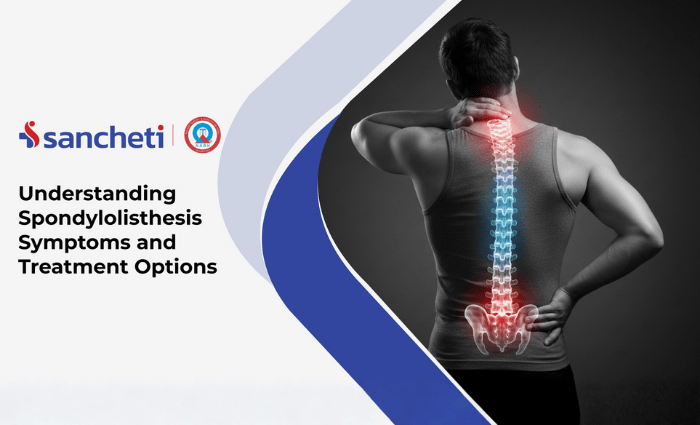

Understanding Spondylolisthesis: Symptoms and Treatment Options
Your spine is made up of stacked bones called vertebrae that provide structure, flexibility, and support. When one of these vertebrae slips forward over the one below it, it leads to a condition called spondylolisthesis. This spinal disorder can cause pain, stiffness, or nerve-related symptoms – but many cases are mild and manageable with the right care.
Recognizing spondylolisthesis symptoms early and choosing the right spondylolisthesis treatment options can prevent progression and improve quality of life. In this article, we’ll cover the types, causes, symptoms, and available therapies, including spondylolisthesis exercises, as well as when spondylolisthesis surgery may be necessary.
What Is Spondylolisthesis?
Spondylolisthesis occurs when a vertebra slips out of its normal position, typically in the lower back (lumbar spine). This misalignment can press on nerves, causing pain or movement restrictions.
It’s often confused with spondylolysis, which refers to a stress fracture in the same region – but spondylolisthesis involves actual vertebral slippage, not just a crack or defect.
Types and Causes of Spondylolisthesis
Understanding what causes vertebral slippage helps guide effective treatment. The main spondylolisthesis causes include:
- Congenital (Dysplastic):
Abnormal spinal formation is present at birth and is commonly seen in children. - Isthmic:
Caused by a small stress fracture (pars interarticularis) that weakens the vertebra. Often seen in young athletes involved in football, gymnastics, or weightlifting. - Degenerative:
The most common type in adults, due to wear and tear on discs and joints. More frequent in people over 50, especially women. - Traumatic:
Follows direct spinal injury or fracture from accidents. - Pathologic:
Results from bone disease, infection, or tumors weaken the spine. - Genetic or Familial Factors:
In rare cases, hereditary conditions predispose individuals to spinal instability.
These spondylolisthesis causes vary by age and activity level. For example, athletes are more prone to isthmic forms, while older adults commonly experience degenerative spondylolisthesis.
Spondylolisthesis Symptoms
The signs of spondylolisthesis range from mild discomfort to significant mobility issues. Recognizing spondylolisthesis symptoms early can help prevent complications, such as nerve compression.
Common Symptoms Include:
- Lower back pain that worsens with movement or standing.
- Muscle stiffness and tightness, especially in the lower back or hamstrings.
- Radiating pain to the buttocks or thighs due to nerve irritation.
- Tingling, numbness, or weakness in the legs.
- Changes in posture or a visible forward-leaning stance.
- Fatigue and reduced flexibility make bending or twisting difficult.
- Trouble walking or maintaining balance in severe cases.
In rare cases, severe nerve compression may cause loss of bladder or bowel control, requiring urgent medical attention.
Diagnosing Spondylolisthesis
Diagnosis begins with a physical examination to assess posture, range of motion, and neurological signs. Doctors often order:
- X-rays to identify vertebral slippage.
- MRI or CT scans to evaluate nerve compression.
- Bone scans are performed if fractures or underlying disease are suspected.
The degree of slippage is graded from mild (Grade 1) to severe (Grade 4 or 5). Most mild to moderate cases respond to conservative treatment.
Spondylolisthesis Treatment Options
Treatment focuses on reducing pain, restoring function, and preventing further slippage. The choice of spondylolisthesis treatment depends on age, severity, and symptoms.
1. Rest and Activity Modification
Avoid high-impact or repetitive spinal strain. Temporary rest and gentle stretching can help reduce inflammation.
2. Physical Therapy and Spondylolisthesis Exercises
Targeted spondylolisthesis exercises are essential for strengthening core muscles and stabilizing the spine. Physiotherapists design personalized programs focusing on:
- Core and lower back strengthening (planks, pelvic tilts)
- Hamstring stretching
- Postural training
- Flexibility and controlled mobility
These exercises relieve pressure on the vertebrae, support spinal alignment, and enhance stability.
3. Bracing
In children, teens, or cases of acute pain, temporary back braces can prevent further slippage and provide support during the healing process.
4. Pain Relief and Medication
Nonsteroidal anti-inflammatory drugs (NSAIDs), muscle relaxants, or mild painkillers can ease discomfort. For persistent pain, epidural steroid injections may be recommended to reduce nerve inflammation.
5. Lifestyle Modifications
- Maintain a healthy weight to reduce spinal load.
- Practice proper posture when sitting or standing.
- Avoid prolonged sitting or heavy lifting.
6. Alternative Therapies
Yoga, hydrotherapy, and low-impact exercise routines can complement standard care. However, all activities should be supervised by a physiotherapist to prevent further injury.
7. Surgery (for Severe Cases)
When conservative care fails or nerve compression worsens, spondylolisthesis surgery may be necessary. The most common procedure is spinal fusion, where vertebrae are stabilized using bone grafts and screws.
Spondylolisthesis surgery is reserved for:
- Persistent pain not improving with therapy
- Progressive vertebral slippage
- Nerve compression causing weakness or numbness
- Loss of bladder or bowel control
While recovery can take several months, modern surgical techniques have high success rates in restoring mobility and relieving pain.
Spondylolisthesis Exercises to Try (Under Expert Guidance)
While treatment should always be supervised by a physiotherapist, these exercises are commonly used for gentle rehabilitation:
- Pelvic tilts: Strengthen the lower back and core.
- Hamstring stretches: Reduce tightness that worsens lumbar stress.
- Bridge pose: Builds glute and core stability.
- Bird-dog exercise: Improves spinal alignment and coordination.
- Wall sits: Strengthen leg and lower back muscles.
Avoid high-impact sports, deep backbends, or heavy lifting during recovery.
When to See a Doctor
Seek medical attention if you experience:
- Persistent or worsening lower back pain
- Numbness or tingling in the legs
- Difficulty walking or balancing
- Bowel or bladder control issues
Early diagnosis helps prevent worsening slippage and nerve damage.
Living with Spondylolisthesis
Most people with spondylolisthesis can lead active, healthy lives through consistent therapy and exercise. The focus should be on strengthening, posture correction, and avoiding strain. With proper management, progression is rare, and pain can be well-controlled.
Sancheti Hospital: Comprehensive Care for Spinal Health
At Sancheti Hospital, our orthopedic and spine specialists provide expert care for all grades of spondylolisthesis. We offer comprehensive treatment options—from physiotherapy and spondylolisthesis exercises to advanced spondylolisthesis surgery when needed.
Our goal is to relieve pain, restore mobility, and prevent recurrence through personalized, evidence-based care. Whether your condition is mild or severe, Sancheti Hospital provides expert evaluation, precise diagnosis, and comprehensive long-term support for spinal health.
If you’re experiencing back pain or other spondylolisthesis symptoms, visit Sancheti Hospital today to begin your recovery journey.