Home
Home PG College
 Patient Login
 Sancheti Clinic
 Contact Us
 Download Reports

Understanding Alzheimer’s Disease Stages: From Early to Advanced
Alzheimer’s disease progresses gradually, changing how a person thinks, behaves, and functions over time. Recognizing each stage is key to understanding the condition, setting realistic expectations, and planning care with compassion. While no two individuals experience it the same way, the Alzheimer’s disease stages generally move from subtle memory lapses in the early phase to severe loss of independence in the advanced phase.
In this blog, we’ll break down the 7 stages of Alzheimer’s disease, explain the symptoms associated with each, and outline what families and caregivers can expect during the advanced stages of Alzheimer’s disease. Understanding the progression helps ensure better support, comfort, and dignity throughout the journey.
What Are the Stages of Alzheimer’s Disease?
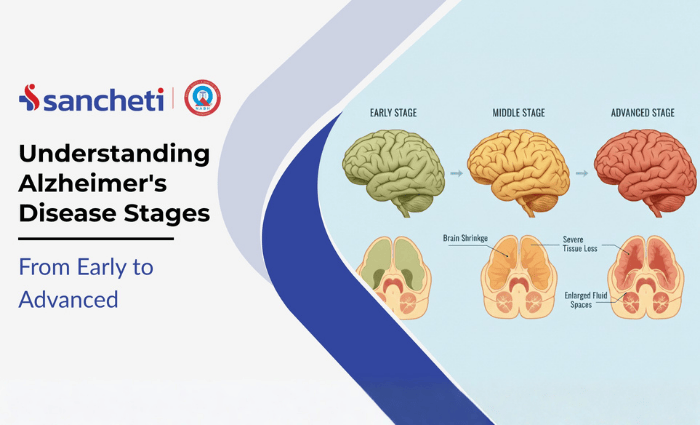
Experts categorize Alzheimer’s progression using either a three-stage model (early, middle, and late) or a more detailed seven-stage model, which shows gradual cognitive and functional decline. The stages of dementia Alzheimer’s disease framework helps medical professionals and families recognize patterns and adjust care accordingly.
Below is an overview of both models:
Three-Stage Model:
- Early (Mild)
- Middle (Moderate)
- Late (Severe)
Seven-Stage Model:
- No symptoms (Preclinical)
- Very mild cognitive decline
- Mild cognitive decline
- Moderate cognitive decline
- Moderately severe decline
- Severe decline
- Very severe decline
Stage 1: Preclinical Alzheimer’s Disease
In the beginning stages of Alzheimer’s disease, changes occur in the brain years before symptoms appear. Proteins like amyloid and tau start building up, detectable only through imaging or biomarker tests.
Symptoms: None noticeable – memory, judgment, and behavior appear normal.
Duration: Can last for years or even decades.
This stage highlights why early research and screening are vital, even when no outward signs are visible.
Stage 2: Very Mild Cognitive Decline
Minor memory lapses may occur – misplacing keys, forgetting names, or struggling to recall familiar words. At this point, changes are often attributed to aging rather than disease.
Symptoms: Minor forgetfulness without significant impact on daily life.
Duration: 1-2 years.
Although mild, this phase marks the start of the early stage of Alzheimer’s disease symptoms.
Stage 3: Mild Cognitive Impairment (Early Stage)
This is when Alzheimer’s becomes more apparent to loved ones. Patients may forget recent events, repeat questions, or have trouble organizing daily tasks.
Common symptoms:
- Short-term memory loss
- Difficulty planning or problem-solving
- Mood changes such as anxiety or irritability
- Struggling to find the right words
Duration: Around 2-4 years.
Despite these challenges, many remain independent with occasional reminders and support.
Stage 4: Moderate Dementia (Middle Stage)
This is one of the most recognizable Alzheimer’s disease stages and symptoms periods. Cognitive decline becomes more pronounced, and assistance with daily living increases.
Symptoms:
- Confusion about time or place
- Forgetting personal history
- Wandering or getting lost
- Behavioral changes, including mood swings or aggression
Duration: Typically lasts 2-10 years.
At this point, structured routines and emotional support become essential. Families often seek professional guidance to manage care effectively.
Stage 5: Moderately Severe Decline
Individuals struggle with basic tasks like dressing or bathing. Recognition of familiar faces may fade, and sleep patterns can become erratic.
Symptoms:
- Major gaps in memory
- Difficulty identifying close family members
- Repetitive speech or movements
- Increased confusion and agitation
Caregiver support and environmental safety measures are crucial to maintaining comfort and dignity.
Stage 6: Severe Decline
Often referred to as stage 6 Alzheimer’s disease, this phase marks significant dependence. Patients require round-the-clock care.
Symptoms:
- Loss of awareness of surroundings
- Limited speech or communication
- Incontinence and sleep disturbances
- Difficulty swallowing or walking
- Emotional and behavioral fluctuations
This is part of the advanced stages of Alzheimer’s disease, when medical and emotional support from caregivers becomes the cornerstone of daily care.
Stage 7: Very Severe Decline (End Stage Alzheimer’s Disease)
In the last stage of Alzheimer’s disease, the brain’s control over bodily functions declines drastically. Patients may lose the ability to walk, talk, eat independently, or respond to their environment.
Last stage of Alzheimer’s disease symptoms:
- Inability to recognize loved ones
- Loss of motor control
- Difficulty swallowing and breathing
- Extreme frailty and high risk of infections
Duration: 1-3+ years.
Compassionate care focuses on comfort, pain relief, and emotional presence rather than cure.
How Many Stages Are There in Alzheimer’s Disease?
While the 7 stages of Alzheimer’s disease model provides detail, most clinicians simplify it into three broader phases – early, moderate, and late. Both systems help track progression and guide appropriate interventions.
The total duration from diagnosis to the end stage Alzheimer’s disease typically ranges from 3 to 11 years, though some people live longer depending on health, genetics, and care quality.
Living with Alzheimer’s: Supporting Every Stage
The course of Alzheimer’s varies widely. Early recognition, regular follow-ups, and tailored care can help individuals maintain independence longer. Families should seek professional help to manage symptoms and reduce caregiver strain.
Key care considerations:
- Establish structured routines.
- Prioritize safety and fall prevention.
- Encourage social and mental engagement early on.
- Seek professional guidance as symptoms progress.
Sancheti Hospital: Providing Comprehensive Alzheimer’s Care
At Sancheti Hospital, we understand that Alzheimer’s disease affects not just memory, but every part of life. Our neurologists and rehabilitation specialists offer comprehensive care across all Alzheimer’s disease stages, from early diagnosis to advanced management.
We provide individualized treatment plans, caregiver education, and therapies designed to enhance quality of life at every stage. Whether it’s the beginning stages of Alzheimer’s disease or the last stage of Alzheimer’s disease, our focus remains on compassionate, dignified care.
If your loved one shows signs of Alzheimer’s, contact Sancheti Hospital for expert evaluation and support. We’re here to guide you every step of the way – from diagnosis through the advanced stages of Alzheimer’s disease.