Home
Home PG College
 Patient Login
 Sancheti Clinic
 Contact Us
 Download Reports
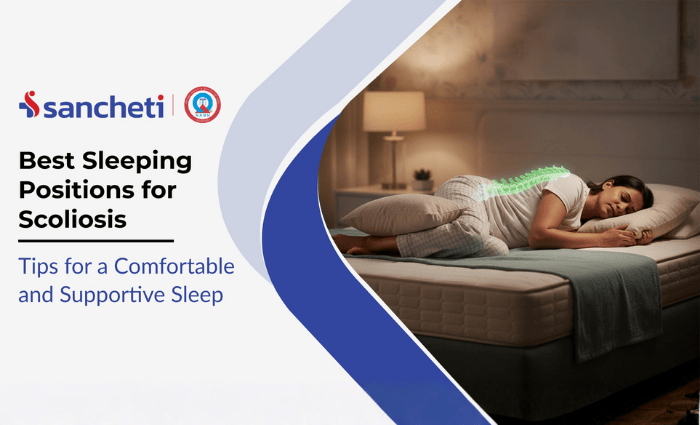

Best Sleeping Positions for Scoliosis: Tips for a Comfortable and Supportive Sleep
Tired of restless nights with scoliosis? You’re not alone. At Sancheti Hospital, Pune’s spine experts know poor sleep worsens pain and stiffness. But simple changes can make a real difference.
We focus on your comfort first—not rigid rules. Our practical tips help you reduce strain, ease pain, and support your unique curve. Forget complicated theories; we’ll show you how to sleep better tonight with smart positioning, the right pillow, and gentle adjustments.
Let’s turn restless nights into restorative rest, together.
What Should You Focus on When Sleeping with Scoliosis?
When you have scoliosis, your sleep setup should help you:
- Keep your spine straight to reduce stress on curved areas
- Reduce night pain and morning stiffness that can wake you up
- Help you breathe easier, especially if your upper back is curved
- Stay comfortable if you wear a back brace at night
Studies show that sleep quality for people with scoliosis depends more on pain levels and how you feel emotionally than on how curved your spine is. This means comfort should be your main goal.
Best Ways to Sleep with Scoliosis
Sleeping on Your Back
Why this works: Sleeping on your back is often the best position because it keeps your spine naturally straight.
How to make it better:
- Put a small pillow under your knees to take pressure off your lower back
- Use a pillow that keeps your head level (not too high or low)
- Let your arms rest comfortably at your sides
This position helps keep your hips even and reduces strain on your lower back.
Sleeping on Your Side
Why this works: Side sleeping can be comfortable for many people with scoliosis when done right.
How to make it better:
- Put a pillow between your knees to keep your hips straight
- Choose a pillow that keeps your head in line with your spine
- Switch sides if one becomes uncomfortable
Important note: Some people think you should sleep on the side opposite to your curve, but new research shows that what feels comfortable to you is more important than following strict rules.
Positions to Avoid
Sleeping on Your Stomach
We usually don’t recommend sleeping on your stomach because it:
- Forces you to turn your neck to one side for hours
- Puts too much arch in your back
- Can make your spine curve worse
If you always sleep on your stomach, try putting a small pillow under your hips to reduce the arch in your back. But it’s better to slowly change to back or side sleeping for healthier spine positioning.
Choosing the Right Mattress and Pillows
Picking a Good Mattress
Medical studies show that medium-firm mattresses work best for people with back pain, making them a great choice if you have scoliosis.
Medium-firm mattresses give you:
- Good support to keep your spine straight
- Enough cushioning to relieve pressure points
- Better pain relief compared to very hard beds
What to avoid:
- Very soft mattresses that don’t support your spine
- Extremely hard surfaces that create pressure points
- Old, saggy mattresses that have lost their support
Choosing the Right Pillow
The right pillow keeps your head and neck straight:
- For back sleepers: Medium-height pillow that supports your neck’s natural curve
- For side sleepers: Higher pillow to fill the space between your shoulder and neck
- Main rule: Your pillow should keep your head in line with your spine, not tilted up or down
Sleeping with a Back Brace
Many teenagers with scoliosis need to wear special back braces at night as part of their treatment. Research shows that nighttime braces can work as well as braces worn all day for certain types of curves.
Types of Nighttime Braces
Boston Night Shift Brace:
- Worn only during sleep
- Made to gently push your spine while lying down
- Comes with specific instructions on how to sleep
Providence/Charleston Braces:
- Custom-made for nighttime use only
- Bends your spine away from the curve while you sleep
- Usually prescribed for certain types of curves
Tips for Sleeping Comfortably in a Brace
Getting started:
- Start by wearing it for shorter times and slowly increase
- Wear soft cotton clothes underneath the brace
- Follow the proper care instructions given by your doctor
Best sleeping positions:
- Try to sleep on your back when possible
- Use pillows for comfort without interfering with how the brace works
- Go to bed and wake up at the same time every day
Taking care of your skin:
- Keep your skin clean and dry
- Check for red spots or sore areas regularly
- Wear the right undergarments to prevent irritation
Sleep Quality: It’s About More Than Just Position
Research from 2021 shows that how well people with scoliosis sleep depends more on managing pain and feeling emotionally well than on how severe their curve is. This means we need to look at the bigger picture:
Managing Pain for Better Sleep
- Work with your spine doctor to address nighttime pain
- Try gentle stretching before bed
- Use heat or cold packs as your doctor suggests
- Stick to good sleep habits
When to Call Your Doctor
Contact Sancheti Hospital’s spine specialists if you have:
- Severe nighttime pain that keeps waking you up
- Trouble breathing while sleeping, especially if your upper back is curved
- Stopping breathing or gasping during sleep (noticed by family)
- Much worse morning stiffness or pain
These signs might mean you have breathing problems during sleep related to severe spine curves, which needs immediate medical attention.
Breathing Better with Severe Curves
People with big curves in their upper back might have trouble breathing while sleeping. Medical studies show that severe spine curves can make it harder to breathe at night.
Ways to breathe easier:
- Raise your upper body slightly if lying flat makes breathing hard
- Make sure your sleeping position doesn’t squeeze your chest
- Use extra pillows to find the most comfortable breathing position
Creating Your Personal Sleep Plan
Recent studies show that everyone is different when it comes to which positions help with pain, so you need a plan that works for you.
Your Sleep Improvement Checklist
Week 1-2: Testing
- Try different recommended positions for several nights each
- Write down your pain levels, sleep quality, and morning stiffness
- Note which positions feel most natural and comfortable
Week 3-4: Fine-tuning
- Adjust pillow placement and mattress support as needed
- Try different types and heights of pillows
- Make small changes based on what works best for you
Ongoing: Checking In
- Regular visits with your spine team at Sancheti Hospital
- Make changes as your condition or treatment changes
- Keep focusing on good sleep habits overall
Expert Care at Sancheti Hospital
At Sancheti Hospital in Pune, our experienced spine doctors understand that scoliosis affects each person differently. We provide complete care that looks at not just your spine curve, but how it affects your daily life, including sleep comfort.
Our team can help you:
- Create personal sleep positioning plans
- Properly fit and adjust nighttime braces when needed
- Manage pain for better sleep quality
- Watch your condition and update recommendations over time
Final Thoughts
The best sleep approach for scoliosis combines proven positioning techniques with what feels comfortable to you. While sleeping on your back or side with the right pillow support usually works best, the most important thing is finding what gives you comfortable, pain-free rest.
Remember that sleep position alone doesn’t change how your curve gets worse – the main goals are comfort, pain relief, and good sleep. Work closely with your spine care team to develop a complete approach that meets your specific needs.
Frequently Asked Questions
1. Can I sleep on my stomach with scoliosis?
No. Stomach sleeping twists your neck and arches your spine, worsening pain. If you must, place a thin pillow under your hips (not head) to reduce strain—but switch to back/side sleeping ASAP for better spine health.
2. How high should my pillow be for scoliosis?
Back sleepers: Medium height (keeps head level).
Side sleepers: Higher (fills shoulder-neck gap).
Sancheti tip: Your ear should line up with your shoulder when lying down—no tilting!
3. Why does my back hurt more in the morning?
Stiffness often comes from poor sleep positioning or an unsupportive mattress. Try a knee pillow (back sleepers) or knee-between-legs (side sleepers) to keep hips/spine neutral overnight.
4. Can sleeping positions fix my curve?
No. Sleep posture won’t correct scoliosis but will reduce pain and stiffness. Focus on comfort—not “fixing” the curve. For progression, follow your doctor’s treatment plan.
5. How do I sleep comfortably in a back brace?
Wear soft cotton clothing under the brace, start with 1–2 hours nightly, and use a small pillow under your knees (back sleepers). Never remove it without doctor approval—consistency is key.
6. When should I see a doctor for sleep issues?
If pain wakes you nightly, you struggle to breathe, or morning stiffness lasts >2 hours. These could signal curve progression or sleep apnea—get checked immediately at Sancheti Hospital.