Home
Home PG College
 Patient Login
 Sancheti Clinic
 Contact Us
 Download Reports
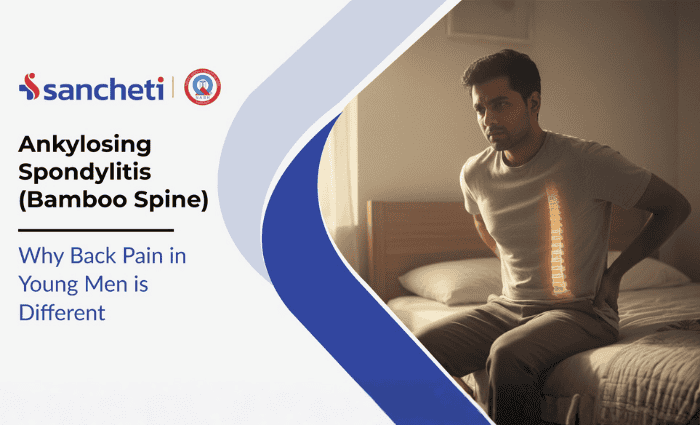

Ankylosing Spondylitis (Bamboo Spine): Why Back Pain in Young Men is Different
Lower back pain in young men—especially those under 40—is often dismissed as a muscle strain or poor posture. However, when this pain is persistent, worse at night, and improves with movement rather than rest, it could signal ankylosing spondylitis (AS), a chronic inflammatory condition that progressively fuses the spine.
Unlike typical mechanical back pain, AS is an autoimmune disorder that primarily affects young men and can lead to a rigid, curved spine resembling bamboo if left untreated. Early recognition and treatment are crucial to preserving mobility, reducing pain, and preventing long-term spinal fusion.
What is Ankylosing Spondylitis?
Ankylosing spondylitis is a type of inflammatory arthritis that primarily targets the spine and sacroiliac joints (where the spine meets the pelvis). Over time, chronic inflammation causes new bone formation, gradually fusing vertebrae together. This process creates the characteristic “bamboo spine” appearance on X-rays—a stiff, inflexible spinal column that limits movement and causes chronic discomfort.
AS belongs to a group of conditions called spondyloarthropathies, which can also affect other joints, tendons, and even organs like the eyes and heart. The condition typically begins in late adolescence or early adulthood, with men being two to three times more likely to develop AS than women.
Why Does Back Pain in Young Men Differ?
The Pattern of Pain Tells a Story
Most mechanical back pain improves with rest and worsens with activity. Ankylosing spondylitis does the opposite. The hallmark features include:
- Morning stiffness lasting more than 30 minutes: The back feels rigid and painful upon waking
- Pain that improves with exercise: Movement and stretching provide relief rather than aggravation
- Nighttime pain: Discomfort often wakes patients during the second half of the night
- Gradual onset: Symptoms develop slowly over weeks or months, not suddenly after an injury
- Persistent duration: Pain lasts more than three months without significant relief
Age and Gender Make a Difference
While anyone can experience back pain, AS specifically targets young adults between ages 17 and 45, with peak onset in the mid-20s. The predominance in men means that persistent inflammatory back pain in young males should raise clinical suspicion for AS, especially when accompanied by other symptoms.
Recognizing the Warning Signs
Early Symptoms
Beyond back pain, several red flags suggest ankylosing spondylitis:
- Alternating buttock pain or hip discomfort
- Heel pain or Achilles tendon inflammation
- Chest pain that worsens with deep breathing
- Unexplained fatigue
- Reduced flexibility in the lower back
- Eye inflammation (uveitis) causing redness, pain, and light sensitivity
- Mild fever or weight loss
Progressive Changes
As AS advances without treatment, additional complications emerge:
- Loss of spinal mobility and forward stooping posture
- Difficulty expanding the chest fully when breathing
- Neck stiffness and reduced ability to look upward
- Pain in other joints like shoulders, hips, or knees
- Bowel inflammation in some cases
What Causes Ankylosing Spondylitis?
The exact cause remains unclear, but AS involves a complex interaction between genetics and environmental factors.
Genetic Factors
Approximately 90% of people with AS carry the HLA-B27 gene. However, having this gene doesn’t guarantee you’ll develop the condition—only 1-2% of HLA-B27-positive individuals actually develop AS. This suggests other genetic and environmental triggers play important roles.
Immune System Dysfunction
In AS, the immune system mistakenly attacks healthy tissues in the spine and joints, causing inflammation. Over time, the body attempts to heal this inflammation by forming new bone, which eventually fuses vertebrae together.
Environmental Triggers
Certain infections, gut bacteria imbalances, and environmental factors may trigger AS in genetically susceptible individuals, though research is ongoing.
Diagnosing Ankylosing Spondylitis
Early diagnosis can be challenging because initial symptoms mimic common back pain. Healthcare providers use several approaches:
Clinical Evaluation
Your doctor will ask detailed questions about your pain pattern, family history, and associated symptoms. Physical examination tests spinal mobility, chest expansion, and joint tenderness.
Blood Tests
- HLA-B27 testing: Presence supports diagnosis but isn’t definitive
- Inflammatory markers: Elevated ESR (erythrocyte sedimentation rate) and CRP (C-reactive protein) indicate active inflammation
Imaging Studies
- X-rays: Show characteristic changes in sacroiliac joints and spine, including the bamboo spine appearance in advanced cases
- MRI scans: Detect early inflammation before structural damage appears on X-rays, making them valuable for early diagnosis
Treatment Approaches for Ankylosing Spondylitis
While AS cannot be cured, modern treatments effectively manage symptoms, slow progression, and maintain quality of life.
Medications
Nonsteroidal Anti-Inflammatory Drugs (NSAIDs): First-line treatment to reduce pain and inflammation
Biologic Medications: TNF inhibitors and IL-17 inhibitors target specific inflammatory pathways, significantly improving symptoms and slowing disease progression
Disease-Modifying Drugs: Medications like sulfasalazine may help when peripheral joints are affected
Pain Management: Muscle relaxants or short-term corticosteroids for acute flares
Physical Therapy and Exercise
Regular exercise is perhaps the most important component of AS management:
- Daily stretching maintains flexibility and posture
- Strengthening exercises support the spine
- Swimming and water-based activities provide low-impact movement
- Breathing exercises preserve chest expansion
- Posture training prevents forward stooping
Lifestyle Modifications
- Maintain good posture during sitting and standing
- Use supportive mattresses and pillows
- Apply heat therapy to ease morning stiffness
- Practice stress management techniques
- Avoid smoking, which worsens AS progression
- Maintain a healthy weight to reduce joint stress
Surgical Options
In severe cases with significant joint damage or spinal deformity, surgical interventions like joint replacement or spinal corrective procedures may be considered.
Why Early Detection Matters
The window for preventing irreversible spinal fusion is limited. Early diagnosis and treatment can:
- Significantly reduce pain and stiffness
- Preserve spinal mobility and flexibility
- Prevent or delay vertebral fusion
- Reduce risk of complications affecting the eyes, heart, and lungs
- Improve overall quality of life and physical function
- Enable patients to remain active and independent
Living Well with Ankylosing Spondylitis
Many people with AS lead active, fulfilling lives with proper management. Key strategies include:
- Adhering to prescribed medications consistently
- Committing to daily exercise routines
- Working closely with rheumatologists and physical therapists
- Staying informed about new treatment advances
- Monitoring for complications and reporting new symptoms promptly
Key Takeaways
- Ankylosing spondylitis is a chronic inflammatory condition causing progressive spinal fusion, creating a “bamboo spine” appearance
- It primarily affects young men under 40, with pain that improves with movement and worsens with rest
- Morning stiffness lasting over 30 minutes and nighttime back pain are hallmark symptoms
- The HLA-B27 gene is present in 90% of AS patients, though most people with this gene never develop the condition
- Early diagnosis through clinical evaluation, blood tests, and imaging is crucial for preventing irreversible damage
- Treatment combines medications (NSAIDs, biologics), physical therapy, regular exercise, and lifestyle modifications
- Unlike mechanical back pain, AS symptoms persist for months and don’t improve with rest alone
- Prompt recognition and treatment can preserve mobility, reduce pain, and significantly improve quality of life
Sancheti Hospital: Expert Care for Ankylosing Spondylitis
At Sancheti Hospital, we understand that persistent back pain in young men requires careful evaluation to distinguish between common mechanical issues and serious inflammatory conditions like ankylosing spondylitis. Our experienced rheumatologists and orthopedic specialists use advanced diagnostic techniques, including detailed clinical assessments, HLA-B27 testing, and state-of-the-art imaging, to identify AS early—before irreversible spinal fusion occurs.
We create personalized treatment plans that combine the latest biologic medications, targeted physical therapy, and evidence-based exercise programs designed to preserve your spinal mobility and reduce inflammation. Our multidisciplinary team works alongside you to manage symptoms, prevent complications, and maintain your active lifestyle.