Home
Home PG College
 Patient Login
 Sancheti Clinic
 Contact Us
 Download Reports

Raynaud’s Phenomenon: Why Fingers Turn White or Blue in Cold
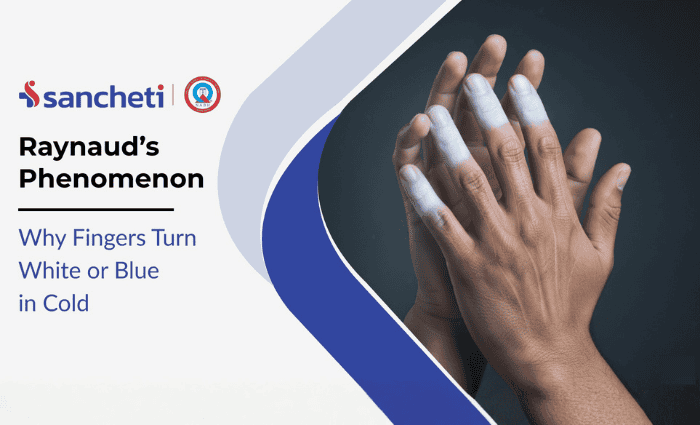
Have you ever noticed your fingers suddenly turning white, blue, or even red when exposed to cold temperatures or stress? This dramatic color change is likely Raynaud’s phenomenon, a condition where blood vessels in the fingers and toes temporarily narrow in response to cold or emotional stress, restricting blood flow to these areas.
While often harmless, understanding why this happens and when to seek medical attention can help you manage symptoms effectively and protect your extremities from potential complications.
What Is Raynaud’s Phenomenon?
Raynaud’s phenomenon (also called Raynaud’s disease or Raynaud’s syndrome) is a vascular condition that causes reduced blood flow to the fingers, toes, and sometimes other extremities like the nose and ears. When triggered by cold temperatures or emotional stress, the small blood vessels in these areas constrict excessively, temporarily cutting off adequate blood supply.
This vasospastic response typically occurs in three distinct color phases:
- White (pallor): The affected area turns white or very pale as blood flow is severely restricted
- Blue (cyanosis): The area may turn blue or purple due to lack of oxygen in the tissues
- Red (reperfusion): As blood flow returns, the area becomes bright red, often accompanied by tingling, throbbing, or swelling
These episodes can last from a few minutes to several hours, and while they’re usually not dangerous, they can be uncomfortable and occasionally lead to complications if left unmanaged.
Understanding the Two Types of Raynaud’s
Primary Raynaud’s Phenomenon
Primary Raynaud’s (also called Raynaud’s disease) is the most common form, accounting for about 80-90% of cases. It occurs on its own without any underlying medical condition and is generally milder. This type typically:
- Begins between ages 15 and 30
- Affects women more frequently than men
- Causes symmetric symptoms (affecting both hands or both feet equally)
- Rarely leads to tissue damage or serious complications
- May improve or disappear over time
Secondary Raynaud’s Phenomenon
Secondary Raynaud’s (also called Raynaud’s syndrome) develops as a result of an underlying health condition or external factor. This form tends to be more serious and may appear later in life, typically after age 30. Common causes include:
- Autoimmune diseases (scleroderma, lupus, rheumatoid arthritis)
- Connective tissue disorders
- Arterial diseases affecting blood vessels
- Carpal tunnel syndrome or repetitive strain injuries
- Certain medications (beta-blockers, migraine medications)
- Smoking and exposure to certain chemicals
- Previous frostbite or hand injuries
Why Do Fingers Turn White or Blue in the Cold?
The color changes in Raynaud’s phenomenon result from your body’s exaggerated response to cold or stress. Here’s what happens:
Normal Cold Response: When exposed to cold, everyone’s body naturally constricts blood vessels in the extremities to preserve heat and protect vital organs. Blood flow to fingers and toes decreases slightly, but circulation remains adequate.
Raynaud’s Response: In people with Raynaud’s, this protective mechanism goes into overdrive. The blood vessels spasm and narrow dramatically, causing a severe reduction in blood flow. This extreme vasoconstriction leads to the characteristic color changes:
- White Phase: Near-complete blockage of blood flow causes tissues to turn white or pale
- Blue Phase: Remaining blood loses oxygen, creating a bluish or purple appearance
- Red Phase: Blood vessels suddenly dilate and blood rushes back, causing redness, warmth, and sometimes pain
Common Triggers to Watch For
Understanding your triggers can help you prevent episodes. Common triggers include:
- Cold weather or sudden temperature drops
- Air conditioning or cold water exposure
- Handling cold objects (frozen foods, cold drinks)
- Emotional stress or anxiety
- Smoking or secondhand smoke exposure
- Caffeine consumption
- Vibrating tools or repetitive hand movements
- Certain medications
Recognizing the Symptoms
Beyond color changes, Raynaud’s phenomenon may cause:
- Numbness or tingling in affected areas
- Cold sensation in fingers or toes
- Pain or throbbing as blood flow returns
- Reduced dexterity or clumsiness during episodes
- In severe cases: skin ulcers or tissue damage
When Should You See a Doctor?
While primary Raynaud’s is generally benign, certain warning signs indicate you should seek medical evaluation:
- Episodes that affect only one side of your body
- Severe pain during episodes
- Sores, ulcers, or wounds on fingers or toes
- Episodes that began after age 30
- Symptoms that significantly interfere with daily activities
- Accompanying symptoms like joint pain, rashes, or muscle weakness
These signs may indicate secondary Raynaud’s or an underlying autoimmune condition requiring specialized treatment.
Diagnosis: What to Expect
A thorough medical evaluation typically includes:
Medical History: Your doctor will ask about symptom patterns, triggers, family history, and any underlying health conditions.
Physical Examination: Checking for signs of tissue damage, pulse strength, and other vascular issues.
Nailfold Capillaroscopy: A painless examination using magnification to view tiny blood vessels at the base of your fingernails, helping distinguish primary from secondary Raynaud’s.
Blood Tests: To check for autoimmune markers or underlying conditions, especially if secondary Raynaud’s is suspected.
Practical Management Strategies
While there’s no cure for Raynaud’s phenomenon, these strategies can help reduce episode frequency and severity:
Lifestyle Modifications
- Dress warmly in layers, paying special attention to hands, feet, and head
- Wear insulated gloves before handling cold items
- Keep your entire body warm, not just extremities
- Avoid sudden temperature changes
- Quit smoking, as nicotine constricts blood vessels
- Manage stress through relaxation techniques
- Exercise regularly to improve circulation
- Stay hydrated
During an Episode
- Move to a warmer location immediately
- Gently massage affected areas
- Swing your arms in circles to encourage blood flow
- Run warm (not hot) water over hands or feet
- Avoid abrupt rewarming, which can be painful
Preventing Complications
With proper management, most people with Raynaud’s phenomenon live comfortably. However, taking preventive measures is important:
- Protect hands and feet from injury, as healing may be slower
- Avoid tight jewelry, watches, or footwear that restricts circulation
- Be cautious with activities that stress fingers repeatedly
- Monitor for any skin changes or slow-healing wounds
- Keep all follow-up appointments with your healthcare provider
Key Takeaways
- Raynaud’s phenomenon causes fingers and toes to turn white, blue, or red in response to cold or stress due to excessive blood vessel constriction
- Primary Raynaud’s is common, mild, and not associated with other diseases, while secondary Raynaud’s occurs with underlying conditions
- The condition affects blood flow temporarily but usually doesn’t cause permanent damage when properly managed
- Staying warm, avoiding triggers, and protecting extremities are the cornerstone of management
- Medical evaluation is important if symptoms are severe, one-sided, or accompanied by other health concerns
- Most people can manage symptoms effectively through lifestyle changes, though medications are available for more severe cases
Sancheti Hospital: Expert Care for Raynaud’s Phenomenon and Vascular Conditions
At Sancheti Hospital, we provide comprehensive evaluation and treatment for Raynaud’s phenomenon and related vascular conditions. Our experienced specialists conduct thorough assessments to determine whether your symptoms stem from primary Raynaud’s or an underlying autoimmune or vascular disorder.
Our multidisciplinary team combines expert medical care with practical lifestyle guidance to help you reduce episode frequency, protect your extremities, and maintain your quality of life.
At Sancheti Hospital, we’re committed to helping you understand your condition and empowering you with the tools and support needed to manage Raynaud’s phenomenon effectively throughout every season.